Key Takeaways:
- Costs scale with feature complexity. Basic booking apps start around $8,000, while full-featured platforms with loyalty programs and multi-location support can reach $60,000.
- Automated reminders and deposits cut no-shows significantly. This combination proves more effective than reminders alone, directly improving daily revenue consistency.
- Backend infrastructure deserves real investment. Scalable architecture prevents expensive rebuilds later, especially for spas planning multiple locations or high booking volume.
- Team choice matters as much as tech stack. Freelancers offer lower costs, while agencies provide structured processes and accountability that often justify higher rates.
- Post-launch costs are part of the real budget. Ongoing maintenance, updates, and support typically add 15-20% annually, and should factor into initial planning.
Spa owners juggling phone bookings, no-shows, and overbooked schedules know exactly how much time and revenue gets lost to manual scheduling.
A well-built app changes that equation entirely, giving clients the convenience they expect while giving your business better control over daily operations.
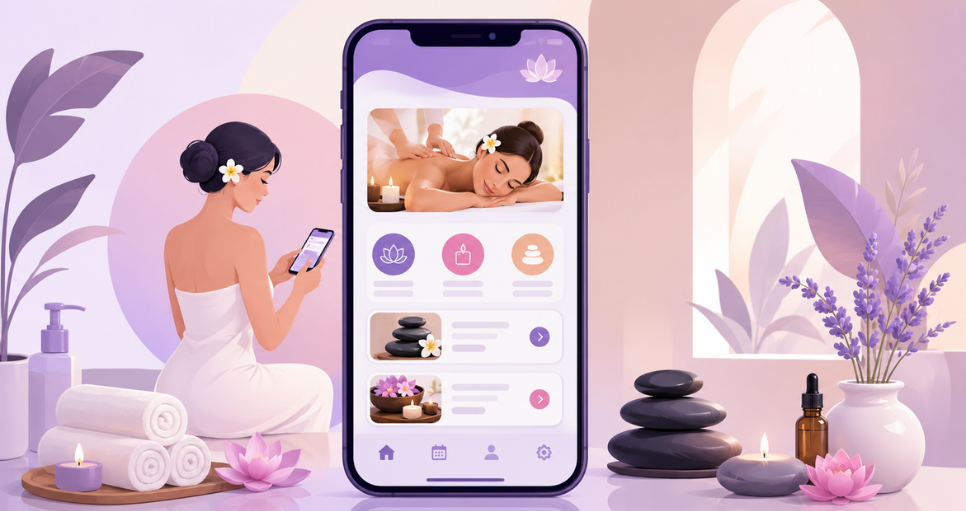
Spa appointment booking app development brings together real-time scheduling, secure payments, and client management tools into one platform that reduces administrative burden and improves the overall customer experience.
But before committing budget to a project like this, most spa owners want clear answers on what it actually costs, which features genuinely matter, and how the investment pays off long-term.
This guide breaks down exactly that the features worth building, realistic pricing, and the business case for making the switch.
How Does a Spa Appointment Booking App Work?
At its core, spa booking app development connects three moving parts client-facing booking, backend scheduling logic, and business management tools into one seamless system.
Understanding how these pieces work together clarifies what you're actually investing in.
1. Client-facing booking interface
Customers browse available services, select their preferred therapist, and choose a time slot directly through the app.
Real-time availability syncs instantly with the salon's calendar, preventing double bookings while giving clients the convenience of scheduling anytime, without waiting on hold or calling during business hours.
2. Backend scheduling and management system
Behind the scenes, spa management software coordinates therapist schedules, room availability, and service durations automatically.
Staff can view, adjust, and manage the entire day's bookings from a centralized dashboard, reducing scheduling conflicts and giving owners clear visibility into daily operations without manual cross-checking.
3. Automated notifications and payment processing
Once a booking is confirmed, the system automatically sends reminders, processes deposits or full payments, and updates records accordingly.
This automation reduces no-shows significantly while eliminating the manual follow-up work front-desk staff would otherwise need to handle for every single appointment.
Must-Have Features of a Spa Appointment Booking App
Getting core spa app features right determines whether clients actually use your app or abandon it after one frustrating attempt.
These six categories cover the essentials every successful spa platform needs, from initial booking through repeat visits.
1. Real-time appointment scheduling
Clients need to see accurate, live availability across therapists, services, and time slots without delays or double-booking risk.
A visual calendar interface makes browsing and selecting appointments intuitive, reducing the friction that often causes potential clients to abandon the booking process entirely.
2. Service and therapist selection
Successful spa booking app development lets clients filter by service type, price, duration, and preferred therapist.
Detailed therapist profiles with specialties and reviews help clients make informed choices, building trust and personalizing the booking experience beyond a generic appointment slot.
3. Secure online payment integration
Seamless checkout within the app reduces friction and encourages upfront deposits that lower cancellation rates.
Strong booking app development supports multiple payment methods, including saved cards and digital wallets, making the entire transaction feel effortless for returning clients.
4. Automated reminders and notifications
Push notifications and SMS reminders significantly cut down on no-shows, one of the biggest revenue drains for spas.
Customizable timing for confirmations, reminders, and rebooking prompts keeps clients engaged without feeling overwhelmed by excessive messaging.
5. Client profiles and treatment history
Effective spa reservation app development stores client preferences, past treatments, and therapist notes for personalized service on every visit.
This eliminates repetitive intake conversations and helps therapists tailor treatments based on documented history and stated preferences.
6. Loyalty programs and promotional offers
Points-based rewards, membership packages, and targeted discounts encourage repeat bookings and higher client lifetime value.
Building these retention tools directly into the booking flow makes redemption effortless, increasing the likelihood clients return rather than trying a competitor.
Business Benefits of Developing a Spa Appointment Booking App
Beyond client convenience, investing in spa appointment booking app development delivers measurable business advantages that directly impact revenue and daily operations.
These six benefits explain why more spa owners are making the switch from manual scheduling.
1. Reduced no-shows and last-minute cancellations
Automated reminders and required deposits significantly cut down on missed appointments, one of the biggest revenue drains for spa businesses.
Fewer no-shows mean more consistent daily revenue and better utilization of therapist time that would otherwise sit empty and unpaid.
2. Increased booking convenience and volume
A well-designed spa appointment scheduling app lets clients book anytime, without waiting for business hours or holding on the phone.
This convenience often increases overall booking volume, since clients can schedule appointments the moment they think of it, day or night.
3. Better staff and resource utilization
Real-time visibility into therapist schedules and room availability helps owners optimize daily operations more effectively.
Thoughtful custom spa app development reduces scheduling gaps and overlaps, ensuring therapists stay productively booked without the inefficiencies common in manual, phone-based scheduling systems.
4. Stronger client retention through personalization
Storing client preferences and treatment history, a service many salon app development companies now build standard, helps therapists deliver consistently personalized care.
Clients who feel remembered and understood are significantly more likely to return and recommend the spa to others.
5. Streamlined payment processing and reduced admin work
Automated billing and deposit collection through solid spa booking software development reduces the administrative burden on front-desk staff considerably.
Less time spent on manual payment tracking means more time available for actual client service and relationship building.
6. Valuable data insights for business decisions
Booking patterns, popular services, and peak hours become visible through app analytics, informing smarter staffing and marketing decisions.
This data-driven approach helps owners identify growth opportunities and address underperforming areas that might otherwise go unnoticed.
Guide to Develop a Spa Appointment Booking App: From Concept to Launch
Turning an idea into a working platform requires a structured process.
Successful spa appointment booking app development moves through distinct stages planning, design, technical build, and testing each building toward a launch-ready product businesses actually rely on.
1. Define your concept and core requirements
Start by identifying exactly what your spa needs from spa management software basic scheduling, or a full platform with payments, loyalty programs, and staff management.
Clarity here shapes every decision ahead, preventing scope creep once development begins in earnest.
2. Research competitors and estimate your budget
Study existing spa apps to identify gaps and opportunities in the market.
Understanding realistic on-demand app development cost upfront helps set expectations with stakeholders and prevents budget surprises once development moves past the initial planning phase.
3. Map out essential versus future features
Trying to launch every feature at once delays release and inflates cost unnecessarily.
A successful spa appointment scheduling app starts lean, focusing on core booking and payment tools first, saving loyalty programs and advanced analytics for later updates.
4. Wireframe core user flows and screens
Map out every essential screen service selection, booking calendar, checkout, and profile before writing any code.
Solid beauty & wellness app development starts with clear wireframes that visualize how clients move through the booking process naturally.
5. Design high-fidelity UI mockups
Move from wireframes to polished visual designs using tools like Figma.
Since branding directly impacts user trust, this stage significantly influences overall mobile app development cost, as unique visual identity requires more design hours than generic templates.
6. Choose your tech stack and development partner
Decide between native and cross-platform frameworks, then select whether to build in-house or partner with an agency.
Reliable on-demand spa app development depends heavily on choosing a team experienced with real-time scheduling and payment integration specifically.
7. Build the backend and core infrastructure
Set up servers, databases, and APIs that support scheduling logic, payment processing, and client data storage.
Strong custom spa app development requires backend architecture built for scale from day one, since booking volume tends to grow quickly after launch.
8. Develop core frontend features
Build the actual client-facing app, including booking screens, payment checkout, and notification systems.
Understanding overall software development cost at this stage helps track budget against the original estimate as frontend and backend work progress simultaneously.
9. Integrate third-party services and APIs
Connect payment gateways, SMS notification services, and calendar sync tools into your core app.
Comprehensive spa booking software development relies on these integrations to add essential functionality without building every technical component entirely from scratch.
10. Test thoroughly and launch your MVP
Conduct rigorous QA across devices before releasing to real users, ideally through a limited beta first.
Many spa owners partner with an experienced on-demand spa app development team at this stage to refine features based on genuine client feedback before scaling.
How Much Does It Cost to Develop a Spa Appointment Booking App?
Budget is usually the first question spa owners ask, and understandably so.
While closely related to overall salon app development cost, spa apps typically range from $8,000 for a lean MVP to $60,000 or more for a fully-featured platform with payments, loyalty programs, and advanced client management tools.
|
Development Element |
Description |
Cost Range |
|
UI/UX Design |
Wireframes, prototypes, and visual design for core screens |
$400 – $700 |
|
Appointment Scheduling System |
Real-time calendar, therapist availability, booking logic |
$700 – $1,400 |
|
Service & Therapist Selection |
Filterable service menus, therapist profiles and reviews |
$500 – $1,000 |
|
Payment Gateway Integration |
Secure checkout, deposits, multiple payment methods |
$600 – $1,200 |
|
Client Profiles & History |
Preferences, treatment history, therapist notes |
$400 – $900 |
|
Automated Reminders & Notifications |
Push notifications, SMS confirmations, rebooking prompts |
$300 – $700 |
|
Loyalty Programs & Promotions |
Points system, referral bonuses, discount codes |
$400 – $900 |
|
Backend & Database Architecture |
Server setup, database design, API development |
$800 – $1,600 |
|
Admin Dashboard |
Staff scheduling, resource management, analytics |
$600 – $1,300 |
|
QA Testing & Deployment |
Cross-device testing, bug fixes, app store submission |
$350 – $700 |
Choosing the Right Tech Stack and Development Team
Technology choices and team selection directly shape both quality and long-term success in spa appointment booking app development.
These eight considerations help you make informed decisions that balance budget with performance, scalability, and reliability.
1. Choose between native and cross-platform development
Native apps offer the best performance but cost more due to duplicate development work across iOS and Android.
Many businesses partner with a spa booking app development company experienced in React Native or Flutter to reduce timelines while still delivering solid, near-native performance.
2. Decide between freelancers, in-house teams, or agencies
Freelancers typically offer the lowest hourly rates but require more hands-on project management from you directly.
Established mobile app development companies bring structured processes, dedicated project managers, and proven experience, often justifying higher costs through fewer delays and better quality.
3. Select a reliable backend framework
Node.js, Django, and Ruby on Rails are popular choices for spa booking backends, each offering strong community support and proven scalability.
Successful beauty & wellness app development depends on choosing a framework your team already understands well, reducing development time and bugs.
4. Evaluate cloud hosting providers
AWS, Google Cloud, and Microsoft Azure all offer reliable hosting with scalable pricing models that grow alongside your user base.
Understanding overall spa appointment app development cost means factoring in hosting fees early, since pricing scales with storage, traffic, and server usage.
5. Prioritize payment security and compliance
Payment processing requires careful attention to security standards like PCI DSS compliance to protect client financial data.
Choosing a mobile app development company experienced with handling sensitive payment information protects your business from costly breaches or compliance violations down the line.
6. Assess real-time scheduling capabilities
Real-time availability updates prevent double bookings and scheduling conflicts, which directly affects client trust and satisfaction.
Reliable on-demand spa app development requires backend architecture specifically built to handle simultaneous booking requests without delays or synchronization errors between staff and clients.
7. Confirm integration capabilities with existing tools
If your spa already uses point-of-sale systems or accounting software, confirm the new app can integrate smoothly with those existing tools.
Seamless integration prevents duplicate data entry and keeps your business operations connected rather than fragmented across multiple disconnected systems.
8. Assess post-launch support and maintenance offerings
Development doesn't end at launch bugs, OS updates, and feature requests require ongoing attention from your development partner.
Confirm whether your chosen team offers maintenance packages or if you'll need to find separate support after the initial build wraps up.
Conclusion
Building a spa appointment booking app is a meaningful investment, but one that pays off through reduced no-shows, streamlined operations, and stronger client relationships.
From real-time scheduling and secure payments through client profiles and loyalty programs, every feature plays a role in creating a platform clients genuinely want to use and staff can rely on daily.
Costs vary based on complexity, platform choice, and team selection, but breaking the project into individual components makes budgeting far more predictable.
Whether you're running a single-location spa or planning multi-location expansion, the fundamentals stay the same: prioritize core booking and payment features first, choose an experienced development partner, and plan for ongoing maintenance.
Getting this foundation right sets your business up for smoother operations and lasting client loyalty.
FAQ's
A basic app with core scheduling and payment features usually starts around $8,000 to $15,000, depending on platform choice and design complexity.
A basic MVP usually takes two to four months, while a fully-featured app with loyalty programs and advanced management tools can take five to seven months.
Many spa owners start with one platform to validate demand, then expand once they see meaningful booking volume, keeping initial costs more manageable.
Automated reminders combined with required deposits at booking time significantly reduce no-shows, often more effectively than reminders alone without a financial commitment.
Template-based solutions cost less and launch faster, but custom development offers better branding, flexibility, and long-term scalability as your spa business grows.
Hosting, maintenance, security updates, and customer support typically range from 15-20% of the original development cost annually, depending on app complexity.
Freelancers work well for simple, budget-conscious projects, while agencies suit more complex builds requiring structured project management and broader technical expertise.
It adds a moderate amount, typically a few hundred dollars, but often pays for itself through improved customer retention and repeat bookings.
It's possible but often more expensive than including it from the start, since it may require restructuring existing checkout and booking flows.
Review their portfolio, ask for client references, and confirm they provide clear timelines, transparent pricing, and post-launch support before signing any contract.

CrinPro
CrinPro Solutions is a leading IT company that helps startups and enterprises build innovative digital products. From intuitive mobile applications and high-performance websites to AI-powered solutions and enterprise software, our team delivers scalable, secure, and user-focused products tailored to unique business needs. With expertise across multiple industries, we transform ideas into digital experiences that drive growth, improve efficiency, and create long-term business value.