Key Takeaways:
- Pet-sitting app development can cost 8,000–100,000+ in 2027.
- Booking, GPS tracking, payments, and sitter profiles are core features.
- Development timelines typically range from 2 to 9+ months.
- Hosting, maintenance, API usage, and marketing add ongoing expenses.
- Starting with an MVP helps control the initial development budget.
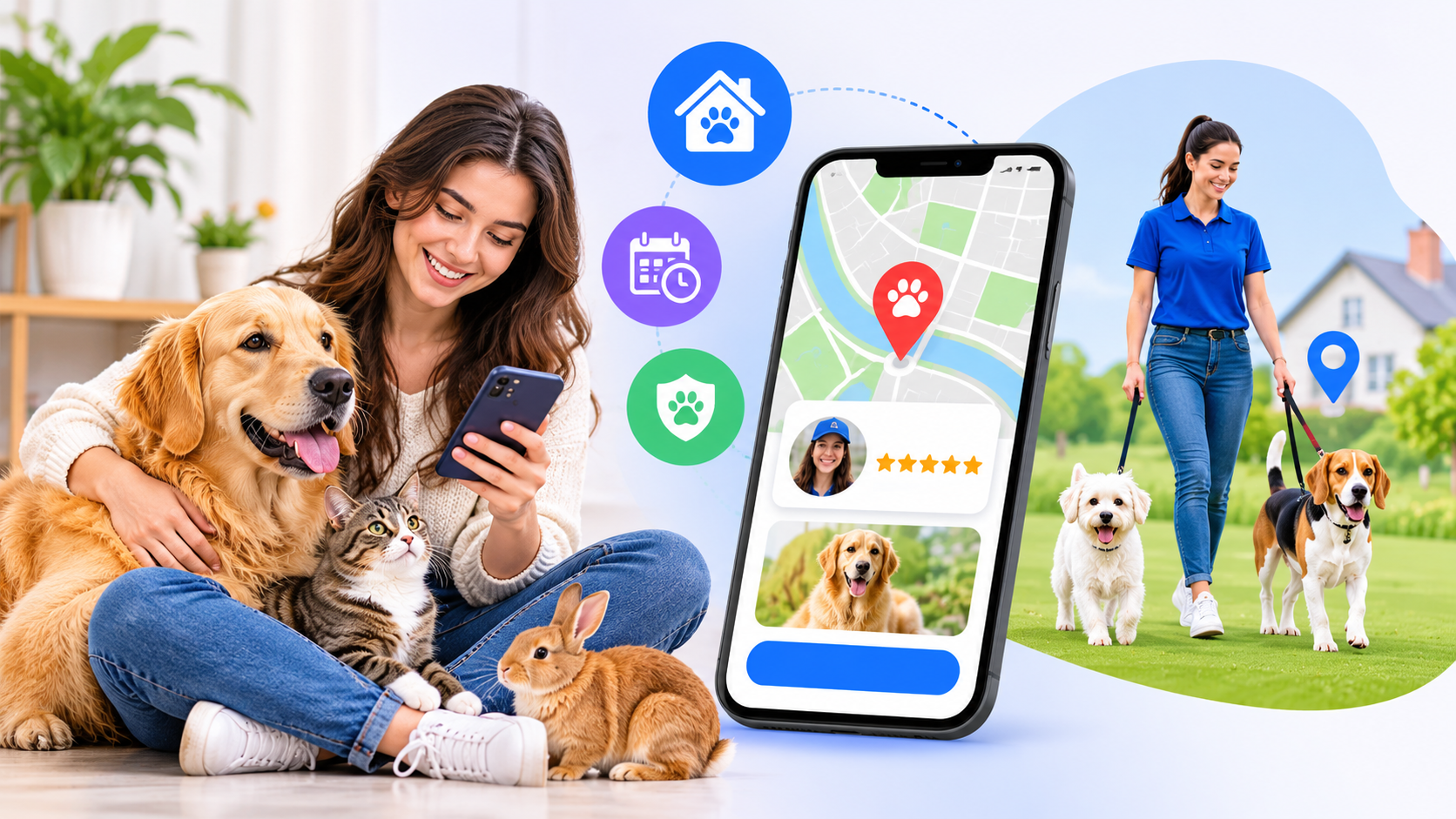
Pet sitting apps are changing how pet owners find trusted caregivers, schedule services, and manage their pets' daily care. These platforms allow users to discover nearby pet sitters, compare service providers, book appointments, make secure payments, and receive updates while their pets are being cared for.
For startups and businesses entering the pet care market, understanding the pet sitting app development cost in 2027 is important for planning the right investment. The overall budget depends on several factors, including booking functionality, GPS tracking, payment processing, sitter verification, real-time communication, and marketplace management.
A basic booking application requires fewer resources than a full-featured marketplace connecting pet owners with independent sitters across multiple locations. Advanced capabilities such as live location tracking, recurring bookings, automated payouts, and multi-service management can further increase development expenses.
This guide explores pet sitting app development pricing, essential features, technology requirements, development timelines, and additional expenses to help businesses plan their budgets effectively.
Market Statistics
- The global pet sitting app market size was estimated at USD 2.1 billion in 2025 and is projected to reach USD 7.4 billion by 2035, growing at a CAGR of 13.3% from 2026 to 2035.
- The global pet sitting market size was valued at USD 2.9 billion in 2025 and is projected to grow from USD 3.2 billion in 2026 to USD 6.7 billion by 2033, at a CAGR of 10.8% from 2026 to 2033.
- The pet-sitting services market size was valued at USD 3.29 billion in 2026 and is estimated to grow from USD 3.74 billion in 2027 to reach USD 7.10 billion by 2032, at a CAGR of 13.66% during the forecast period (2027-2032).
Understanding Pet Sitting Apps, How They Work, and How They Connect Pet Owners With Caregivers
A pet sitting app is a digital platform that connects pet owners with professional or independent caregivers who provide services such as pet sitting, feeding, walking, overnight care, and home visits. It simplifies the process of finding available sitters, scheduling appointments, managing payments, and tracking service activities.
Most pet sitting applications operate as service marketplaces with three main components:
- Pet owner app: Allows users to create pet profiles, search for sitters, check availability, book services, make payments, and review caregivers.
- Pet sitter app: Enables caregivers to create profiles, list services, manage booking requests, update availability, and receive payments.
- Admin panel: Helps platform owners manage users, verify sitters, monitor bookings, handle disputes, and track transactions.
How Does a Pet Sitting App Work?
- User registration: Pet owners and sitters create accounts using email, phone numbers, or social login.
- Pet profile creation: Owners add information such as pet breed, age, health requirements, feeding schedules, and care instructions.
- Sitter discovery: Users search for nearby caregivers based on location, pricing, ratings, and service availability.
- Booking and scheduling: Pet owners select a service, choose a date and time, and submit a booking request.
- Payment processing: The platform collects payments through integrated payment gateways.
- Service delivery: Sitters provide the requested care and share updates, photos, or location information where applicable.
- Reviews and ratings: Owners provide feedback after the service to help other users evaluate caregivers.
Businesses planning a marketplace model should account for features such as sitter verification, booking management, and payment distribution. These requirements also influence the overall Booking app development budget, particularly when the platform supports multiple service providers and recurring appointments.
Key Features of a Pet Sitting App That Affect Development Cost
The features included in a pet-sitting app directly influence its development budget, complexity, and delivery timeline. A basic platform may only need sitter profiles and booking functionality, while a complete marketplace requires GPS tracking, secure payments, communication tools, and administrative controls.
1. User Registration and Pet Profiles
Pet owners and sitters should be able to create accounts and manage their information. Pet profiles can include breed, age, medical requirements, feeding instructions, and emergency contact details.
2. Pet Sitter Profiles and Verification
Sitters need dedicated profiles displaying their experience, services, availability, pricing, certifications, and customer reviews. Identity verification and background checks can improve platform trust and safety.
3. Search and Location-Based Matching
Pet owners should be able to find caregivers based on location, service type, availability, ratings, and pricing. Advanced filters and location-based recommendations require additional backend development.
4. Booking and Scheduling
A booking system allows users to select services, choose appointment dates, check sitter availability, and confirm reservations. Recurring bookings, cancellation rules, and automated reminders add further development effort.
5. GPS Tracking and Real-Time Updates
GPS functionality helps pet owners monitor a sitter's location during walks or scheduled visits. Live tracking, route history, and location sharing require map API integration and real-time data processing. The GPS tracking app development cost depends on tracking frequency, mapping services, and location accuracy requirements.
6. Secure Payment and Payout Management
The app should support credit cards, digital wallets, payment history, refunds, and sitter payouts. Marketplace platforms may also need commission calculations and automated payment distribution. These requirements influence the mobile payment app development cost, especially when multiple payment methods and payout workflows are involved.
7. In-App Chat and Notifications
Messaging allows owners and sitters to communicate about bookings and pet care instructions. Push notifications can inform users about booking confirmations, cancellations, payment updates, and service reminders.
8. Reviews and Ratings
After completing a booking, pet owners can rate sitters and share feedback. This helps build credibility and allows users to make informed service decisions.
9. Admin Dashboard
The admin panel provides control over user accounts, sitter verification, service listings, bookings, payments, commissions, complaints, and platform analytics.
10. Pet Care Updates and Activity Reports
Sitters can share photos, feeding updates, walking details, and activity reports with pet owners. These features improve transparency and help owners stay informed during the service.
Businesses planning a complete marketplace should prioritize features based on their launch requirements. An experienced pet care app development company can help estimate the implementation effort and select suitable functionality for the initial version.
Pet Sitting App Development Cost in 2027: Complete Pricing Breakdown
The pet sitting app development cost in 2027 can range from $8,000 to $100,000+, depending on the platform's features, marketplace functionality, GPS tracking, payment integrations, and customization requirements.
A basic application with sitter profiles and booking functionality requires a smaller investment. However, a full-scale marketplace with real-time tracking, automated payouts, advanced search, and multiple user roles needs a larger development budget.
Estimated Development Cost by App Complexity
|
App Type |
Estimated Cost (USD) |
Development Timeline |
|
Basic pet sitting app |
$8,000–$15,000 |
2–3 months |
|
Mid-level pet care app |
$15,000–$30,000 |
3–4 months |
|
Advanced pet sitting marketplace |
$30,000–$60,000 |
4–6 months |
|
Enterprise pet care platform |
$60,000–$100,000+ |
6–9+ months |
Feature-Wise Development Cost
The following breakdown shows the approximate investment required for individual components.
|
Development Component |
Estimated Cost (USD) |
|
User registration and authentication |
$800–$2,000 |
|
Pet and sitter profiles |
$1,000–$3,000 |
|
Search and location filters |
$1,000–$2,500 |
|
Booking and scheduling |
$1,500–$4,000 |
|
GPS tracking integration |
$2,000–$5,000 |
|
Payment gateway integration |
$1,000–$3,000 |
|
In-app chat and notifications |
$1,000–$2,500 |
|
Reviews and ratings |
$500–$1,500 |
|
Admin dashboard |
$2,000–$5,000 |
|
Advanced analytics and reporting |
$1,500–$4,000 |
Factors Affecting Pet Sitting App Development Cost
Several technical and business decisions influence the total investment required to build a pet sitting app. Understanding these factors helps businesses estimate expenses and prioritize development requirements.
1. App Features and Complexity
A basic application with sitter profiles and booking functionality costs less than a marketplace with GPS tracking, automated payouts, in-app messaging, and recurring appointments. Every additional feature increases development and testing requirements.
2. Platform Selection
Developing separate native applications for Android and iOS generally requires more resources than using a cross-platform framework. Businesses should consider their target audience, performance requirements, and available budget before selecting a platform.
3. UI/UX Design
A simple interface with basic navigation requires less design effort than a customized experience with interactive maps, booking calendars, pet profiles, and personalized dashboards.
4. GPS Tracking and Map Integration
Real-time tracking requires location permissions, map APIs, background location updates, and route processing. The GPS tracking app development cost can increase when businesses need continuous tracking, location history, and multiple simultaneous users.
5. Payment Gateway and Marketplace Payouts
A pet sitting marketplace may need to collect customer payments, deduct platform commissions, process refunds, and transfer earnings to sitters. Multiple payment methods and automated payout workflows add integration and testing costs.
6. Backend Infrastructure and Scalability
The backend manages user accounts, bookings, payments, sitter availability, notifications, and location data. Platforms expecting high booking volumes or multi-city operations need more scalable infrastructure.
7. Third-Party Integrations
Integrations with mapping services, payment gateways, SMS providers, email platforms, and identity verification tools increase implementation effort. Their recurring subscription or usage charges should also be considered.
8. Security and Data Protection
The app may store personal information, pet care instructions, payment records, and location data. Secure authentication, encryption, access controls, and regular testing are important for protecting this information.
9. Development Team and Expertise
The team's location, experience, and technical specialization affect development rates. Working with experienced providers offering on-demand app development services can help businesses plan the required features, integrations, and delivery schedule.
Best Technologies and Tools Used in Pet Sitting App Development
The technology stack affects app performance, development cost, scalability, and maintenance. A pet sitting platform typically needs separate interfaces for pet owners, sitters, and administrators, supported by a secure backend.
|
Technology Component |
Recommended Technologies |
Estimated Cost |
|
Android App |
Kotlin, Java |
$2,000–$5,000 |
|
iOS App |
Swift |
$2,500–$6,000 |
|
Cross-Platform Development |
Flutter, React Native |
$3,000–$7,000 |
|
Backend Development |
Node.js, Python, Laravel |
$2,000–$6,000 |
|
Database |
PostgreSQL, MongoDB, Firebase |
$800–$2,500 |
|
UI/UX Design |
Figma, Adobe XD |
$800–$2,000 |
|
GPS and Maps |
Google Maps API, Mapbox |
$500–$2,000 |
|
Payment Integration |
Stripe, PayPal |
$500–$1,500 |
|
Cloud Hosting |
AWS, Google Cloud, Azure |
$500–$2,000 |
The final technology choices depend on the required features, user volume, and platform complexity. A cross-platform approach can reduce the cost of building separate Android and iOS applications, while native development may be suitable when the app requires advanced device-level functionality.
Working with an experienced mobile app development company can help select technologies that meet current requirements without creating unnecessary infrastructure expenses. The stack should also support future updates, security improvements, and additional features as the pet sitting business grows.
Additional Development and Ongoing Maintenance Costs of a Pet Sitting App
The initial development budget is not the only expense involved in launching a pet sitting platform. Ongoing services, third-party tools, and maintenance can increase the overall investment.
|
Additional Expense |
Estimated Cost |
|
Cloud Hosting and Servers |
$50–$500/month |
|
App Maintenance and Updates |
$500–$2,000/month |
|
GPS API Usage |
$50–$300/month |
|
Payment Gateway Charges |
2%–3.5% per transaction |
|
Push Notification Services |
$0–$100/month |
|
Security Monitoring |
$100–$500/month |
|
App Store Accounts |
$25–$99/year |
|
Marketing and Promotion |
$500–$5,000+ initially |
Expenses to Consider Before Launch
- Third-party API charges: Map, messaging, and payment services may charge based on usage. Costs can increase as more pet owners and sitters join the platform.
- Maintenance and updates: Regular bug fixes, compatibility updates, and performance improvements help keep the application reliable.
- Customer support: A growing marketplace may require dedicated support for booking disputes, cancellations, refunds, and sitter verification.
- Marketing and user acquisition: Advertising, referral programs, and promotional offers require a separate budget to attract pet owners and service providers.
- Feature expansion: Adding services such as grooming, boarding, or dog walking can require additional development. Businesses comparing Dog walking app development costs should also account for shared features like sitter profiles, scheduling, location tracking, and payments.
Planning for these expenses helps businesses estimate the total investment more accurately instead of focusing only on the initial development quotation.
How to Reduce Pet Sitting App Development Costs
Building a pet sitting app does not always require a large initial investment. Businesses can control expenses by prioritizing essential features, choosing suitable technologies, and expanding the platform gradually.
- Start with an MVP: Launch with essential features such as user registration, pet and sitter profiles, booking, payments, and basic notifications. Advanced features can be introduced after validating market demand.
- Choose cross-platform development: Using Flutter or React Native can reduce the effort required to build and maintain separate Android and iOS applications.
- Prioritize high-value features: Focus on features that directly support bookings and user experience. Avoid adding complex analytics, AI recommendations, or advanced automation before they are necessary.
- Use ready-made integrations: Integrating established payment gateways, mapping services, and notification tools can reduce the time and expense of developing these systems from scratch.
- Plan GPS functionality carefully: Use location tracking only where required, such as during active pet sitting sessions. This helps manage API usage and server expenses.
- Select scalable infrastructure: Choose cloud services that allow resources to grow with user demand instead of investing in expensive infrastructure from the beginning.
- Avoid unnecessary redesigns: Finalize the main user journeys and UI/UX design before development starts. Clear requirements reduce rework and unexpected costs.
Work with an experienced development team: A skilled team can estimate requirements accurately, identify cost-saving opportunities, and prevent technical decisions that create expensive maintenance issues later.
Conclusion
The cost of developing a pet sitting app in 2027 can range from $8,000 to $100,000+, depending on its features, platform selection, GPS tracking capabilities, payment integrations, and overall complexity. A basic MVP can help startups enter the market with a smaller investment, while advanced marketplaces require more sophisticated booking, communication, and management systems.
Businesses should define their core requirements, estimate ongoing expenses, and choose a scalable technology stack before starting development. A phased approach can help control the initial budget while allowing the platform to grow as demand increases.
FAQ's
It typically costs between $8,000 and $100,000+, depending on features, platforms, and complexity.
A basic app may take 2–3 months, while an advanced marketplace can take 6–9 months or longer.
User profiles, sitter listings, booking, GPS tracking, payments, chat, reviews, and an admin dashboard.
Basic GPS integration may cost around 2,000–5,000, depending on tracking requirements and map API usage.
Yes. Start with an MVP containing essential booking, profile, payment, and notification features, then expand gradually.
Feature complexity, platform choice, GPS functionality, payment integrations, UI/UX design, and backend infrastructure.

CrinPro
CrinPro Solutions is a leading IT company that helps startups and enterprises build innovative digital products. From intuitive mobile applications and high-performance websites to AI-powered solutions and enterprise software, our team delivers scalable, secure, and user-focused products tailored to unique business needs. With expertise across multiple industries, we transform ideas into digital experiences that drive growth, improve efficiency, and create long-term business value.