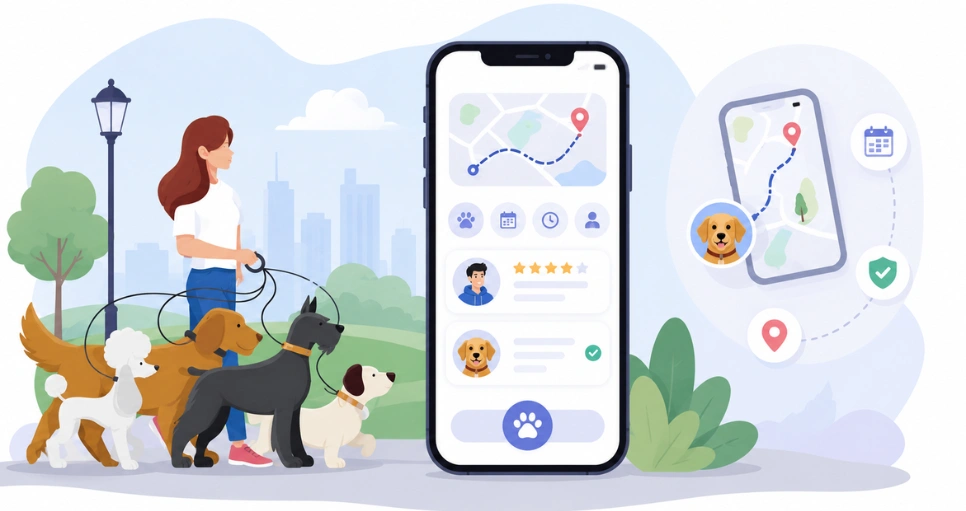
Key Takeaways:
- Dog walking app cost ranges from $8,000 to $90,000+ based on features, complexity, and platform choice.
- GPS tracking, payments, AI, and live updates increase development cost but improve user trust.
- MVP development helps test your pet care idea while saving time and budget.
- Choosing the right tech stack and development team impacts app quality and long-term growth.
- Hidden costs like maintenance, security, APIs, and marketing affect the total investment.
A dog is not just a pet anymore. For many people, it’s family and leaving them alone all day is a real worry.
Busy schedules, long office hours, and travel plans have increased the need for reliable pet care solutions. That’s where dog walking apps like Rover, Wag!, and Pawshake are changing the way owners find trusted walkers, schedule walks, and track their pets through GPS-based services.
But building an app like this comes with many questions. How much does dog walking app development cost? What features actually matter? The answer depends on your app idea, technology stack, user needs, and business model. In this blog, we’ll break down the dog walking app development cost, key features, development process, and factors that affect the final budget.
What Is a Dog Walking App and Market Overview in 2026?
A dog walking app is a mobile platform that connects pet owners with trusted dog walkers, allowing them to book walks, track pets, manage schedules, and make secure payments from their phones.
The dog walking service app market is growing as mobile-first pet solutions gain popularity. According to Market Growth Reports, the global dog walking service app market was valued at around USD 600.99 million in 2026 and is expected to reach USD 1,270.13 million by 2035, growing at a CAGR of 8.67%.
How Much Does It Cost to Pay Someone to Develop a Dog-Walking App?
Building a dog walking app depends on features, design, technology, and the level of customization you need.
The dog walking app pricing can range from a simple booking platform to a full pet care marketplace with GPS tracking, payments, and walker management.
|
App Complexity |
Development Timeline |
Estimated Cost |
Best For |
|
Basic App Cost |
2–4 months |
$8,000 – $20,000 |
Startups testing a dog walking app idea with basic booking, walker profiles, and payment features |
|
Medium Complexity |
4–6 months |
$20,000 – $45,000 |
Growing businesses needing GPS tracking, chat, reviews, notifications, and better user experience |
|
Advanced/ Wag-like App |
6–10 months |
$45,000 – $90,000+ |
Businesses building a scalable dog walking platform with live tracking, subscriptions, AI matching, and multiple user roles |
|
Enterprise Solution |
10+ months |
$90,000+ |
Large pet care companies requiring advanced integrations, analytics, automation, and multi-city operations |
Step-by-Step Process and Cost to Build a Dog Walking App
Building a dog walking app takes more than just adding booking features. You need a smooth experience for pet owners, walkers, and admins. The cost to build a dog walking app depends on the design, features, technology, and app size.
A good development process starts with planning and moves through design, coding, testing, and launch. Each step plays a role in creating a reliable pet care platform that users can trust.
1. UI/UX Design
The first step is creating the app’s look and flow. Designers plan screens for pet owners and walkers, making sure booking a walk feels simple.
This stage includes:
- User flow planning
- Wireframes
- App screens
- Clickable prototypes
A clean design helps users find walkers, book services, and manage pet details without confusion.
Cost: $1,000 – $6,000
Timeline: 2 – 6 Weeks
2. Frontend Development
Frontend development turns the design into a working app. Developers build the parts users see and interact with.
This includes:
- Login screens
- Pet profiles
- Walker search
- Booking pages
- Chat features
Many businesses work with a mobile app development company at this stage to create apps that run smoothly on different devices.
Cost: $4,000 – $25,000
Timeline: 2 – 4 Months
3. Backend Development
The backend manages the main system behind the app. It handles users, bookings, payments, locations, and data.
It includes:
- User management
- Booking system
- Database setup
- Security controls
- Real-time updates
Think of it like the engine of the app. Users may not see it, but everything depends on it.
Cost: $5,000 – $35,000
Timeline: 2 – 5 Months
4. Admin Panel
The admin panel gives business owners control over the platform.
Admins can:
- Manage users and walkers
- Check bookings
- Handle payments
- Review reports
It helps keep daily operations organized as the app grows.
Cost: $3,000 – $15,000
Timeline: 4 – 8 Weeks
5. APIs & Third-party Integrations
A dog walking app needs outside tools to add useful features. These connections make the app smarter and easier to use.
Common integrations:
- GPS and maps
- Payment gateways
- Push notifications
- SMS and email services
Experienced mobile app development companies often use trusted APIs to save time and improve app performance.
Cost: $2,000 – $12,000
Timeline: 3 – 8 Weeks
6. Testing
Before launch, the app needs proper testing. Small bugs can create big problems, especially when users depend on live tracking and bookings.
Testing covers:
- App speed
- Security checks
- Payment testing
- Device testing
A tested app gives users a better experience from day one.
Cost: $1,500 – $8,000
Timeline: 3 – 6 Weeks
7. Deployment
The final step is launching the app on platforms like the App Store and Google Play.
This includes:
- Store setup
- Final updates
- App publishing
- Launch support
After release, regular updates help the app stay useful and competitive.
Cost: $500 – $3,000
Timeline: 1 – 3 Weeks
The complete development journey can take around 4–10 months, depending on the app’s features and business goals. A simple MVP may launch faster, while a full dog walking marketplace with GPS, payments, and multiple user roles needs more time and investment.
What Factors Affect Dog Walker App Development Cost?
Building a dog walking app is not only about adding booking screens. The final budget changes based on design, technology, features, location, and the type of experience you want to create. The dog walking app development cost depends on many small decisions made during the development journey.
1. App Features and Functionality
Features decide how simple or advanced your app will be. Basic booking needs less investment, while GPS tracking, chat, payments, walker profiles, and AI tools increase the budget.
|
Feature Level |
Estimated Cost |
|
Basic Features (Login, Pet Profile, Booking) |
$3,000 – $10,000 |
|
Standard Features (GPS, Chat, Payments, Reviews) |
$10,000 – $25,000 |
|
Advanced Features (AI Matching, Live Tracking, Subscription) |
$25,000 – $60,000+ |
2. Platform (Android/iOS/Web)
The platform choice affects development time and cost. Creating apps for multiple devices requires more work, testing, and maintenance.
|
Platform |
Estimated Cost |
|
Android App |
$8,000 – $25,000 |
|
iOS App |
$10,000 – $30,000 |
|
Android + iOS |
$20,000 – $60,000 |
|
Web Admin Panel |
$3,000 – $15,000 |
Businesses often compare On demand app development cost before selecting the right platform mix for their audience.
3. Dog Walking App Development Pricing Varies by Region
Developer location plays a big role in pricing. Different regions have different hourly rates, team experience, and development practices.
|
Region |
Average Development Cost |
|
USA |
$50,000 – $100,000+ |
|
UK |
$45,000 – $90,000+ |
|
Canada |
$40,000 – $85,000+ |
|
Europe |
$35,000 – $80,000+ |
|
India |
$15,000 – $50,000+ |
|
Eastern Europe |
$30,000 – $70,000+ |
4. Technology Stack
The tech stack controls how your app works behind the scenes. A strong stack helps with speed, security, and future growth.
|
Technology Area |
Common Options |
Estimated Cost |
|
Mobile Development |
Flutter, React Native, Swift, Kotlin |
$15,000 – $40,000 |
|
Backend |
Node.js, Python, PHP, Java |
$5,000 – $35,000 |
|
Database |
MongoDB, PostgreSQL, MySQL |
$2,000 – $10,000 |
|
Cloud Hosting |
AWS, Google Cloud, Azure |
$2,000 – $15,000 |
|
Maps & GPS |
Google Maps API, Mapbox |
$1,000 – $8,000 |
|
Payment Integration |
Stripe, PayPal, Wallet APIs |
$1,000 – $5,000 |
5. AI Features
AI can make a dog walking app smarter by improving user experience. Features like smart walker matching, demand prediction, and personalized suggestions need extra development work.
AI-based features can increase the budget because they require data handling, testing, and model integration.
Estimated Cost: $10,000 – $40,000
Timeline: 2 – 5 Months
6. Cloud Infrastructure
A growing pet care platform needs reliable servers to handle bookings, user data, GPS updates, and notifications.
Cloud setup includes:
- Server management
- Database storage
- Backup systems
- Performance scaling
Estimated Cost: $2,000 – $15,000
Timeline: 2 – 6 Weeks
7. Security & Compliance
Security protects pet owners, walkers, payments, and private information. This becomes more important when your app grows.
Common security needs:
- User authentication
- Data encryption
- Payment safety
- Privacy controls
Estimated Cost: $3,000 – $15,000
Timeline: 3 – 8 Weeks
The total investment changes based on your goals. A small MVP can start with essential features, while a full marketplace app needs more advanced systems, stronger infrastructure, and a larger development team.
Must-Have Features That Determine the Cost to Build an App Like Wag
Building a pet care app like Wag! needs more than basic booking options. The features you add decide the user experience, app performance, and overall cost to build an app like Wag. A simple app needs fewer resources, while a full dog walking marketplace requires advanced tools.
The right feature set helps pet owners find trusted walkers, manage bookings, and track their dogs safely. It also affects the mobile app development cost because each feature needs design, development, and testing time.
|
Customer App |
Walker App |
Admin Panel |
|
Registration – Users create accounts and add pet details like breed, age, and walking needs. |
Accept Requests – Walkers receive nearby booking requests and choose available jobs. |
User Management – Admins manage pet owners, walkers, and account activity. |
|
Book Walkers – Owners search, select, and schedule trusted dog walkers. |
Route Navigation – GPS helps walkers follow routes and reach pet locations easily. |
Walker Verification – Admin checks profiles, documents, and approval status. |
|
GPS Tracking – Owners can view walk routes and service updates. |
Earnings Dashboard – Walkers track income, completed walks, and payments. |
Payments – Admin controls transactions, commissions, and payouts. |
|
Live Tracking – Real-time location sharing builds trust during the walk. |
Availability Management – Walkers set working hours and service areas. |
Analytics – Business owners view bookings, revenue, and user trends. |
|
Payment – Secure payment options make booking quick and simple. |
Chat – Walker communicates with owners about updates or special instructions. |
Reports – Admin reviews app activity, complaints, and performance data. |
How Advanced Features Impact Custom Dog Walking App Development Cost
Advanced features can change the app experience and budget quickly. The custom dog walking app development cost increases when you add smart tools like AI, automation, wearable support, and personalized pet care options.
|
Advanced Feature |
Explanation |
Estimated Feature Cost |
|
AI Pet Recommendations |
Suggests walks, care tips, and activities based on dog breed, habits, and health data. |
$3,000 - $8,000 |
|
AI Chatbot |
Helps users with quick answers, booking support, walker queries, and pet care guidance. |
$2,000 - $6,000 |
|
Smart Scheduling |
Automatically matches walkers and owners using time, location, and availability data. |
$1,000 - $5,000 |
|
Wearable Integration |
Connects smart collars or devices to track activity, distance, and pet wellness. |
$6,000 - $15,000 |
|
Video Calling |
Allows owners to check on pets through live calls during walks or visits. |
$3,000 - $8,000 |
|
Subscription Plans |
Adds recurring payments for monthly walking packages and regular pet services. |
$1,000 - $5,000 |
|
Loyalty Program |
Rewards repeat users with points, discounts, and engagement benefits. |
$1,500 - $5,000 |
What Hidden Costs Impact Pet Care App Development Cost?
Many extra expenses appear after development, and they can affect the pet care app development cost. Things like servers, third-party tools, security, support, and updates keep the app running smoothly.
1. Server Costs
Cloud hosting, storage, and database expenses grow as users, dog profiles, bookings, and GPS tracking data increase. A reliable server setup helps avoid slow app performance.
Estimated Hidden Cost: $100 – $2,000/month
2. API Charges
Maps, payment gateways, SMS, and location services often charge based on usage. For an on-demand dog walking app development cost plan, API expenses should be counted early.
Estimated Hidden Cost: $300 – $3,000/year
3. App Store Fees
Publishing on platforms like the Apple App Store and Google Play Store includes developer account charges and revenue-sharing rules.
Estimated Hidden Cost: $25-$150/year
4. Maintenance
Regular bug fixes, feature improvements, app optimization, and compatibility updates add ongoing costs after launch.
Estimated Hidden Cost: 15% - 25% of development cost/year
5. Security Updates
User data, payment details, and pet information need protection through encryption, secure login, and privacy improvements.
Estimated Hidden Cost: $2,000 – $8,000/year
6. Marketing
User acquisition needs spending on ads, SEO, social media, and partnerships with pet businesses to bring dog owners and walkers.
Estimated Hidden Cost: $5,000 - $50,000+
7. Customer Support
A support team or chatbot helps solve booking issues, payment problems, and walker-owner communication gaps.
Estimated Hidden Cost: $2,000 – $15,000/year
How to Save Money on Dog Walking App Development Cost
Reducing the dog walking app development cost does not mean cutting important features. Smart planning, the right tech approach, and a clear product roadmap help businesses launch faster while keeping quality strong.
1. Build an MVP
Start with core features like user signup, walker booking, GPS tracking, payments, and reviews. An MVP helps test the market before adding advanced pet care tools.
Estimated Saving: Save 40% - 60%
2. Cross-platform Development
Use technologies that build Android and iOS apps together. It reduces separate development work, testing time, and maintenance efforts.
Estimated Saving: Save 30% - 45%
3. Reusable Components
Pre-built UI elements, code modules, and common app features reduce development hours and help developers focus on key functions.
Estimated Saving: Save 20% - 35%
4. Outsourcing
Hiring an experienced development team can lower costs through skilled resources, flexible hiring, and faster product delivery.
Estimated Saving: Save 25% - 50%
5. Agile Development
Agile methods break development into smaller steps, helping teams control budgets, fix issues early, and improve the app based on feedback.
Estimated Saving: Save 15% - 30%
How to Choose the Right Dog Walking App Development Company
Choosing the right development partner can shape your app’s success. A skilled team helps you build a secure, scalable, and user-friendly dog walking platform with the right features.
- Check Experience: Pick teams with pet care app, booking, and marketplace development experience.
- Review Portfolio: Study past apps, UI design, GPS tracking, and real-time service solutions.
- Technical Skills: Look for expertise in mobile apps, APIs, cloud, and payment integration.
- Feature Knowledge: Choose developers who understand walkers, pet owners, and admin panel needs.
- Security Focus: Verify their approach toward data safety, privacy, and secure transactions.
- Communication Style: Select a partner offering clear updates, timelines, and project discussions.
- Development Approach: Agile development helps improve features through regular testing and feedback.
- Support Plans: Check post-launch maintenance, bug fixes, and app performance support.
- Cost Transparency: Avoid hidden charges and ask for complete development cost details.
- Industry Understanding: A team familiar with pet services can build better user experiences.
Conclusion
A successful dog walking platform needs more than just basic booking features. User trust, GPS tracking, secure payments, walker verification, and smooth app performance decide how well the service works in real life.
The dog walking app development cost depends on app complexity, technology choices, advanced features, and the team you hire. A clear plan helps control expenses while creating a reliable pet care experience for owners and walkers.
With the right approach, businesses can launch a scalable solution that supports growth, improves customer satisfaction, and fits changing pet service needs.
FAQ's
The cost usually ranges from $8,000 to $90,000+, depending on features, platforms, design, integrations, and app complexity.
A dog walking app can take around 3 to 9 months based on the features, testing, technology, and development process.
AI tools, GPS tracking, live video, smart matching, wearable support, and advanced admin features usually add more development cost.
Yes, an MVP helps test your idea with core features before investing in a full-scale dog walking platform.
Yes. Flutter can reduce cost by using one codebase for Android and iOS app development.
App maintenance often costs 15% to 25% of the initial development budget yearly for updates and fixes.
AI features increase cost due to data processing, machine learning models, testing, and ongoing improvements.
App complexity, feature list, platform choice, integrations, security needs, and development team location affect the budget most.

CrinPro
CrinPro Solutions is a leading IT company that helps startups and enterprises build innovative digital products. From intuitive mobile applications and high-performance websites to AI-powered solutions and enterprise software, our team delivers scalable, secure, and user-focused products tailored to unique business needs. With expertise across multiple industries, we transform ideas into digital experiences that drive growth, improve efficiency, and create long-term business value.