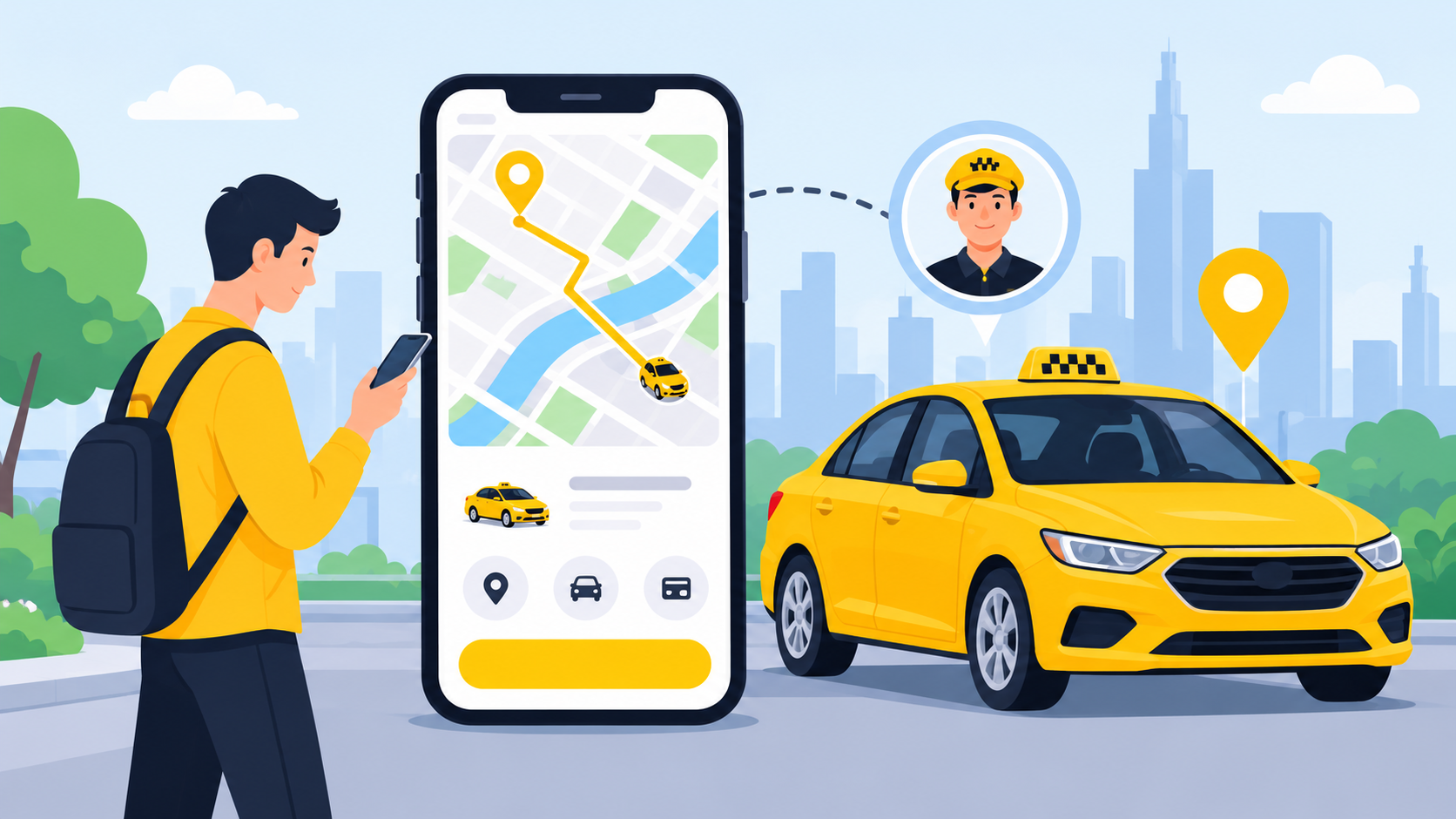
Key Takeaways:
- Taxi app development can cost 8,000–70,000 depending on complexity and customization.
- Core features such as booking, GPS tracking, payments, and driver management form the foundation of the platform.
- Advanced features like surge pricing, analytics, automation, and real-time tracking can increase development costs.
- Starting with an MVP helps businesses test demand while keeping the initial investment manageable.
- Scalable architecture, strong security, and reliable APIs are important for long-term taxi app growth.
Bolt turned a simple idea into a global ride-hailing business: tap, ride, pay. Now founders everywhere want to build their own version for a city, a region, or a niche market. The first question is always the same: what will it cost?
The honest answer is that it depends. A basic MVP with rider and driver apps costs far less than a full platform with surge pricing, live tracking, in-app payments, and an admin dashboard.
Team location, tech choices, and ongoing upkeep also move the number.
This guide breaks down what a Bolt-style taxi app costs in 2027. You will see the features that drive the price, the stages of development, and ways to launch smartly without overspending too early.
Understanding the Bolt Business Model
Bolt runs on the same basic idea as most ride-hailing platforms: connect riders with drivers and take a cut.
But a few specific choices in how Bolt built that marketplace are exactly why its approach is worth studying before building something similar.
1. A Commission-Based Marketplace, Not a Fleet Owner
Bolt doesn't own the cars or employ the drivers directly. It connects independent drivers with riders and takes a commission on every completed trip, which keeps operational overhead relatively low while revenue scales with ride volume.
2. Ride Hailing Still Drives Most of the Revenue
Ride hailing made up about 82 percent of Bolt's total revenue in 2024, even as the company expanded into delivery, scooters, and grocery, confirming rides remain the core engine behind the business.
3. The Market Bolt Operates In Is Genuinely Massive
The global ride-hailing market hit $266.28 billion in 2026 and is projected to reach $513.77 billion by 2031, growing at a 14.05 percent CAGR, which explains why so many regional players keep entering this space.
4. Regional Dominance Matters More Than Global Scale
Bolt doesn't try to beat Uber everywhere. Instead, it's captured over 40 percent market share across Africa specifically, showing that owning a strong regional position can matter more than chasing global number one status.
Must-Have Features for a Bolt-Like Taxi App
A taxi booking app development project lives or dies on a handful of core features working flawlessly, not on how many bells and whistles get bolted on later. Riders and drivers both need the basics nailed before anything else matters.
1. Real-Time GPS Tracking
Riders need to see exactly where their driver is, down to the minute, and drivers need accurate navigation to pick up and drop off efficiently. Without reliable live tracking, the entire trust foundation of the app falls apart fast.
2. Instant Fare Estimation
Before confirming a ride, users expect to see roughly what it'll cost based on distance, time, and current demand. Hiding this until after the trip ends is one of the fastest ways to lose rider trust and get uninstalled.
3. Multiple Payment Options
Cash still matters in plenty of markets, but digital wallets, cards, and in app balances need to work seamlessly too. Riders shouldn't have to think twice about how they're paying once they've already decided to book the ride.
4. Driver and Rider Rating System
A two-way rating system keeps both sides accountable. Riders avoid consistently poor drivers, and drivers can flag problematic riders, which protects the overall experience quality for everyone still actively using the platform.
5. In-App Chat and Call Masking
Riders and drivers need a way to coordinate pickup details without exchanging personal phone numbers. Masked calling and in-app messaging protect both parties' privacy while still making real-time coordination genuinely easy.
6. Separate Driver App With Earnings Dashboard
Drivers need their own dedicated interface showing trip requests, navigation, and a clear breakdown of daily or weekly earnings. A confusing or unclear earnings view is a fast way to lose driver retention over time.
7. SOS and Safety Features
An emergency button that shares live location with trusted contacts or local authorities isn't optional anymore; it's expected. Safety features directly affect whether riders, especially women, feel comfortable using the app regularly.
8. Surge Pricing During Peak Demand
Dynamic pricing that adjusts based on real-time demand keeps enough drivers available during busy periods. Done transparently, it balances supply and demand without feeling like the app is punishing riders unfairly.
Recommended Tech Stack for Building the App
Picking the right tech stack early saves you from painful rebuilds down the road. Here's a combination of proven technologies that handle the real-time demands of a ride-hailing platform without buckling under growing user and driver volume.
1. Backend Framework: Node.js
Node.js handles the constant stream of real-time location updates, trip requests, and driver matching efficiently through its asynchronous, non-blocking architecture. It's become the default choice for most ride-hailing platforms built in the last few years.
2. Frontend Framework: React Native or Flutter
Building separately for iOS and Android doubles your development time and cost. React Native and Flutter let you ship both platforms from a single codebase, which matters a lot when you're trying to launch fast.
3. Database: PostgreSQL With Redis Caching
Any serious taxi booking app development company relies on PostgreSQL for structured trip and payment data, paired with Redis for caching frequently accessed data like driver availability, keeping response times fast even under heavy load.
4. Real-Time Communication: Socket.io or WebSockets
Live GPS tracking and instant trip status updates require a persistent connection between app and server, not repeated polling.
WebSockets keep that connection open, delivering location updates every few seconds without noticeable lag.
5. Maps and Navigation: Google Maps API
Accurate route calculation, ETA estimates, and turn-by-turn navigation all depend on a reliable mapping service.
Google Maps API remains the most widely used option, backed by consistently accurate, regularly updated global map data.
6. Payment Gateway: Stripe or Local Processors
Riders expect seamless checkout, whether paying by card, wallet, or local payment methods specific to their region.
Integrating a reliable gateway with strong fraud protection prevents payment failures from becoming a recurring source of complaints.
7. Cloud Hosting: AWS or Google Cloud Platform
Ride-hailing traffic spikes hard during rush hours and dips overnight, which makes auto-scaling cloud infrastructure essential.
Both AWS and Google Cloud offer the elasticity needed to handle unpredictable demand without overpaying for idle server capacity.
8. Push Notifications: Firebase Cloud Messaging
Keeping riders and drivers informed- trip confirmed, driver arriving, payment processed- depends on reliable push notifications.
Firebase Cloud Messaging handles this across both iOS and Android without requiring separate notification systems for each platform.
Cost to Build a Taxi App Like Bolt in 2027
Building a taxi app like Bolt in 2027 requires careful budgeting across booking, tracking, payments, driver management, and backend systems.
The on-demand app development cost can range from $8,000 to $70,000, depending on features, platforms, integrations, and customization needs today.
1. User Registration and Profile Management
User registration creates the first interaction between riders and your platform. Include phone or email signup, OTP verification, profile creation, password recovery, and social login.
A smooth onboarding flow reduces friction and helps users start booking rides quickly without confusion.
|
Component |
Cost Range |
Description |
|
Signup & Login |
500–600 |
Allows riders and drivers to create accounts using email, phone numbers, passwords, or supported social login options. |
|
OTP Verification |
700–800 |
Adds phone-based verification through one-time passwords to confirm user identity and reduce fake or unauthorized account creation. |
|
User Profiles |
800–1,000 |
Lets users manage personal details, profile photos, saved locations, preferences, contact information, and other account settings. |
2. Ride Booking and Fare Estimation
Ride booking is the core function of a Bolt-like app. Users should enter pickup and destination points, select vehicle types, view estimated fares, confirm requests, and receive booking updates.
A simple flow makes ride ordering faster and improves overall usability.
|
Component |
Cost Range |
Description |
|
Ride Booking |
1,000–1,500 |
Enables users to enter pickup and destination locations, choose a vehicle, confirm rides, and receive booking details within the app. |
|
Fare Estimation |
1,200–1,800 |
Calculates an estimated trip price using factors such as distance, travel time, vehicle category, base fare, and applicable charges. |
|
Vehicle Selection |
800–1,200 |
Allows riders to select different vehicle categories based on their preferred comfort level, passenger capacity, pricing, or availability. |
3. Driver Management System
Driver management helps operators control onboarding, availability, documents, and ride assignments.
Build tools for driver registration, verification, vehicle details, online status, earnings, and trip history. Strong management features also help administrators maintain service quality and resolve operational issues efficiently and smoothly.
|
Component |
Cost Range |
Description |
|
Driver Registration |
1,000–1,500 |
Provides a structured onboarding process where drivers can submit personal details, contact information, vehicle information, and required registration data. |
|
Document Verification |
1,200–1,800 |
Supports uploading and reviewing driving licenses, vehicle documents, insurance details, and other required credentials before approval. |
|
Driver Dashboard |
1,500–2,000 |
Gives drivers access to ride requests, completed trips, earnings, availability settings, performance details, and important account information. |
4. Real-Time Ride Tracking
Real-time location tracking keeps riders informed from pickup through drop-off. The GPS tracking app development cost depends on map APIs, location updates, route visualization, and tracking accuracy.
Reliable tracking improves transparency, estimated arrival times, navigation, and the overall ride experience.
|
Component |
Cost Range |
Description |
|
Map Integration |
1,500–2,000 |
Integrates mapping services so riders and drivers can view locations, routes, pickup points, destinations, and nearby streets in real time. |
|
Live Location |
2,000–3,000 |
Continuously shares the driver's current location with the rider, helping users monitor the vehicle's movement and estimated arrival time. |
|
Route Navigation |
1,500–2,500 |
Provides turn-by-turn navigation and route guidance to help drivers reach pickup and destination points efficiently during every trip. |
5. Fare Calculation and Surge Pricing
Fare calculation determines what riders pay for each trip. Your app can support distance-based pricing, time charges, minimum fares, waiting fees, tolls, and surge pricing.
Flexible pricing rules allow operators to adjust fares for different locations, vehicles, and demand levels.
|
Component |
Cost Range |
Description |
|
Base Fare Logic |
1,500–2,000 |
Establishes the starting fare for rides and provides the foundation for calculating the final trip price based on configured pricing rules. |
|
Distance & Time Pricing |
2,000–3,000 |
Calculates charges according to traveled distance and ride duration, allowing businesses to create flexible and location-specific pricing structures. |
|
Surge Pricing |
2,500–4,000 |
Automatically adjusts fares during high-demand periods, helping balance rider demand with driver availability across busy locations and peak hours. |
6. Push Notifications and Alerts
Push notifications keep riders and drivers informed about important trip events. Send alerts for booking confirmations, driver arrivals, ride starts, cancellations, payments, and promotions.
Timely notifications reduce missed updates and create a smoother experience across the booking and delivery journey.
|
Component |
Cost Range |
Description |
|
Booking Alerts |
800–1,200 |
Sends instant notifications when a ride is requested, accepted, confirmed, cancelled, or completed, keeping users updated throughout the booking process. |
|
Driver Notifications |
1,000–1,500 |
Alerts drivers about new ride requests, pickup details, passenger updates, cancellations, and other important trip-related activities. |
|
Promotional Alerts |
700–1,000 |
Helps businesses send personalized offers, discount codes, seasonal promotions, loyalty rewards, and other marketing messages to customers. |
7. Ratings, Reviews, and Feedback
Ratings and reviews give users a simple way to share feedback after every ride. Let riders rate drivers, and drivers rate passengers.
Add review options, complaint categories, and moderation tools so administrators can monitor service quality and address recurring issues.
|
Component |
Cost Range |
Description |
|
Rating System |
800–1,200 |
Allows riders and drivers to rate each other after completing trips, helping the platform maintain transparency and monitor overall service quality. |
|
Written Reviews |
700–1,000 |
Lets customers share detailed comments about their ride experience, driver behavior, vehicle condition, or other service-related aspects. |
|
Complaint Management |
1,000–1,500 |
Provides users with a structured way to report problems while giving administrators tools to review, categorize, and resolve customer complaints. |
8. Admin Dashboard and Analytics
An admin dashboard gives your team control over users, drivers, rides, fares, payments, promotions, and reports.
Build clear analytics and management screens so operators can identify problems, monitor performance, update settings, and make faster business decisions as demand grows daily.
|
Component |
Cost Range |
Description |
|
User Management |
1,500–2,500 |
Allows administrators to manage customer accounts, review activity, update account information, handle restrictions, and monitor user-related issues. |
|
Driver Management |
2,000–3,000 |
Helps administrators approve drivers, review documents, monitor performance, manage availability, and track driver activity across the platform. |
|
Analytics Dashboard |
2,500–4,000 |
Displays important business metrics such as completed rides, revenue, cancellations, active users, driver activity, and overall platform performance. |
9. Payment Integration and Driver Payouts
Secure payment processing lets riders pay through cards, wallets, bank transfers, or other supported methods.
The mobile payment app development cost depends on gateway integrations, security requirements, transaction flows, refunds, and driver payouts. Choose payment infrastructure to support protected transactions.
|
Component |
Cost Range |
Description |
|
Payment Gateway |
2,000–3,000 |
Connects the app with secure payment providers so riders can complete transactions using cards, online banking, or other supported payment methods. |
|
Digital Wallet |
2,000–3,500 |
Allows users to add funds, store balances, receive refunds, and pay for rides directly through an integrated in-app wallet. |
|
Driver Payouts |
2,500–4,000 |
Helps automate driver earnings calculations and settlements while accounting for commissions, completed trips, incentives, and applicable platform deductions. |
10. Backend, Security, and Scalability
A strong backend connects riders, drivers, payments, maps, notifications, and administrative tools.
Development costs increase with security controls, real-time communication, database architecture, API integrations, and scalability requirements. Investing in reliable infrastructure helps the platform handle growing ride volumes.
|
Component |
Cost Range |
Description |
|
Backend APIs |
4,000–6,000 |
Powers communication between rider, driver, admin, payment, booking, mapping, and notification systems while managing core application processes. |
|
Security |
3,000–5,000 |
Protects sensitive user, payment, and business information through authentication, encryption, access controls, secure APIs, and other security measures. |
|
Cloud & Scalability |
4,000–7,000 |
Provides flexible cloud infrastructure that can support increasing users, rides, transactions, data volumes, and traffic without affecting application performance. |
Revenue Models to Monetize Your Taxi App
Building the app is only half the equation; figuring out how it actually makes money is the other half. Here are the monetization approaches that have proven to work across most successful ride-hailing platforms today.
1. Commission on Every Completed Trip
The core revenue model for most platforms, taking a percentage cut, typically 15 to 25 percent, from each fare. This scales naturally with ride volume and remains the primary income source for platforms like Bolt and Uber.
2. Surge Pricing During Peak Demand
Dynamic pricing during high demand periods increases both fare amounts and your commission take simultaneously. When done transparently, it also helps balance driver supply with rider demand during rush hours or bad weather.
3. Subscription Plans for Frequent Riders
Offering monthly or weekly passes with discounted rates or waived booking fees encourages loyalty among regular commuters. This creates predictable recurring revenue instead of relying purely on per trip commission income alone.
4. In-App Advertising
Once your user base reaches meaningful scale, displaying ads from local businesses or brands within the app, during wait times or on receipt screens, becomes a viable secondary revenue stream without disrupting the core experience.
5. Driver Subscription or Membership Tiers
Many platforms built with on-demand app development services now offer drivers premium tiers with reduced commission rates or priority trip access in exchange for a flat monthly fee, creating additional predictable revenue beyond standard commissions.
6. Cancellation Fees
Charging riders a small fee for last-minute cancellations discourages flaky booking behavior and compensates drivers for wasted time and fuel, while also contributing modestly to overall platform revenue.
7. Corporate and B2B Accounts
Offering dedicated business accounts for companies that need regular employee transportation creates larger, more predictable revenue streams through bulk billing arrangements, often with better margins than individual consumer rides.
8. Partnerships With Local Businesses
Collaborating with hotels, airports, or event venues for exclusive pickup rights or promotional placement can generate direct partnership revenue while also driving consistent ride volume from high-traffic locations
Final Thoughts
Building a taxi app like Bolt in 2027 can cost between $8,000 and $70,000, depending on its features, technology stack, platforms, integrations, and customization level.
A basic MVP can cover essential booking, driver management, payments, GPS tracking, and notifications at a lower cost.
Advanced platforms require larger investments in real-time tracking, dynamic pricing, analytics, security, automation, and scalable backend infrastructure.
Businesses should also budget for third-party APIs, cloud hosting, maintenance, updates, and ongoing support after launch.
Starting with essential features and expanding gradually can help control development expenses while validating market demand.
Working with an experienced development team can further streamline planning, design, development, testing, and deployment while creating a reliable taxi platform that can scale with growing users and ride volumes.
FAQ's
The cost can range from $8,000 to $70,000, depending on features, design, platforms, integrations, backend complexity, security, and customization requirements.
A basic taxi app may take around 3–5 months, while a feature-rich platform with advanced integrations and scalable infrastructure can take significantly longer.
Essential features include user registration, ride booking, fare estimation, GPS tracking, driver management, payments, push notifications, ratings, reviews, and an admin dashboard.
Yes. You can start with an MVP containing core booking, tracking, payment, and driver features. Additional functionality can be introduced after validating customer demand.
GPS tracking costs depend on map APIs, live location updates, navigation, route optimization, and tracking frequency. Advanced tracking generally increases development and integration expenses.
Usually, yes. Rider and driver applications require different interfaces and workflows. A separate admin panel is also useful for managing users, rides, payments, and operations.
A taxi app can support credit and debit cards, digital wallets, online banking, and other region-specific payment methods through suitable payment gateway integrations.
Start with an MVP, prioritize essential features, use reliable third-party APIs, select cross-platform development when suitable, and introduce advanced features in later development phases.
Major cost factors include app complexity, number of platforms, UI/UX design, GPS functionality, payment integration, backend architecture, security, third-party APIs, testing, and maintenance.
Yes. A scalable backend and cloud infrastructure allow businesses to gradually add users, drivers, cities, payment options, features, and integrations without rebuilding the entire platform.