Key Takeaways:
- Stock trading app development cost typically ranges from $8,000 to $70,000.
- Advanced features such as copy trading and real-time analytics can increase development expenses.
- Security, financial APIs, and regulatory requirements should be considered from the beginning.
- Choosing the right technology stack improves scalability, performance, and reliability.
- An experienced development partner can simplify development, testing, deployment, and long-term maintenance
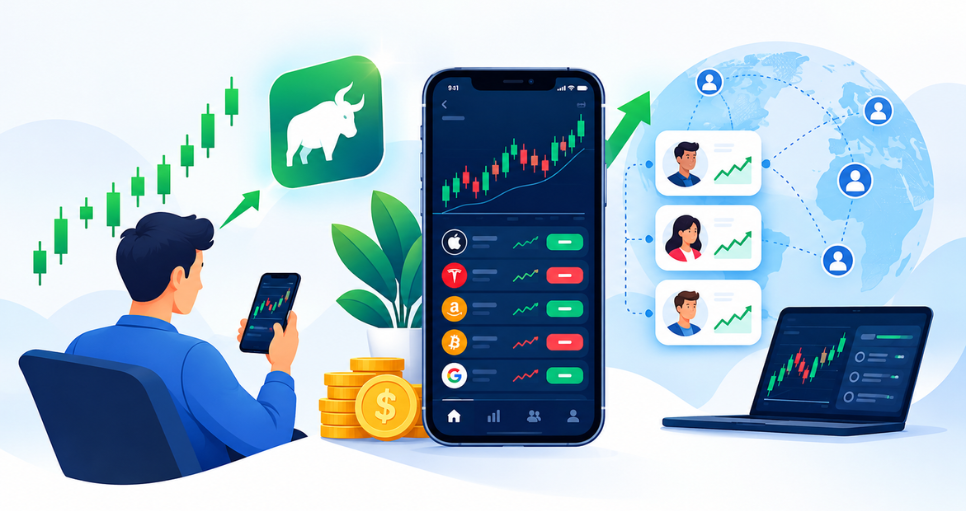
- eToro turned stock trading into something closer to social media, letting users buy shares, follow top traders, and copy their strategies automatically, all from one app.
That model has proven wildly popular, and plenty of businesses now want to build something similar. But before diving in, most founders ask the same question: how much will this actually cost?
eToro-like app development cost depends on far more than just "basic" versus "advanced" features.
Real-time market data, secure payment processing, regulatory compliance, and social trading functionality all add complexity most people underestimate going in.
This guide breaks down exactly what drives that number, from core features and technology choices to a realistic, stage-by-stage cost breakdown.
What Is eToro and Why Businesses Want to Build Something Similar?
eToro pioneered social trading, letting users buy stocks and crypto while following and automatically copying successful traders' strategies.
This social layer turned a traditionally solitary activity into something community-driven, and stock trading app development inspired by this model keeps attracting new businesses.
1. Social Trading Fundamentally Changed User Expectations
eToro's CopyTrader feature let novice investors mirror experienced traders automatically, removing the intimidation factor that kept many people away from investing.
This social, transparent approach to trading built genuine trust and engagement, setting a new standard users now expect from modern trading apps rather than treating it as a bonus feature.
2. The Market Is Still Growing at a Healthy Pace
This isn't a saturated opportunity. The global online trading platform market is valued at approximately $12.57 billion in 2026 and projected to reach $18.18 billion by 2031, growing at a 7.66% CAGR.
Businesses pursuing eToro clone app development now are entering a market with genuine room left to grow.
3. Retail Investor Participation Keeps Climbing
More people are trading than ever before. Retail investors controlled 69.59% of the online trading platform market in 2025, growing at an 8.43% CAGR, driven largely by fractional shares and more accessible, mobile-first trading experiences that lower the barrier to entry for first-time investors.
4. Mobile-First Trading Has Become the Default
Desktop trading terminals are no longer the primary interface.
Mobile apps account for around 53.20% of the US online trading platform market, with roughly 75% of retail trade orders in North America executed through smartphone apps, confirming that mobile experience quality directly determines competitive success in this space.
Must-Have Features for a Stock Trading App Like eToro
A successful eToro-like trading platform needs features that make investing simple, transparent, and engaging.
From secure access to real-time market data, these stock trading app features help users manage portfolios, follow investors, and make informed trading decisions.
1. Copy Trading
Copy trading lets beginners mirror experienced investors automatically, making copy trading app development an important feature for eToro-like platforms.
Users can browse trader profiles, review performance, set investment amounts, and start or stop copying strategies based on preferences.
2. Real-Time Market Data
Real-time market data supports timely investment decisions. During stock trading app development, businesses should integrate live prices, interactive charts, market trends, watchlists, and alerts.
These tools help users monitor assets and respond quickly when market conditions change significantly.
3. Easy Order Placement
A simple interface improves accessibility for beginners and experienced traders.
With online trading app development, platforms can provide easy navigation, quick order placement, portfolio summaries, personalized dashboards, and clear buy or sell actions without creating unnecessary complexity.
4. Portfolio Management
Portfolio management helps users understand their investments and overall performance.
Through investment app development, businesses can offer asset allocation views, profit and loss tracking, transaction histories, diversification insights, and customizable reports that make financial monitoring easier and more organized.
5. Personalized Watchlists
Personalized watchlists allow users to monitor stocks and other assets they find interesting.
Users can add securities, track price movements, compare performance, and receive alerts when selected assets reach specific price levels or experience notable market changes.
6. Strong Security
Strong security protects sensitive financial information and builds user trust. An eToro-like app should include two-factor authentication, biometric login, encryption, secure payment processing, fraud monitoring, and session controls.
These safeguards help reduce unauthorized access and support safer digital investing.
Best Tech Stack for Building a Secure Trading Platform
A secure trading platform needs a reliable trading app technology stack that supports real-time transactions, strong data protection, and seamless performance.
The right combination of programming languages, databases, cloud services, APIs, and security tools creates a scalable platform.
1. Frontend Technologies
Use React.js, Angular, or Flutter to build responsive trading interfaces across web and mobile platforms.
These technologies support interactive dashboards, live charts, portfolio views, watchlists, and smooth navigation while maintaining consistent performance across different devices and screen sizes.
2. Backend Technologies
Node.js, Python, Java, or .NET can power the backend of a trading platform.
They support secure APIs, transaction processing, authentication, portfolio management, and business logic while providing scalability for platforms handling high volumes of concurrent users.
3. Database Solutions
PostgreSQL, MySQL, MongoDB, and Redis can manage different types of trading data.
Relational databases handle transactions and account information, while Redis enables faster access to frequently requested data, helping maintain responsive performance during periods of heavy market activity.
4. APIs and Integrations
APIs connect trading platforms with stock exchanges, payment gateways, market-data providers, and financial services.
During fintech app development, businesses can integrate reliable APIs for real-time prices, order execution, identity verification, payment processing, portfolio synchronization, and other essential financial operations.
5. Cloud Infrastructure
AWS, Microsoft Azure, and Google Cloud provide scalable infrastructure for trading applications.
Cloud services support secure data storage, automated backups, load balancing, monitoring, and disaster recovery, helping platforms maintain availability and performance as user activity and transaction volumes increase.
6. Security Technologies
Security should include TLS encryption, OAuth 2.0, multi-factor authentication, biometric verification, firewalls, and continuous monitoring.
These technologies protect accounts, financial transactions, and sensitive information while helping trading platforms detect suspicious activities and reduce cybersecurity risks effectively.
Stock Trading App Development Cost: A Detailed Breakdown
The stock trading app development cost generally ranges from $8,000 to $70,000, depending on features, technology, security, integrations, and complexity.
Understanding individual cost components helps businesses plan budgets, prioritize functionality, and estimate the investment required for a successful trading platform.
1. Planning and Requirement Analysis
Planning defines the app’s purpose, target users, trading markets, and required functionality.
The eToro like app development cost at this stage depends on research depth, user-flow mapping, technical planning, and requirement documentation needed before development begins.
|
Element |
Estimated Cost |
Description |
|
Market Research |
$500–$600 |
Analyzes competitors, target users, market trends, and trading requirements. |
|
Requirement Planning |
$700–$800 |
Defines essential features, user flows, technical requirements, and project objectives. |
|
Technical Architecture |
$900–$1,000 |
Establishes scalable architecture for secure and efficient application development. |
2. UI/UX Design
UI/UX design shapes how users view markets, place orders, track portfolios, and manage accounts.
The cost to build a stock trading app like eToro can increase with advanced dashboards, interactive prototypes, custom interfaces, and multiple device-specific designs.
|
Element |
Estimated Cost |
Description |
|
Wireframes |
$500–$600 |
Creates basic layouts for screens, navigation, and essential user interactions. |
|
Interactive Prototype |
$700–$800 |
Demonstrates application workflows and interactions before development begins. |
|
Complete UI Design |
$900–$1,000 |
Develops polished interfaces, dashboards, charts, and responsive trading screens. |
3. Frontend Development
Frontend development creates the user-facing trading experience across mobile or web platforms.
Businesses should consider the stock trading app development cost for dashboards, charts, watchlists, order screens, portfolio views, and responsive interfaces that deliver smooth user interactions.
|
Element |
Estimated Cost |
Description |
|
Dashboard |
$700–$800 |
Displays portfolios, market information, account details, and trading activities. |
|
Trading Interface |
$900–$1,000 |
Enables users to conveniently place, modify, and monitor trading orders. |
|
Advanced Charts |
$1,200–$1,500 |
Provides interactive charts for analyzing prices, trends, and market movements. |
4. Backend Development
Backend development handles core trading operations, authentication, portfolio calculations, order processing, and business logic.
The overall fintech app development cost depends on backend architecture, scalability requirements, transaction processing, database complexity, and integrations with external financial services.
|
Element |
Estimated Cost |
Description |
|
User Management |
$700–$800 |
Handles registration, profiles, authentication, permissions, and account management securely. |
|
API Development |
$900–$1,000 |
Connects application services with databases and external financial systems. |
|
Trading Logic |
$1,200–$1,500 |
Processes orders, portfolio calculations, transactions, and trading-related business rules. |
5. Market Data and API Integrations
Real-time market data and third-party integrations can significantly influence expenses.
Custom stock trading app development may require integrations with stock exchanges, market-data providers, payment gateways, identity verification services, analytics tools, and notification systems for complete functionality.
|
Element |
Estimated Cost |
Description |
|
Market Data API |
$900–$1,000 |
Delivers real-time stock prices, market information, and trading data. |
|
Payment Gateway |
$700–$800 |
Enables secure deposits, withdrawals, and other financial transactions. |
|
Exchange Integration |
$1,200–$1,500 |
Connects the platform with exchanges for reliable trading execution. |
6. Security and Compliance
Security is a major investment area because trading platforms manage sensitive financial information and transactions.
The stock trading app development process should include encryption, authentication, fraud detection, access controls, compliance requirements, monitoring, and vulnerability assessments to protect users.
|
Element |
Estimated Cost |
Description |
|
Authentication |
$500–$600 |
Protects accounts through secure login and identity verification mechanisms. |
|
Data Encryption |
$700–$800 |
Secures sensitive financial and personal information during transmission and storage. |
|
Security Auditing |
$900–$1,000 |
Identifies vulnerabilities and evaluates application security against potential threats. |
7. Quality Assurance and Testing
Quality assurance ensures trading features work correctly under different conditions.
The cost to build a stock trading app like eToro can increase when extensive testing is required for functionality, usability, performance, security, APIs, transactions, device compatibility, and complex trading workflows.
|
Element |
Estimated Cost |
Description |
|
Functional Testing |
$500–$600 |
Verifies that application features work correctly according to requirements. |
|
Performance Testing |
$700–$800 |
Measures application speed, stability, and responsiveness under different workloads. |
|
Security Testing |
$900–$1,000 |
Detects vulnerabilities that could compromise user accounts or financial data. |
8. Cloud Infrastructure
Cloud infrastructure supports scalability, availability, backups, monitoring, and secure data storage.
Businesses may also consider mobile payment app development requirements when configuring payment-related services, databases, cloud servers, load balancing, disaster recovery, and infrastructure monitoring.
|
Element |
Estimated Cost |
Description |
|
Cloud Setup |
$700–$800 |
Configures secure cloud environments, servers, storage, and essential services. |
|
Database Configuration |
$900–$1,000 |
Establishes scalable databases for storing and managing trading information. |
|
Load Balancing |
$1,200–$1,500 |
Distributes traffic efficiently to maintain application performance and availability. |
9. Admin Panel Development
An admin panel allows businesses to manage users, transactions, trading activity, reports, notifications, and platform settings.
The stock trading app development cost can vary depending on dashboard complexity, permission levels, analytics requirements, monitoring capabilities, and administrative controls.
|
Element |
Estimated Cost |
Description |
|
User Management |
$500–$600 |
Allows administrators to manage accounts, permissions, and user activities. |
|
Reports Dashboard |
$700–$800 |
Provides centralized reports covering transactions, users, and platform performance. |
|
Advanced Analytics |
$900–$1,000 |
Delivers detailed insights into trading activity and business performance. |
10. Maintenance and Post-Launch Support
Post-launch maintenance keeps the application secure, compatible, and functional as markets, devices, operating systems, and regulations evolve.
eToro clone app development may require ongoing bug fixes, security updates, performance improvements, feature enhancements, monitoring, and technical support after launch.
|
Element |
Estimated Cost |
Description |
|
Bug Fixes |
$500–$600 |
Resolves application errors and maintains smooth functionality after launch. |
|
Security Updates |
$700–$800 |
Keeps security measures updated against emerging cybersecurity threats. |
|
Feature Enhancements |
$900–$1,000 |
Adds improvements and new capabilities based on changing user requirements. |
Key Factors That Influence the Final Cost
Several factors determine the eToro like app development cost, from feature complexity and platform selection to integrations, security, and development expertise.
Understanding these elements helps businesses estimate budgets accurately and choose features that align with their trading goals.
1. Feature Complexity
The number and complexity of features directly affect development expenses.
Online trading app development becomes more expensive when platforms include advanced charts, automated trading, real-time alerts, portfolio analytics, multiple order types, watchlists, and sophisticated account management capabilities for users.
2. Copy Trading Functionality
Copy trading requires specialized functionality, including investor profiles, performance tracking, strategy discovery, automatic trade replication, risk controls, and portfolio synchronization.
Therefore, copy trading app development can increase costs compared with a basic trading application offering standard buying and selling features.
3. Platform Selection
Building for iOS, Android, web, or multiple platforms influences the overall budget.
Developing separate native applications generally requires additional resources, while cross-platform frameworks can reduce expenses. Businesses should select platforms according to their target audience and trading requirements.
4. Technology and AI Integration
Advanced technologies can significantly increase development expenses.
Working with AI app development companies may add costs when implementing intelligent recommendations, predictive analytics, fraud detection, automated insights, personalized experiences, or machine-learning models that require specialized expertise and infrastructure for deployment.
5. Security Requirements
Trading platforms handle sensitive financial and personal information, making security essential.
Costs increase when businesses implement multi-factor authentication, biometric verification, encryption, fraud monitoring, secure APIs, role-based access, vulnerability testing, and continuous security monitoring to protect users and transactions.
6. Third-Party Integrations
Integrations with stock exchanges, market-data providers, payment gateways, identity verification services, analytics platforms, and notification systems affect development costs.
Each integration requires API configuration, testing, maintenance, and security considerations, especially when platforms depend on multiple external financial services.
7. Development Team Location
Developer rates vary considerably depending on geographic location, experience, and expertise.
Hiring an experienced development team in regions with higher hourly rates can increase project expenses, while offshore or nearshore teams may offer competitive pricing without compromising essential technical capabilities.
8. Maintenance and Updates
Development costs continue after launch through maintenance, security updates, bug fixes, performance optimization, infrastructure management, and new feature releases.
Regular updates are particularly important for trading applications because market integrations, operating systems, security requirements, and user expectations continuously evolve.
Choosing the Right Development Partner for Your Trading App
Choosing the right stock trading app development company can significantly impact your platform’s quality, security, scalability, and launch timeline.
Businesses should evaluate technical expertise, financial-industry experience, development processes, communication, and post-launch support before making their final decision.
1. Evaluate Technical Expertise
Review the company’s experience with financial platforms, APIs, cloud infrastructure, security, and scalable applications.
Strong stock trading app development expertise ensures your partner can handle complex trading workflows, real-time data, integrations, and performance requirements while maintaining reliable application architecture.
2. Check Customization Capabilities
Every trading business has different requirements, so customization matters.
A partner experienced in custom stock trading app development should create tailored features, interfaces, workflows, integrations, and dashboards rather than relying entirely on pre-built templates that may limit future growth.
3. Review Portfolio and Case Studies
Examine previous projects, especially applications involving finance, trading, investments, or other regulated industries.
A strong portfolio can demonstrate practical expertise, development quality, problem-solving abilities, technical implementation, and the company’s capability to deliver complex digital financial products successfully.
4. Assess Financial Technology Knowledge
Financial applications require specialized knowledge of transactions, market data, security, and compliance.
A capable partner should understand investment app development requirements and demonstrate familiarity with financial APIs, payment systems, authentication, portfolio management, and other essential investment platform components.
5. Verify Security Practices
Security should remain a top priority when selecting a development partner. Ask about encryption, secure authentication, vulnerability testing, access controls, fraud prevention, data protection, and compliance practices to ensure sensitive financial information and user transactions receive appropriate protection.
6. Consider Development Methodology
Understand how the team manages planning, design, development, testing, deployment, and revisions.
Agile development can provide regular progress updates and flexible improvements, while transparent documentation, defined milestones, and clear deliverables help businesses maintain control over project progress and expectations.
7. Compare Pricing and Engagement Models
Compare quotations based on features, development scope, technology, team expertise, and support rather than choosing the cheapest option.
A transparent development partner should clearly explain costs, timelines, payment structures, maintenance charges, and potential additional expenses before starting.
8. Evaluate Post-Launch Support
Trading applications require continuous monitoring, updates, security improvements, and technical maintenance after launch.
Choose a partner offering dependable post-launch support, bug fixing, performance optimization, infrastructure management, and feature enhancements to keep the platform reliable as requirements evolve.
Final Thoughts
Building a stock trading app like eToro requires more than attractive interfaces and basic trading functionality.
Businesses need a secure technology stack, real-time market data, reliable APIs, intuitive features, and scalable infrastructure to deliver a smooth trading experience.
The stock trading app development cost can range from $8,000 to $70,000, depending on customization, integrations, security requirements, platforms, and overall complexity.
Features such as copy trading, portfolio management, personalized watchlists, and advanced analytics can further influence the budget.
Choosing an experienced development partner helps ensure better technical execution, regulatory awareness, security, and post-launch support.
With proper planning and a clear development strategy, businesses can create a competitive trading platform that meets user expectations while supporting long-term growth and scalability.
FAQ's
A stock trading app can cost approximately $8,000 to $70,000, depending on features, technology, integrations, security, platforms, and development complexity.
Development may take several months, depending on the app’s features, number of platforms, integrations, customization, testing requirements, and development team size.
Essential features include user registration, secure authentication, real-time market data, portfolio management, order placement, watchlists, notifications, payment integration, and transaction history.
The cost depends on the desired eToro-like functionality. Advanced features such as copy trading, real-time data, analytics, and multiple integrations can increase the overall development budget.
Common technologies include React.js, Flutter, Node.js, Python, Java, PostgreSQL, MongoDB, Redis, AWS, Azure, and various financial APIs.
Copy trading requires specialized backend logic, portfolio synchronization, trader-performance tracking, automated trade replication, risk controls, and reliable market integrations, making it more complex than basic trading functionality.
Businesses can begin with an MVP, prioritize essential features, use cross-platform development, select necessary integrations, and gradually introduce advanced functionality based on user feedback.
Trading applications handle sensitive financial and personal information. Strong encryption, authentication, fraud monitoring, secure APIs, access controls, and regular security testing help protect users and transactions.
Yes. Businesses can build native applications separately or use cross-platform technologies such as Flutter or React Native to create applications for both platforms.
Evaluate the company’s financial technology experience, portfolio, technical expertise, security practices, customization capabilities, pricing transparency, development methodology, and post-launch support.

CrinPro
CrinPro Solutions is a leading IT company that helps startups and enterprises build innovative digital products. From intuitive mobile applications and high-performance websites to AI-powered solutions and enterprise software, our team delivers scalable, secure, and user-focused products tailored to unique business needs. With expertise across multiple industries, we transform ideas into digital experiences that drive growth, improve efficiency, and create long-term business value.