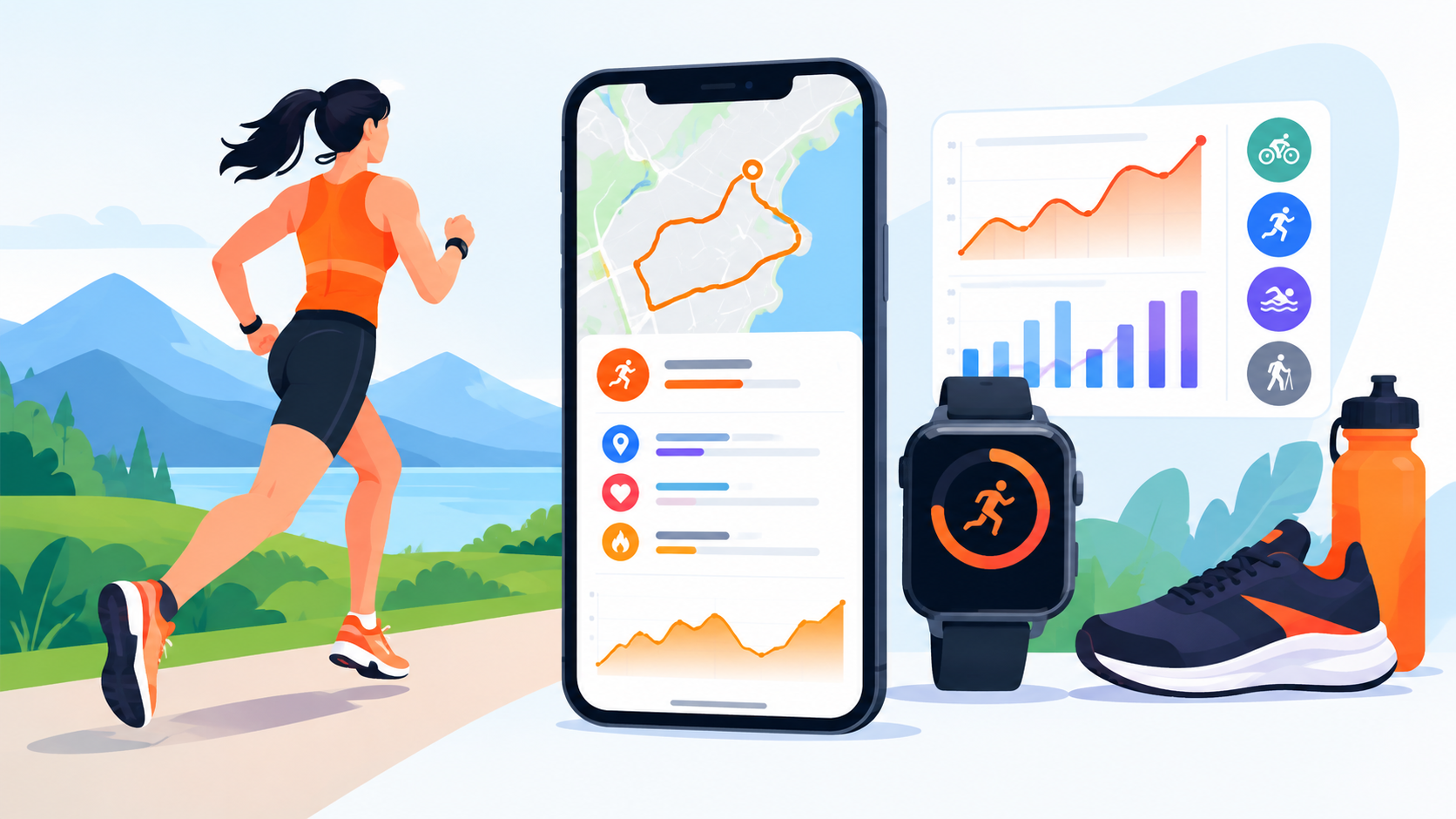
Key Takeaways:
- Cost depends on feature depth, not app category. A basic tracker and a full social fitness platform carry very different price tags despite sharing a label.
- GPS accuracy and segments drive the highest engineering cost. Real-time geospatial matching and signal smoothing are genuinely complex, not simple features.
- Wearable integration cost scales with ecosystem coverage. Each additional device platform, Apple, Garmin, Fitbit, adds separate development work.
- Monetization should be planned early, not after launch. Freemium, premium analytics, and partnerships all shape pricing and feature prioritization decisions upfront.
- Post-launch costs continue well beyond the initial build. Budgeting 15-20% annually for maintenance prevents surprises after the app goes live.
Strava didn't become the default app for runners and cyclists by accident. GPS tracking that actually stays accurate over a three-hour ride, social feeds that keep people motivated, segment leaderboards that turn a solo workout into quiet competition- all of it adds up to something far more complex than a basic step counter.
That complexity is exactly why fitness app development costs in 2027 vary so widely depending on who you ask.
A simple activity tracker and a full GPS-based social fitness platform aren't the same project, even though both technically qualify as "a fitness app."
This guide breaks down what drives the cost of building something like Strava, feature by feature, so you can budget for what your app genuinely needs, not a vague industry average.
What Makes an App Like Strava, and Why Do Costs Vary So Much?
Strava isn't just a tracker it's a connected system of GPS data processing, social features, and performance analytics working together.
Understanding what actually goes into that system explains why quotes for a similar app vary so dramatically.
1. GPS Tracking Accuracy Drives Significant Engineering Complexity
Fitness app development cost climbs quickly once GPS accuracy becomes a real requirement, not just a nice-to-have.
Maintaining precise location tracking over hours of movement, accounting for signal drift, tunnels, and battery optimization, requires genuinely sophisticated engineering work most basic apps never need.
2. Social Features Turn a Tracker Into a Platform
Activity feeds, following other athletes, kudos, and comments transform a solo tracking tool into a genuine social platform, which means building and maintaining real-time feeds, notifications, and privacy controls.
This social layer alone often rivals the core tracking feature in development complexity.
3. Segments and Leaderboards Require Dedicated Backend Logic
Strava's segment feature, comparing your time on a specific route against other athletes, needs its own backend system tracking historical performance data across potentially millions of route overlaps.
This isn't a simple database query; it's a genuinely complex geospatial matching problem at scale.
4. Data Volume and Storage Scale Differently Than Typical Apps
Every recorded activity generates continuous GPS coordinates, heart rate data, and pace metrics, accumulating into massive datasets per active user over time.
Storing, querying, and analyzing this volume efficiently requires infrastructure decisions most standard consumer apps simply don't have to consider.
Key Features That Define a Strava-Like Fitness App
Not every fitness app needs every feature, but these six define what separates a Strava competitor from a basic tracker.
Understanding these fitness app features upfront helps scope a realistic project instead of underestimating what a genuinely competitive app actually requires.
1. GPS Activity Tracking
Real-time route tracking with distance, pace, elevation, and speed forms the foundation of any serious fitness app development effort.
Accuracy here depends on signal smoothing and background location handling that keeps tracking reliable even when the phone's screen is off during a long run.
2. Wearable Device Integration
Syncing with Apple Watch, Garmin, Fitbit, and other wearables lets users track heart rate, cadence, and other metrics beyond what a phone alone can capture.
Wearable app development cost adds up quickly here, since each device platform often requires its own dedicated integration work.
3. Social Feed and Kudos System
An activity feed showing followed athletes' workouts, with likes and comments, is what turns a solo fitness app into something users check daily out of habit.
This requires real-time feed generation, notification infrastructure, and privacy controls users can configure for their own activities.
4. Segments and Leaderboards
Comparing performance on specific route segments against other users, both friends and the broader community, adds a competitive layer that keeps engaged athletes coming back.
This feature depends on matching GPS data against segment databases efficiently, even as segment volume grows into the millions.
5. Training Analytics and Performance Trends
Heart rate zones, training load, pace trends over time, and personalized insights turn raw activity data into something genuinely useful for serious athletes tracking progress.
This analytics layer requires solid data processing infrastructure, not just simple charts pulled directly from stored activity data.
6. Route Planning and Discovery
Letting users explore popular routes in a new area, based on where other athletes have actually run or ridden, helps with both motivation and safety when exploring unfamiliar locations.
This feature relies on aggregated, anonymized route data pulled from the broader user base.
Tech Stack for Building a Strava-Like Fitness App
Choosing the right fitness app technology stack matters more here than in typical apps, given the real-time location processing and social features involved.
Here's what a production-grade Strava competitor typically needs across mobile, backend, and data infrastructure.
1. Mobile Frontend and GPS Handling
React Native or Flutter can work for basic tracking, but native development (Swift, Kotlin) often becomes necessary for reliable background GPS tracking and battery optimization.
GPS tracking app development cost tends to rise here, specifically when native-level location handling is required for genuine accuracy.
2. Backend Framework and API Layer
Node.js, Python, or Go commonly power the backend, exposing APIs that handle activity uploads, social feed generation, and segment matching.
Go is increasingly popular here specifically for its performance advantages when processing large volumes of GPS coordinate data efficiently at scale.
3. Geospatial Database and Segment Matching
PostGIS, a geospatial extension for PostgreSQL, handles the route matching and spatial queries that power segments and leaderboards.
This is one area where fitness app development genuinely requires specialized geospatial expertise, not just standard database skills most backend teams already have.
4. Wearable Device SDKs and Integrations
Apple HealthKit, Google Fit, and manufacturer-specific SDKs (Garmin Connect, Fitbit) each require separate integration work to pull heart rate, cadence, and other sensor data reliably.
Supporting multiple wearable ecosystems well means budgeting real development time for each platform individually.
5. Real-Time Data Processing Pipeline
Activity data needs processing for elevation smoothing, pace calculation, and segment matching shortly after upload, often through a queue-based pipeline (Kafka, RabbitMQ) rather than blocking the user's upload experience while calculations run synchronously in the background.
6. Cloud Infrastructure and Media Storage
AWS, Google Cloud, or Azure typically host the platform, with object storage handling activity photos and route data separately from the core database.
Autoscaling infrastructure matters here too, since usage spikes predictably around weekends and popular race or event days.
Fitness App Like Strava Cost Breakdown in 2027
A Strava-like fitness app typically costs between $7,000 and $80,000, depending on feature depth and platform coverage.
Fitness app development cost varies this widely because a basic tracker and a full social fitness platform are fundamentally different builds, even under the same category name.
1. Discovery and Requirements Planning
Every project starts with defining scope, target platforms, and which features actually matter for your specific audience, casual joggers versus competitive athletes.
Skipping this stage is one of the most common reasons the cost to build a fitness app like Strava climbs well past initial estimates.
|
Tier |
What's Included |
Cost Range |
|
Basic |
Requirements gathering, user persona definition, single-platform scope (iOS or Android only) |
$500 – $600 |
|
Mid-Level |
Competitor feature analysis, multi-platform scoping (iOS + Android), technical feasibility review |
$700 – $800 |
|
Enterprise |
Full market research, monetization strategy, regulatory/data-privacy review, multi-market planning |
$900 – $1,000 |
2. UI/UX Design
Fitness apps need interfaces that display dense data, maps, charts, metrics clearly without overwhelming users mid-workout or post-activity.
Getting this balance right between information density and simplicity is where a meaningful share of Strava app development cost actually gets spent early on.
|
Tier |
What's Included |
Cost Range |
|
Basic |
Low-fidelity wireframes for core screens (tracking, activity summary, profile) |
$1,100 – $1,200 |
|
Mid-Level |
Clickable prototypes, full design system, activity feed and leaderboard screens |
$1,300 – $1,400 |
|
Enterprise |
Custom data visualization design, dark mode, accessibility compliance, design QA rounds |
$1,500 – $1,600 |
3. GPS Activity Tracking
Real-time route tracking with distance, pace, and elevation forms the technical foundation of the entire app.
Anyone researching how to build a fitness app like Strava quickly learns that this accuracy work- signal smoothing, background tracking, battery optimization- is where real engineering effort concentrates.
|
Tier |
What's Included |
Cost Range |
|
Basic |
Simple distance/time/speed tracking using standard device GPS, single activity type |
$1,700 – $1,800 |
|
Mid-Level |
Elevation gain tracking, pace zone calculation, reliable background tracking with screen off |
$1,900 – $2,000 |
|
Enterprise |
Advanced signal smoothing algorithms, sensor fusion, multi-sport tracking (run, ride, swim, hike) |
$2,100 – $2,200 |
4. Wearable Device Integration
Syncing with Apple Watch, Garmin, and Fitbit lets users capture heart rate and cadence data beyond what a phone alone provides.
A capable fitness app development company typically scopes this per ecosystem, since cost scales with how many wearable platforms need support at launch.
|
Tier |
What's Included |
Cost Range |
|
Basic |
Apple HealthKit or Google Fit integration only, basic heart rate sync |
$2,300 – $2,400 |
|
Mid-Level |
Apple Watch + Garmin Connect integration, heart rate and cadence data sync |
$2,500 – $2,600 |
|
Enterprise |
Full ecosystem support (Apple, Garmin, Fitbit, Wahoo), real-time live metrics during activity |
$2,700 – $2,800 |
5. Social Feed and Kudos System
An activity feed with likes, comments, and following other athletes is what turns the app into a daily habit rather than a workout-only tool.
Fitness app development cost in 2027 rises meaningfully here, since real feed infrastructure requires far more than a simple activity list.
|
Tier |
What's Included |
Cost Range |
|
Basic |
Manual activity sharing to a public or private profile, no real-time feed |
$2,900 – $3,000 |
|
Mid-Level |
Real-time activity feed, kudos (likes), comments, follow/following system |
$3,100 – $3,200 |
|
Enterprise |
Advanced privacy controls (per-activity visibility), push notifications, activity feed personalization |
$3,300 – $3,400 |
6. Segments and Leaderboards
Matching GPS routes against segment databases to power leaderboards is complex geospatial engineering, and cost rises significantly as segment volume and matching accuracy requirements increase, closer to social media app development cost territory than a typical utility app.
|
Tier |
What's Included |
Cost Range |
|
Basic |
Manual route comparison against a user's own past activities only |
$3,500 – $3,600 |
|
Mid-Level |
User-created segments, local leaderboards among followed athletes |
$3,700 – $3,800 |
|
Enterprise |
Real-time global segment matching, age/gender leaderboard filters, KOM/QOM-style rankings |
$3,900 – $4,000 |
7. Training Analytics and Insights
Heart rate zones, training load, and performance trends require solid data processing infrastructure to turn raw activity data into genuinely useful insights.
This analytics depth is a major reason fitness app development cost skews higher than a basic tracking-only app.
|
Tier |
What's Included |
Cost Range |
|
Basic |
Basic post-activity stats: distance, pace, time, calories, simple charts |
$4,100 – $4,200 |
|
Mid-Level |
Heart rate training zones, weekly/monthly trend analysis, personal records tracking |
$4,300 – $4,400 |
|
Enterprise |
Predictive performance insights, training load/recovery scoring, race time predictions |
$4,500 – $4,600 |
8. Route Planning and Discovery
Letting users explore popular routes based on aggregated community data helps with both motivation and safety, requiring anonymized data aggregation across the broader user base. This is one more feature that pushes the cost to build a fitness app like Strava toward the higher end.
|
Tier |
What's Included |
Cost Range |
|
Basic |
Manual route search and saved routes list |
$4,700 – $4,800 |
|
Mid-Level |
Popular route suggestions based on nearby community activity heatmaps |
$4,900 – $5,000 |
|
Enterprise |
AI-based personalized route recommendations by fitness level, terrain, and past preferences |
$5,100 – $5,200 |
9. Backend, Geospatial Database, and Infrastructure
The backend handling GPS data processing, segment matching, and cloud infrastructure is where much of the app's technical complexity, and a large share of total Strava app development cost, genuinely concentrates.
|
Tier |
What's Included |
Cost Range |
|
Basic |
Standard backend setup, relational database, single-region hosting |
$5,300 – $5,400 |
|
Mid-Level |
PostGIS geospatial database, queue-based processing pipeline for activity uploads |
$5,500 – $5,600 |
|
Enterprise |
Fully scalable infrastructure, autoscaling, multi-region deployment, CDN for media storage |
$5,700 – $5,800 |
10. QA, Launch, and Post-Launch Support
Testing across real GPS scenarios, deploying to app stores, and providing ongoing support and monitoring round out the total project cost, and depend heavily on how much of the fitness app technology stack needs validation across different devices and conditions.
|
Tier |
What's Included |
Cost Range |
|
Basic |
Standard QA, single-platform app store submission and launch |
$5,900 – $6,000 |
|
Mid-Level |
Multi-platform testing (iOS + Android), real-world GPS field testing, phased rollout |
$6,100 – $6,200 |
|
Enterprise |
Full QA across devices, performance monitoring setup, 3-6 months post-launch support |
$6,300 – $6,400 |
Factors That Influence Total Development Cost in 2027
Beyond individual features, several broader factors shape fitness app development cost in 2027 across the entire project.
Understanding these upfront helps you interpret why two seemingly similar quotes can differ significantly once real requirements get compared side by side.
1. App Complexity and Feature Scope
The fitness app development process costs dramatically more when it includes segments, social feeds, and predictive analytics compared to a basic activity tracker.
Defining a realistic minimum viable product upfront, rather than trying to build every feature at launch, keeps initial cost genuinely manageable.
2. Platform Coverage: iOS, Android, or Both
Anyone researching how to build a fitness app like Strava should budget separately for each platform, since native iOS and Android development essentially doubles certain costs compared to a single-platform launch.
Cross-platform frameworks reduce this gap somewhat, but rarely eliminate it for GPS-heavy apps.
3. Team Location and Development Rates
Development rates vary significantly by region; agencies in North America and Western Europe typically charge more per hour than teams in South Asia or Eastern Europe.
This difference can meaningfully shift total project cost even when the actual scope of work remains essentially identical.
4. In-House Team vs. Outsourced Development
Building with an in-house team offers more control but carries higher fixed costs, salaries, benefits, and tooling, regardless of project pace.
Working with an established fitness app development company often reduces upfront cost and timeline risk, particularly for teams without prior GPS or geospatial experience.
5. Third-Party API and Service Costs
Mapping services, wearable SDKs, push notification providers, and cloud hosting all carry ongoing licensing or usage-based fees beyond the initial development cost.
These recurring costs should be budgeted separately, since they continue well after the app itself has already launched to users.
6. Data Storage and Infrastructure Scale
Storing years of detailed GPS, heart rate, and activity data for a growing user base requires infrastructure that scales accordingly, and costs rise directly with both user count and how much historical data each user accumulates over time.
7. Regulatory and Data Privacy Requirements
Handling health and location data means complying with regulations like GDPR or HIPAA-adjacent standards depending on the target market, adding development time for consent flows, data handling policies, and security auditing that a simpler app wouldn't necessarily require.
8. Post-Launch Support and Iteration Needs
Ongoing maintenance, OS compatibility updates, and feature iteration based on real user feedback continue well beyond initial launch, typically adding 15-20% of the original development cost annually to the total cost of ownership over time.
Monetization Models for a Strava-Like Fitness App
Development cost is only half the financial picture; monetization determines whether that investment actually pays off.
From subscriptions to wearable app development services that unlock premium hardware integrations, here are the eight models shaping how fitness apps generate real revenue.
1. Freemium Subscription Model
Core tracking features stay free, while advanced analytics, training plans, and segment leaderboards sit behind a paid subscription tier.
This model works well for fitness apps specifically because it lets users experience genuine value before committing to a recurring monthly or annual payment.
2. Premium Tier With Advanced Analytics
A dedicated premium tier unlocks deeper insights, heart rate zone analysis, training load scoring, and race time predictions that casual users don't need but serious athletes actively want.
Pricing this tier based on genuine analytical depth tends to convert better than an arbitrary feature paywall.
3. Wearable Ecosystem Partnerships
Partnering with wearable manufacturers for deeper integration, exclusive data access, or co-marketing arrangements creates both direct revenue and user acquisition channels.
These partnerships often depend on genuinely reliable wearable app development services, since manufacturers won't partner with an unreliable integration layer.
4. In-App Purchases for Digital Goods
Custom route badges, achievement unlocks, or branded virtual gear give users optional ways to spend within the app beyond a core subscription.
This model works best as a supplement to subscription revenue, not a primary monetization strategy on its own.
5. Branded Challenges and Event Partnerships
Partnering with race organizers, gear brands, or fitness events to host branded challenges within the app creates sponsorship revenue while also driving genuine user engagement.
This model works particularly well once the app has built a large, active community worth advertisers paying to reach.
6. Affiliate and Marketplace Commissions
Recommending gear, nutrition products, or race registrations through affiliate partnerships generates commission revenue without requiring users to pay anything directly.
This works best when recommendations feel genuinely relevant to the user's specific activity data, not generic advertising unrelated to their actual training.
7. Corporate and Team Wellness Licensing
Licensing the platform to companies for employee wellness programs, tracking team challenges and aggregate fitness metrics, opens a B2B revenue stream separate from individual consumer subscriptions.
This model often commands higher per-user pricing than a typical direct-to-consumer subscription.
8. Data Licensing for Research and Urban Planning
Aggregated, anonymized activity data, popular running routes, and cycling patterns have genuine value to urban planners and researchers studying mobility patterns.
This model requires careful privacy handling and explicit user consent, but represents a revenue stream most fitness apps never fully explore.
Final Thoughts
Building a fitness app like Strava in 2027 isn't a fixed-price project, it's a range shaped by how much GPS accuracy, social infrastructure, and analytics depth your specific audience actually needs.
A basic tracker with core GPS features and simple activity sharing sits toward the lower end of the range, while a full social fitness platform with segments, wearable integration, and predictive analytics pushes toward $80,000 or beyond.
The smartest approach isn't building every feature at launch; it's scoping a genuinely useful MVP, choosing the right monetization model early, and budgeting for the ongoing costs that continue well after launch.
Whether you're targeting casual joggers or competitive athletes, the same principle holds: know exactly which features earn their cost before committing budget to them.
FAQ's
A basic single-platform tracker with core GPS features typically starts around $7,000 to $20,000, depending on design and integration complexity.
Segments and leaderboards, since matching GPS routes against a growing database in real time requires complex geospatial engineering.
Most projects take 4 to 9 months, depending on feature scope, platform coverage, and how many wearable integrations are included.
Cross-platform works for many features, but native development is often necessary for reliable background GPS tracking and battery optimization.
Each device ecosystem, Apple, Garmin, Fitbit, requires separate SDK integration work, and supporting multiple platforms adds up quickly.
Freemium subscriptions tend to work best initially, letting users experience core value before converting to a paid analytics tier.
Yes, and it's usually smarter. A focused MVP with core tracking and social features lets you validate demand before expanding.
Typically 15-20% of the original development cost annually, covering OS updates, bug fixes, and continued feature iteration.
Not for basic distance tracking, but it becomes essential once segments, leaderboards, or route discovery features are added.
Yes, especially for apps handling health and location data, GDPR and similar regulations require dedicated consent flows and security auditing.

CrinPro
CrinPro Solutions is a leading IT company that helps startups and enterprises build innovative digital products. From intuitive mobile applications and high-performance websites to AI-powered solutions and enterprise software, our team delivers scalable, secure, and user-focused products tailored to unique business needs. With expertise across multiple industries, we transform ideas into digital experiences that drive growth, improve efficiency, and create long-term business value.