Key Takeaways :
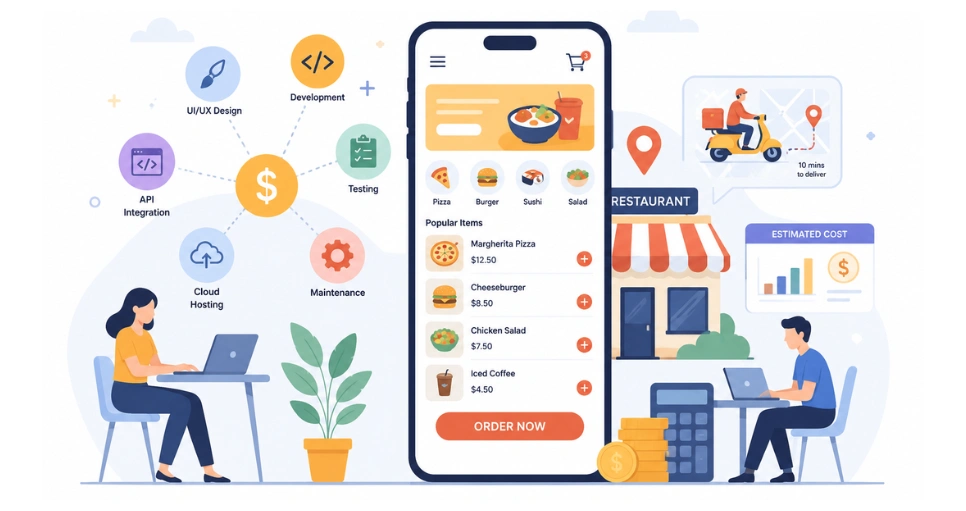
- Restaurant app development costs range between $8,000 and $70,000. Where you allocate that budget across features, design, and infrastructure determines how well your app actually performs in the real world.
- Launching with core features like online ordering, payments, and tracking is smarter than building everything at once. A focused MVP validates your model before significant budget gets committed to advanced functionality.
- Choosing a team based on experience and relevant portfolio rather than the lowest price protects your budget, your timeline, and the long-term quality of your restaurant app.
- Every feature added to your app increases design, development, and testing requirements. Prioritizing features your customers will actually use keeps costs controlled without sacrificing the experience that matters most.
- Building the app is only the beginning. Security updates, bug fixes, OS compatibility, and feature additions require ongoing budget planning. Setting aside 15 to 20 percent of your build cost annually keeps your app competitive and reliable.
The restaurant industry has shifted dramatically over the past few years. Customers no longer just walk in and order.
They browse menus online, schedule pickups, track deliveries in real time, and leave reviews before they even finish their meal.
For restaurant owners, having a dedicated app is no longer a luxury reserved for big chains. It is a competitive necessity that directly impacts revenue, customer retention, and brand loyalty.
But before jumping into development, understanding the real restaurant app development cost is what separates smart investments from expensive regrets.
Prices vary widely depending on features, platform choice, and the team you hire.
In this guide, we break down every cost factor, from design and development to launch and long-term maintenance, so that you can plan your budget with complete confidence.
Why Are Restaurant Apps Worth the Investment in 2026?
Restaurant apps are not an expense. They are a revenue channel, a loyalty tool, and a direct line to your customer all at once. Here is why investing in one in 2026 makes more business sense than ever before.
1. Customer Expectations Have Permanently Shifted
Convenience is no longer a bonus. It is the baseline. Diners expect to order, pay, and track their food from a single app without calling anyone or waiting in line. Restaurants that meet that expectation keep customers. Those that do not lose them to competitors who do.
2. The Market Numbers Make a Compelling Case
Online food delivery revenue is projected to reach $1.29 trillion globally by 2027, making it one of the fastest-growing segments in digital commerce. Restaurants with dedicated apps capture a significantly larger share of that growth compared to those relying entirely on third-party platforms.
3. Direct Orders Mean Higher Profit Margins
Third-party delivery platforms charge commissions anywhere between 15 and 30 percent per order. Restaurants using their own ordering apps reduce those costs dramatically while building direct customer relationships that no third-party platform can own. According to the National Restaurant Association, direct digital ordering continues to grow year over year.
The Features That Define a Profitable Restaurant App
Features are what turn a restaurant app from a digital menu into an actual revenue driver. The right ones keep customers coming back. The wrong ones or the missing ones push them straight toward a competitor.
1. Intuitive Menu Management and Real-Time Updates
A profitable restaurant app lets owners update prices, swap items, and flag sold-out dishes instantly without touching a line of code. When the menu always reflects reality, customers order with confidence and kitchens avoid the frustration of constantly canceling unavailable items.
2. Seamless Online Ordering and Scheduling
Customers want to order ahead, schedule pickups, and customize their meals without friction. A clean ordering flow with clear customization options and accurate time estimates reduces cart abandonment significantly and turns first-time app users into repeat customers who prefer ordering directly over any third-party platform.
3. Integrated Loyalty and Rewards Program
Loyalty programs built directly into the app drive repeat visits better than any discount campaign. When customers earn points, unlock rewards, and receive personalized offers inside the same app they order from, engagement stays high and the average customer lifetime value increases consistently over time.
4. Real-Time Order Tracking and Notifications
Nobody wants to wonder where their food is. Real-time tracking with automatic push notifications for order confirmation, preparation updates, and delivery status keeps customers informed and reduces the volume of where is my order support calls your team has to handle every single day.
5. Secure and Flexible Payment Options
A restaurant app that only accepts one or two payment methods leaves money on the table. Supporting credit cards, digital wallets, and buy-now-pay-later options removes checkout friction entirely and ensures customers can complete their order quickly regardless of their preferred payment method or device.
6. Table Reservation and In-App Waitlist Management
For dine-in-focused restaurants, table reservations built directly into the app eliminate the back-and-forth of phone bookings. Customers book in seconds, receive instant confirmations, and join digital waitlists without standing at a host stand. That convenience alone drives more consistent foot traffic and repeat reservations.
Restaurant App Development Cost Breakdown in 2026
Building a restaurant app is a serious but rewarding investment. Understanding the real restaurant app development cost upfront keeps your budget realistic and your planning sharp.
Costs typically range between $8,000 and $70,000 depending on features, platform choice, and your development team. Here is a transparent, stage-by-stage breakdown of exactly where your budget goes.
1. UI/UX Design
The cost to build a restaurant app starts with design, and skipping it is never a smart move. A clean, food-forward interface with intuitive navigation requires serious design investment from wireframes through final screens to deliver an experience that feels premium and effortless from the first tap.
|
Design Component |
What It Covers |
Estimated Cost |
|
Wireframing & Prototyping |
User flow mapping, screen layouts, and clickable prototypes for stakeholder review |
$500 – $900 |
|
Visual UI Design |
Final screen designs, typography, color systems, and food-forward visual identity |
$800 – $1,400 |
|
UX Research & Testing |
Customer journey mapping, usability testing, and menu browsing flow refinement |
$400 – $700 |
2. Frontend Development
Restaurant app development pricing rises with frontend complexity.
Building a fast, visually appealing interface across iOS and Android requires developers who understand both performance optimization and the specific expectations of hungry users who want zero friction between opening the app and placing an order.
|
Frontend Component |
What It Covers |
Estimated Cost |
|
Mobile App (iOS & Android) |
Cross-platform build using React Native or Flutter for both operating systems |
$1,500 – $2,500 |
|
Menu & Ordering Interface |
Product browsing, customization options, cart management, and checkout screen build |
$900 – $1,500 |
|
UI Component Library |
Reusable design components and a consistent style system across all app screens |
$500 – $800 |
3. Backend Development
Experienced app development companies know that the backend is where most of the technical heavy lifting happens.
It handles orders, user accounts, menu data, and payment processing silently behind every tap without delays, errors, or downtime during your busiest service hours.
|
Backend Component |
What It Covers |
Estimated Cost |
|
Core API Development |
RESTful APIs for menu management, orders, user accounts, and notifications |
$1,800 – $2,800 |
|
Database Architecture |
Structured database setup for menu items, orders, customers, and transaction records |
$800 – $1,300 |
|
Third-Party Integrations |
Connecting delivery platforms, analytics tools, and marketing services via APIs |
$500 – $900 |
4. Online Ordering and Scheduling System
The restaurant ordering app development cost reflects how critical this feature is to your entire revenue operation.
The ordering system needs to handle menu customization, special instructions, scheduled pickups, and real-time availability updates without a single point of friction that causes cart abandonment.
|
Ordering Component |
What It Covers |
Estimated Cost |
|
Order Management System |
End-to-end order flow from placement through kitchen confirmation and fulfillment |
$1,000 – $1,800 |
|
Scheduled Pickup Logic |
Time slot selection, availability controls, and advance order management system |
$500 – $800 |
|
Menu Customization Engine |
Item modifier setup, dietary filters, and special instruction handling at checkout |
$300 – $600 |
5. Payment Gateway Integration
Understanding food delivery app development cost means recognizing that payment integration is non-negotiable. Supporting cards, digital wallets, and contactless payments with a fast, secure checkout experience directly impacts conversion rates and determines how many first-time users become loyal repeat customers over time
|
Payment Component |
What It Covers |
Estimated Cost |
|
Multi-Method Payment Setup |
Stripe or Square integration supporting cards, Apple Pay, and Google Pay |
$600 – $1,000 |
|
Tipping and Gratuity System |
Customizable tip prompts and gratuity options built into the checkout flow |
$200 – $400 |
|
Secure Transaction Handling |
PCI compliance setup, encryption, and fraud prevention measures |
$300 – $500 |
6. Real-Time Order Tracking
Any solid mobile app development company will tell you that real-time tracking is one of the most impactful features you can add. Customers who can see exactly where their order stands are significantly less likely to call your restaurant, reducing support volume and building post-order confidence.
|
Tracking Component |
What It Covers |
Estimated Cost |
|
Order Status Engine |
Real-time order stage updates from confirmed through prepared and out for delivery |
$700 – $1,100 |
|
Push Notification System |
Automated alerts for order confirmation, preparation updates, and delivery arrival |
$250 – $450 |
|
Delivery Driver Tracking |
GPS-based live driver location visible to customers during active deliveries |
$500 – $800 |
7. Loyalty and Rewards Program
Custom restaurant app development cost rises meaningfully when a loyalty program is included, but the return on that investment makes it worth every dollar. Points systems, reward unlocks, and personalized offers built into the ordering flow increase visit frequency and raise average order value consistently.
|
Loyalty Component |
What It Covers |
Estimated Cost |
|
Points and Rewards Engine |
Logic for earning, tracking, and redeeming loyalty points across all orders |
$800 – $1,200 |
|
Personalized Offer System |
Automated discount triggers based on order history and customer behavior patterns |
$400 – $700 |
|
Referral Program Setup |
Customer referral tracking, reward distribution, and new user acquisition logic |
$300 – $500 |
8. Table Reservation and Waitlist Management
How much does it cost to develop a restaurant app with reservation features depends heavily on how sophisticated your booking system needs to be. Digital waitlist management, instant confirmations, and automated reminders keep your front-of-house operation running smoothly while giving customers the seamless experience they expect.
|
Reservation Component |
What It Covers |
Estimated Cost |
|
Table Booking System |
Real-time availability display, party size selection, and instant booking confirmation |
$700 – $1,100 |
|
Digital Waitlist Management |
Virtual queue system with live wait time updates and automated customer notifications |
$300 – $600 |
|
Reservation Reminder Alerts |
Automated SMS and push notification reminders sent before confirmed booking times |
$150 – $300 |
9. Admin Panel and Restaurant Dashboard
Keeping restaurant mobile app development cost under control long-term depends heavily on having a strong admin panel your team can actually use without developer support. Menu updates, order management, promotional campaigns, and performance analytics all need to live in one centralized management interface.
|
Admin Component |
What It Covers |
Estimated Cost |
|
Restaurant Admin Dashboard |
Menu management, order oversight, staff controls, and daily operations interface |
$1,000 – $1,600 |
|
Promotions and Discount Engine |
Flash deal setup, coupon management, and automated promotional rule configuration |
$350 – $600 |
|
Sales Analytics and Reporting |
Revenue tracking, popular item insights, and customer behavior reporting tools |
$250 – $450 |
10. QA Testing and Launch Support
Reputable on-demand app development companies never skip comprehensive testing before launch. Shipping a buggy restaurant app is one of the most damaging things a restaurant brand can do digitally. Strong QA combined with a solid app store strategy ensures your app reaches customers in perfect condition.
|
Launch Component |
What It Covers |
Estimated Cost |
|
Functional and Device Testing |
End-to-end testing across iOS, Android, screen sizes, and OS versions |
$500 – $800 |
|
Performance and Load Testing |
Stress testing under peak order volumes to ensure stability during busy service hours |
$250 – $450 |
|
App Store Submission and ASO |
Listing setup, screenshots, keyword optimization, and compliance review for both stores |
$150 – $300 |
Factors That Push Restaurant App Costs Up and How to Control Them
Not every restaurant app costs the same to build. Several decisions made early in the process have an outsized impact on your final restaurant app development cost. Here are the eight biggest cost drivers and exactly how to keep them in check.
1. Choosing Native Development Over Cross-Platform
Even experienced artificial intelligence development companies recommend cross-platform frameworks for most restaurant apps. Building separate native apps for iOS and Android nearly doubles your frontend development cost with two codebases, two development timelines, and two rounds of testing going forward.
How to control it: Start with React Native or Flutter to serve both platforms from a single codebase.
2. Overloading the First Version With Too Many Features
The cost to build a restaurant app rises sharply when too many features get packed into version one. Most first-version features go unused by customers, making them an expensive lesson in what your audience actually needs versus what seemed important during the planning stage.
How to control it: Launch with core features only and add advanced functionality based on real user feedback.
3. Skipping the Discovery and Planning Phase
Jumping straight into development without a clear plan is one of the fastest ways to inflate your restaurant ordering app development cost. Scope changes, rework, and budget overruns caused by poor planning consistently cost far more than a proper discovery phase would have upfront.
How to control it: Invest in a proper discovery phase upfront to avoid expensive mid-development scope changes.
4. Hiring the Wrong Development Team
Choosing a team based purely on the lowest hourly rate directly impacts your restaurant mobile app development cost in the worst possible way. Poor code quality, missed deadlines, and costly rebuilds from underqualified teams almost always end up costing significantly more than hiring the right team from the beginning.
How to control it: Evaluate portfolios, check references, and prioritize relevant restaurant or food tech experience always.
5. Underestimating Third-Party Integration Costs
Custom restaurant app development cost estimates frequently miss the ongoing costs of payment gateways, mapping APIs, SMS services, and analytics platforms. These integrations carry both upfront setup fees and recurring monthly licensing costs that add up quickly once your app is live and actively processing orders.
How to control it: Research API pricing before finalizing your budget and factor in recurring monthly fees.
6. Ignoring Scalability in the Initial Architecture
Building an app that works for 500 users but breaks at 5,000 means a costly rebuild exactly when your business is growing fastest. Scalability decisions made during initial architecture design are far cheaper to implement correctly than fixing them under real business pressure later.
How to control it: Work with developers who architect for scale from day one regardless of current user volume.
7. Underinvesting in QA Testing
Cutting the testing budget to save money upfront almost always results in a buggy launch that damages your brand reputation and drives early users away permanently. Post-launch bug fixes cost significantly more than catching and resolving issues properly during the active development cycle.
How to control it: Allocate at least 15 percent of your total development budget to thorough testing.
8. Neglecting Post-Launch Maintenance Planning
Partnering with a reliable AI app development company that offers ongoing support makes post-launch maintenance significantly more manageable. Most restaurant owners budget for the build but forget about OS updates, security patches, and feature additions that are ongoing costs requiring planning before launch day.
How to control it: Set aside 15 to 20 percent of your initial build cost annually for post-launch support.
Final Thoughts
Building a restaurant app in 2026 is one of the smartest investments a restaurant owner can make, but only when it is approached with the right information and a realistic budget.
The costs covered in this guide are not just numbers. They represent decisions that directly shape how your app performs, how your customers experience your brand, and how much revenue your digital presence actually generates over time.
From design and development to loyalty programs and post-launch maintenance, every dollar spent strategically pays back in customer retention, direct orders, and long-term brand loyalty.
The restaurant industry is more competitive than ever, and the businesses pulling ahead are the ones that invest in owned digital experiences. Start with a clear plan, choose the right development partner, and build something your customers will actually use every single day.
FAQ's
Building a restaurant app typically costs between $8,000 and $70,000 depending on features, platform choice, team location, and overall project complexity.
A basic restaurant app takes roughly 3 to 4 months to build. A fully featured platform with loyalty programs, reservations, and real-time tracking can take 6 to 9 months, depending on scope.
The essentials include online ordering, real-time tracking, push notifications, loyalty rewards, secure payments, table reservations, and a strong admin panel for managing daily operations efficiently.
Cross-platform development using React Native or Flutter is the smarter choice for most restaurants. It delivers a smooth experience on both iOS and Android at a significantly lower development cost.
Feature scope is the single biggest driver. Every additional feature adds design time, development hours, and testing requirements. Starting lean with core features and scaling later keeps initial costs controlled.
It depends on your model. Restaurants managing their own delivery fleet benefit from a dedicated driver app with order assignment, GPS navigation, and real-time status updates built specifically for driver workflows.
Post-launch maintenance typically runs 15 to 20 percent of your initial build cost annually. This covers bug fixes, OS updates, security patches, and ongoing feature improvements as your business grows.
Absolutely. Starting with a lean MVP focused on core ordering and payment functionality is the smartest approach for most restaurants. Real user feedback then guides which features to prioritize in subsequent updates.
React Native or Flutter for mobile, Node.js for the backend, PostgreSQL for the database, Stripe or Square for payments, and Firebase for push notifications form a reliable and scalable foundation.
Look for a team with proven experience in food tech or on-demand app development, a strong and relevant portfolio, transparent pricing, and clear post-launch support commitments before signing any agreement.

CrinPro
CrinPro Solutions is a leading IT company that helps startups and enterprises build innovative digital products. From intuitive mobile applications and high-performance websites to AI-powered solutions and enterprise software, our team delivers scalable, secure, and user-focused products tailored to unique business needs. With expertise across multiple industries, we transform ideas into digital experiences that drive growth, improve efficiency, and create long-term business value.