Key Takeaways:
- Building a TaskRabbit-like app requires essential features like tasker verification, secure escrow payments, real time matching, and transparent ratings to build trust between strangers.
- Development costs typically range from $8,000 to $60,000, depending on complexity, tasker verification depth, and payment integration requirements.
- Commission-based fees remain the primary revenue model, though subscriptions, featured listings, and B2B contracts offer valuable additional monetization opportunities.
- Achieving critical mass on both sides of the marketplace and building genuine trust between customers and taskers are the hardest early challenges to solve.
- The gig economy and on-demand home services market continue expanding rapidly, creating strong opportunities for well planned, differentiated platforms entering the space.
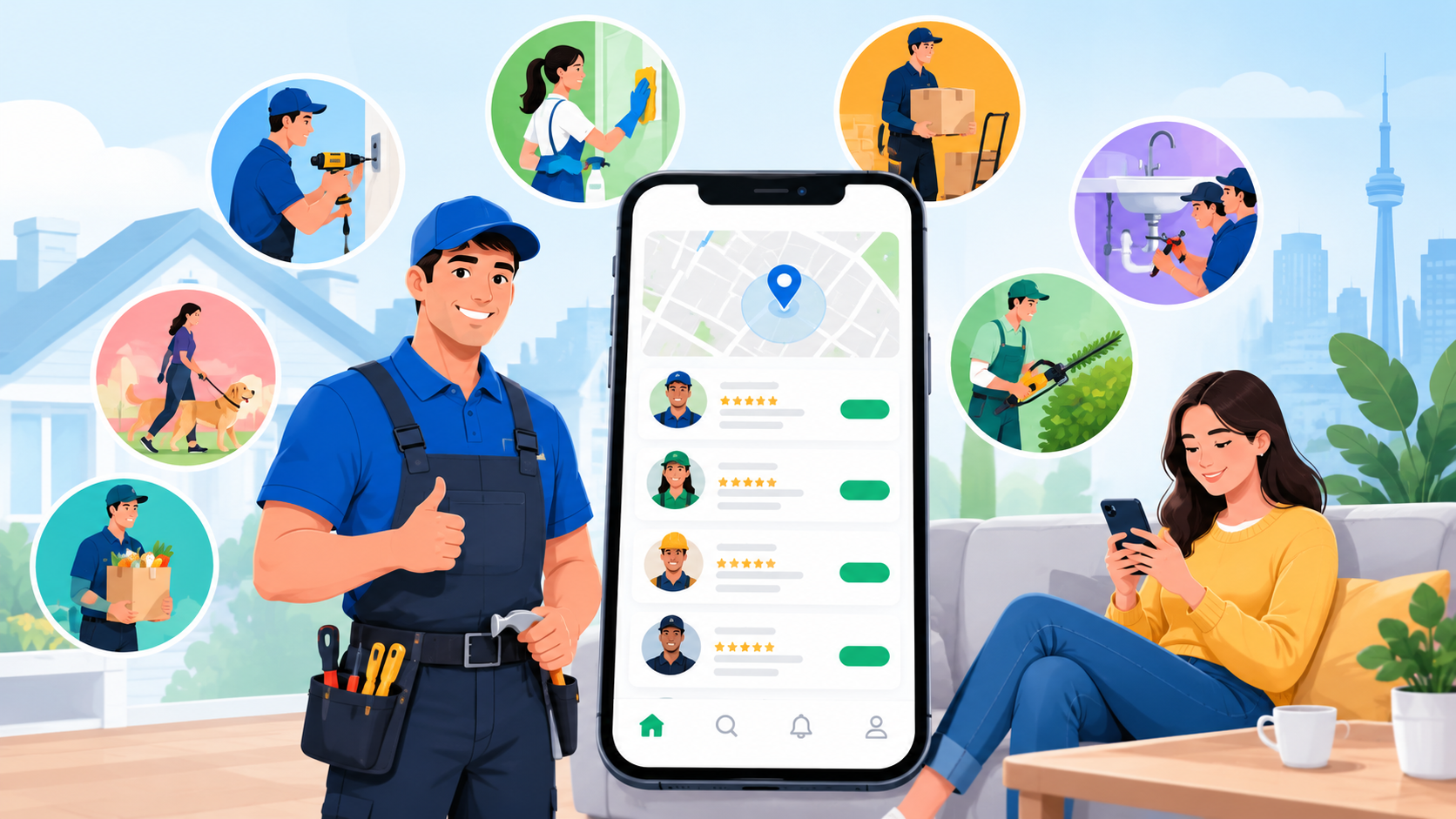
The gig economy has transformed how people find help for everyday tasks, and TaskRabbit stands as one of the most successful examples of connecting skilled taskers with customers needing anything from furniture assembly to home repairs.
For entrepreneurs looking to build an app like TaskRabbit, understanding the complete picture, from essential features and technology choices to development costs and revenue models, is critical before committing resources to such a project.
This on-demand service marketplace model has proven scalable across cities worldwide, making it an attractive opportunity for businesses entering the local services space.
This guide breaks down everything you need to know, covering must-have features, recommended tech stack, development process, pricing, monetization strategies, and common challenges to help you launch a competitive, successful platform.
Understanding the TaskRabbit Business Model
TaskRabbit operates as a two sided marketplace connecting customers with independent taskers for furniture assembly, cleaning, moving, and handyman services.
Businesses looking to build a TaskRabbit-like app development strategy need to understand this core model before defining features and technology choices.
1. A Two-Sided Marketplace Connecting Customers and Taskers
TaskRabbit's model links customers needing help with independent professionals offering skills across furniture assembly, moving assistance, cleaning, and handyman services.
The platform earns revenue by facilitating this match rather than employing taskers directly, keeping operational overhead comparatively low.
2. Task-Based Work Remains a Significant Gig Economy Segment
Platforms like TaskRabbit and Handy contribute around 15 percent of the broader gig-based business market, which was valued at $47.70 billion in 2026 and is projected to reach $58.77 billion in 2027.
3. Verified Profiles and Transparent Pricing Build Trust
The platform emphasizes user ratings, verified profiles, and transparent pricing structures, enabling rapid service matching and efficient communication between customers and professionals. This trust layer is central to retaining both sides of the marketplace long term.
4. AI-Driven Support Is Reshaping the Category
TaskRabbit introduced multilingual AI chatbots for real-time service support, leading to a 40 percent reduction in customer query resolution time and a 22 percent boost in customer satisfaction ratings.
Must-Have Features for a TaskRabbit-Like App
Understanding essential TaskRabbit app features is critical before starting development, since each feature directly shapes user trust, matching accuracy, and overall platform reliability.
From tasker onboarding to secure payments, these components form the foundation of a successful marketplace.
1. Tasker Verification and Profile Management
Any TaskRabbit clone app development project must include robust background checks, skill verification, and detailed tasker profiles showing ratings, reviews, and completed jobs.
This verification layer builds customer trust before a stranger enters their home for a task.
2. Task Posting and Category Browsing
Task Marketplace app development requires an intuitive interface where customers post job details, budgets, and timelines while browsing taskers by category, whether furniture assembly, cleaning, or handyman repairs, ensuring both sides find the right match quickly.
3. Real-Time Availability and Instant Booking
Successful on-demand service app development depends on showing accurate tasker availability and enabling instant booking confirmation.
Customers expect to see open time slots immediately rather than waiting for manual scheduling coordination between multiple parties.
4. Secure Payment Processing and Escrow
Reliable booking app development includes secure payment gateways with escrow functionality, holding funds until task completion is confirmed.
This protects both customers and taskers, ensuring payment disputes are minimized throughout the transaction process.
5. In-App Messaging and Task Coordination
Effective gig marketplace app development requires built-in messaging so customers and taskers can clarify task details, share photos, and coordinate logistics without exchanging personal contact information, maintaining privacy and platform accountability throughout.
6. Ratings, Reviews, and Dispute Resolution
Any local service marketplace app needs a transparent ratings and review system alongside a structured dispute resolution process.
This feedback loop maintains service quality standards while giving the platform a mechanism to address conflicts fairly.
Recommended Tech Stack for Building the App
Choosing the right TaskRabbit app technology stack significantly impacts performance, scalability, and long-term maintenance costs.
Selecting proven frameworks and infrastructure ensures your platform handles matching, payments, and real-time coordination reliably as your user base grows.
1. Frontend Framework: Flutter or React Native
Cross-platform frameworks power efficient task management app development by letting developers build iOS and Android apps from a single codebase.
This reduces development time significantly while maintaining consistent functionality and design across both major mobile platforms.
2. Backend Framework: Node.js or Django
Node.js handles simultaneous booking and messaging requests efficiently through its asynchronous architecture, a key consideration when you build an app like TaskRabbit.
Django offers strong security and rapid development for admin-heavy platforms managing taskers and disputes.
3. Database: PostgreSQL or MongoDB
PostgreSQL suits structured data central to any Task marketplace business model, including tasker profiles, bookings, and payment records, offering reliable transactions.
MongoDB handles unstructured, fast-changing data like real-time availability and location updates.
4. Real-Time GPS and Mapping: Google Maps API
Google Maps API powers accurate tasker location tracking and service area matching, a factor that meaningfully influences overall TaskRabbit app development cost given the technical complexity of maintaining live location accuracy across many taskers simultaneously.
5. Cloud Hosting: AWS or Google Cloud Platform
Cloud infrastructure provides the scalability needed for TaskRabbit-like app development to handle fluctuating booking demand across cities.
Auto scaling and load balancing keep the platform fast and reliable during peak service request periods.
6. Payment Gateway: Stripe or PayPal
A trusted handyman app development company typically integrates Stripe or PayPal for secure payment processing with built-in escrow capabilities, protecting both customers and taskers while supporting multiple payment methods and currencies across regions.
7. Push Notifications: Firebase Cloud Messaging
Firebase Cloud Messaging powers real-time alerts for booking confirmations, tasker arrival updates, and message notifications across iOS and Android, ensuring both customers and taskers stay informed throughout the entire task lifecycle.
8. AI and Machine Learning: TensorFlow or Python-Based Models
TensorFlow or custom Python models analyze historical booking data to optimize tasker matching and demand prediction, improving accuracy over time and helping the platform recommend the right tasker for each specific job request.
Step-by-Step Development Process: Build An App Like TaskRabbit
Successful marketplace app development follows a structured sequence, from planning through launch.
Each step reduces risk before the next begins, ensuring the platform genuinely serves both customers and taskers rather than launching with untested assumptions about user needs.
1. Define Your Niche and Target Market
Before you build an app like TaskRabbit, identify whether your platform focuses on general handyman tasks, specialized trades, or a specific geographic region.
Clarifying your niche shapes feature priorities and marketing strategy from the very start.
2. Conduct Market and Competitor Research
Any serious TaskRabbit clone app development project should analyze existing platforms to identify gaps, tasker pain points, and differentiation opportunities.
This research ensures your app delivers genuine value beyond what established competitors already offer customers.
3. Design Intuitive User Flows for Both Sides
Effective Task Marketplace app development requires mapping out separate, intuitive flows for customers posting tasks and taskers browsing opportunities.
Thoughtful UX design reduces friction and encourages consistent engagement from both sides of the marketplace.
4. Choose the Right Technology Stack
Selecting appropriate databases, cloud infrastructure, and programming languages for on-demand service app development impacts scalability and security.
This decision should support real-time location tracking and growing transaction volumes as the platform expands.
5. Develop Core Booking and Matching Functionality
Building real-time availability, tasker matching algorithms, and instant booking confirmation forms the foundation of gig marketplace app development.
This core functionality ensures customers connect with the right tasker quickly and reliably.
6. Integrate Secure Payment Processing
Connecting reliable payment gateways with escrow functionality ensures smooth financial transactions between customers and taskers.
Robust encryption and fraud prevention protect both parties throughout the payment lifecycle, from booking through task completion.
7. Build Tasker Onboarding and Verification Systems
Any credible handyman app development effort requires background checks, skill verification, and document upload workflows before taskers can accept jobs.
This verification step builds essential trust before strangers enter customers' homes.
8. Implement Messaging and Notification Systems
Building on your chosen TaskRabbit app technology stack, integrate in-app messaging and push notifications so customers and taskers can coordinate task details, share photos, and receive real-time booking and arrival updates.
9. Conduct Rigorous Testing and Quality Assurance
Comprehensive testing across devices, booking scenarios, and payment flows identifies bugs before launch, validating that your Task marketplace business model functions reliably under real-world conditions with actual customers and taskers.
10. Launch and Scale With Continuous Feedback
Deploying the app requires monitoring initial bookings, gathering tasker and customer feedback, and refining matching algorithms.
Continuous iteration based on real usage data helps the platform scale successfully across new cities and service categories.
Cost to Build an App Like TaskRabbit
Understanding on-demand app development cost helps businesses budget accurately for a TaskRabbit-like platform, typically ranging from $8,000 to $60,000.
Pricing scales significantly based on features, tasker verification complexity, and payment integration requirements, from a basic MVP to a fully featured, enterprise-ready marketplace.
|
Feature/Stage |
Description |
Cost Range ($) |
|
Discovery and Planning |
Market research, competitor analysis, and requirements gathering |
600-900 |
|
UI and UX Design |
Wireframes, prototypes, and interfaces for customers and taskers |
900-1,400 |
|
Backend Architecture |
Database setup, cloud infrastructure, and API development |
2,000-3,000 |
|
Tasker Verification System |
Background checks, document upload, and skill verification workflows |
1,200-1,900 |
|
Task Posting and Matching Engine |
Category browsing, task listings, and matching algorithm development |
1,800-2,600 |
|
Real-Time GPS and Location Tracking |
Live tasker location, service area mapping, and route optimization |
1,500-2,200 |
|
Payment Gateway and Escrow Integration |
Secure payment processing with fund holding until task completion |
1,600-2,400 |
|
In-App Messaging and Notifications |
Real-time chat, push alerts, and booking status updates |
900-1,400 |
|
Ratings, Reviews, and Dispute Resolution |
Feedback system and structured conflict resolution workflows |
700-1,100 |
|
Testing, Deployment, and Post-Launch Support |
Cross-device testing, app store submission, and ongoing maintenance |
800-1,300 |
Revenue Models to Monetize Your Platform
Choosing the right revenue approach is central to any sustainable Task marketplace business model.
From commission fees to premium subscriptions, understanding which monetization strategy fits your platform's scale and audience helps ensure long term profitability beyond the initial launch.
1. Commission-Based Fees on Completed Tasks
The most common revenue model charges a percentage commission on every completed task, typically ranging from 15 to 30 percent.
This aligns platform revenue directly with actual transaction volume rather than requiring upfront fees from either party.
2. Tasker Subscription or Premium Membership Plans
Beyond commission, factoring in handyman app development cost against long term revenue potential, platforms can offer taskers premium subscriptions for reduced commission rates, priority listing placement, or advanced analytics on booking trends and customer demand.
3. Customer Service or Booking Fees
Charging customers a small, flat service fee per booking, separate from the tasker's payment, generates additional revenue without significantly increasing the cost taskers pay.
This fee often covers payment processing and platform maintenance costs.
4. Featured Listings and Promoted Profiles
Allowing taskers to pay for featured placement in search results or category listings creates an advertising revenue stream.
This benefits taskers seeking increased visibility while generating consistent income independent of transaction volume.
5. Insurance and Protection Plan Add-Ons
Offering optional insurance coverage or damage protection plans as an add-on service during checkout generates additional per transaction revenue while giving customers added peace of mind for higher risk tasks like moving or repairs.
6. Cancellation and Rescheduling Fees
Implementing reasonable fees for late cancellations or rescheduling protects taskers from lost income due to last minute changes, while generating modest additional platform revenue from policy enforcement across the marketplace.
7. Data and Analytics Licensing
Once the platform reaches significant scale, anonymized booking trends, demand patterns, and service category insights can be licensed to businesses researching gig economy trends or planning service expansions in specific markets.
8. Corporate and B2B Service Contracts
Expanding beyond individual consumers, platforms can offer bulk service contracts to property management companies, real estate agencies, or corporate offices needing recurring maintenance and handyman services, creating predictable, higher-value revenue streams.
Key Challenges and How to Overcome Them
Building a successful marketplace comes with predictable obstacles that even experienced on-demand app development companies must navigate carefully.
Understanding these challenges upfront, alongside practical solutions, helps businesses avoid costly setbacks and build a platform that genuinely earns user trust.
1. Achieving Critical Mass on Both Sides of the Marketplace
Launching with too few taskers frustrates customers, while too few customers discourage taskers from staying active.
This chicken-and-egg problem is one of the hardest challenges any new marketplace platform must solve early on.
How to overcome it: Launch in a single, focused geographic area first, manually recruiting quality taskers before marketing to customers, ensuring enough supply exists to deliver a positive first booking experience for early adopters.
2. Building Trust Between Strangers
Customers must trust an unfamiliar tasker entering their home, while taskers must trust customers to pay fairly and treat them respectfully. Without strong trust signals, adoption stalls regardless of how polished the app itself is.
How to overcome it: Implement thorough background checks, verified profiles, transparent reviews, and secure escrow payments, giving both sides visible proof of accountability before any transaction takes place on the platform.
3. Ensuring Consistent Service Quality
Since taskers are independent contractors rather than employees, maintaining consistent service quality across thousands of individuals becomes genuinely difficult, and one bad experience can damage the platform's overall reputation significantly.
How to overcome it: Establish clear quality standards, ongoing performance monitoring, and a fair rating system that surfaces top performers while removing consistently poor-performing taskers from the platform over time.
4. Managing Cancellations and No-Shows
Last-minute cancellations or no-shows from either customers or taskers disrupt scheduling, waste time, and create frustration that can drive users away from the platform entirely if left unaddressed.
How to overcome it: Implement clear cancellation policies with reasonable fees, automated rescheduling tools, and backup tasker recommendations to minimize disruption when a booking falls through unexpectedly.
5. Navigating Regulatory and Worker Classification Issues
Gig economy platforms face ongoing scrutiny over whether taskers should be classified as independent contractors or employees, with regulations varying significantly across different cities and countries where the platform operates.
How to overcome it: Consult legal experts familiar with gig economy regulations in each target market, and structure tasker agreements carefully to remain compliant as classification laws continue evolving.
6. Handling Payment Disputes Fairly
Disagreements over task quality, pricing, or completion status inevitably arise, and poorly handled disputes can damage relationships with both customers and taskers, leading to negative reviews and platform abandonment.
How to overcome it: Build a structured, transparent dispute resolution process with clear timelines, evidence submission options, and a dedicated support team empowered to make fair, consistent decisions.
7. Scaling Operations Across New Cities
Expanding into new geographic markets requires rebuilding tasker supply and customer awareness from scratch each time, making rapid scaling significantly more resource-intensive than simply adding server capacity.
How to overcome it: Develop a repeatable city launch playbook covering local tasker recruitment, targeted marketing, and regional pricing adjustments, allowing faster, more predictable expansion into new locations.
8. Competing Against Established Platforms
New entrants face significant competition from established players like TaskRabbit and Handy, which already have strong brand recognition, large tasker networks, and customer trust built over many years of operation.
How to overcome it: Differentiate through a specific niche, superior local service quality, or underserved geographic markets rather than attempting to compete directly on scale against dominant, well-funded incumbents.
Final Thoughts
Building an app like TaskRabbit requires more than replicating a familiar interface; it demands careful attention to tasker verification, secure payments, real-time matching, and the trust-building features that make strangers comfortable transacting with one another.
From choosing the right technology stack to navigating regulatory challenges around worker classification, success depends on solving the platform’s hardest problems, achieving critical mass and building genuine trust, before scaling into new markets.
As the gif economy and on demand home services market continue their rapid global expansion, businesses that invest in a well planned, feature rich platform position themselves for strong long term growth.
Partnering with experienced developers who understand both the technical requirements and the unique dynamics of two-sided marketplaces ensures your app launches successfully and scales sustainably.
FAQ's
Costs typically range from $8,000 for a basic MVP to $60,000 or more for a fully featured platform with advanced matching, escrow payments, and real time tracking, depending on complexity.
Development timelines usually range from four to nine months, depending on feature complexity, tasker verification requirements, and the extent of testing needed before a reliable public launch.
Essential features include tasker verification, task posting and matching, real time GPS tracking, secure escrow payments, in-app messaging, and a transparent ratings and dispute resolution system.
TaskRabbit and similar platforms primarily earn revenue through commission fees on completed tasks, often supplemented by service fees, featured listings, and optional insurance or protection plan add-ons.
Building for both platforms maximizes reach, and using cross-platform frameworks like Flutter or React Native allows simultaneous development from a single codebase, reducing overall time and cost.
Focus on a single geographic area first, manually recruit quality taskers, and offer reduced commission rates or promotional incentives to build sufficient supply before broader customer marketing begins.
Achieving critical mass on both sides of the marketplace is typically the hardest challenge, since customers need enough taskers available while taskers need enough customer demand to stay active.
Yes, escrow payments hold funds until task completion is confirmed, protecting both customers and taskers from payment disputes and building essential trust in transactions between strangers.
Regulations vary by region and continue evolving, requiring careful legal consultation to structure tasker agreements appropriately and remain compliant as independent contractor classification laws change over time.
Yes, AI-powered matching algorithms and chatbots can significantly improve tasker recommendations and customer support, with real-world examples showing reduced query resolution times and higher satisfaction ratings.

CrinPro
CrinPro Solutions is a leading IT company that helps startups and enterprises build innovative digital products. From intuitive mobile applications and high-performance websites to AI-powered solutions and enterprise software, our team delivers scalable, secure, and user-focused products tailored to unique business needs. With expertise across multiple industries, we transform ideas into digital experiences that drive growth, improve efficiency, and create long-term business value.