Key Takeaways:
- A Gojek-style super app combines multiple services such as ride booking, food delivery, digital payments, grocery shopping, chat, and other on-demand services within one ecosystem.
- A modular and scalable architecture is essential because each service has different workflows while still relying on shared capabilities such as authentication, payments, notifications, and location services.
- Security and real-time infrastructure are major development considerations, particularly when the platform handles payments, location tracking, customer information, and live communication.
- Super app development costs can range from $8,000 to $90,000+, depending on the number of services, integrations, architecture complexity, security requirements, and expected scale.
- Launching in phases can reduce development complexity, allowing businesses to validate their initial services before expanding into additional categories and markets.
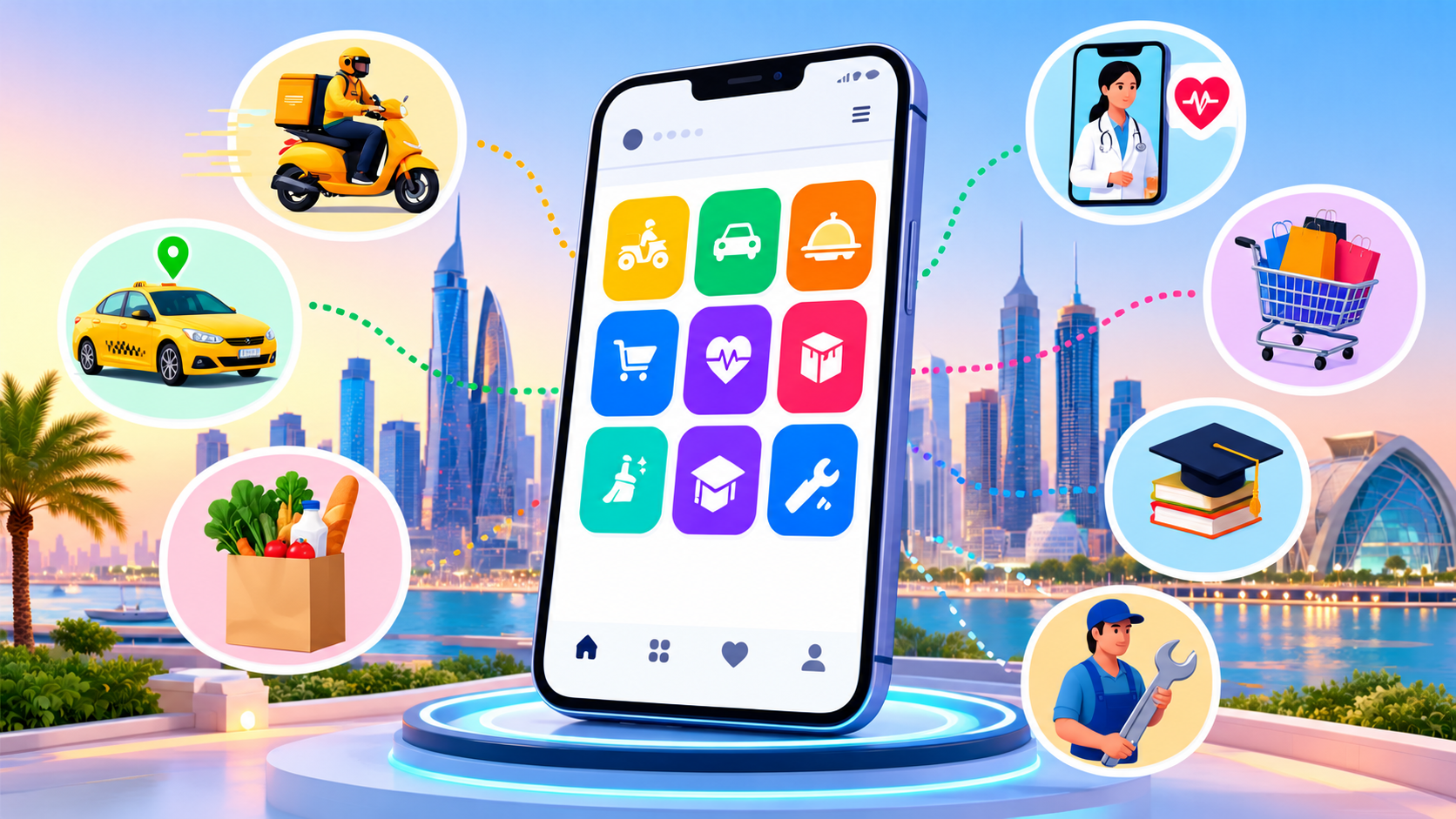
Super apps are bringing multiple everyday services into a single digital platform, allowing users to move between transportation, food delivery, payments, shopping, communication, and other services without switching between separate applications. Gojek is one of the prominent examples of this model, combining a broad ecosystem of services within one application.
The growing interest in super apps has encouraged businesses to explore platforms that can serve several customer needs while creating multiple revenue streams. However, building a Gojek-like application requires considerably more than developing a collection of standalone features. The platform needs a scalable architecture, shared user accounts, secure payments, real-time communication, location services, service-specific modules, and reliable backend infrastructure.
This guide explains how to build a super app like Gojek in 2027, including its core features, architecture, development process, technology stack, security considerations, and estimated development cost.
What Is a Gojek-Style Super App?
A Gojek-style super app is a unified digital platform that brings multiple services into one application and account ecosystem. Instead of requiring users to install separate apps for transportation, food delivery, payments, shopping, or local services, a super app provides access to these services from a shared interface.
The key difference is the connected ecosystem behind the application. Users can maintain one profile, payment method, address book, and transaction history while accessing different service modules. Businesses can also share infrastructure such as authentication, notifications, location services, payments, customer support, and analytics across multiple services.
For example, a user might book a ride, order food, make a digital payment, and communicate with a service provider through the same platform. Each service can have its own workflows and operational requirements while still connecting to the central super-app ecosystem.
This model requires a modular architecture so new services can be introduced without rebuilding the entire platform. A super app development company can design the underlying architecture around reusable services, APIs, shared databases, security controls, and independent business modules.
Why Businesses Are Building Super Apps in 2027
The super app model allows businesses to combine several digital services within one ecosystem instead of managing completely separate applications. This can create opportunities to increase user engagement, simplify account management, and build additional revenue channels.
1. One Platform for Multiple Needs
Users can access several services through a single application, reducing the need to maintain multiple accounts and apps. Shared profiles, saved addresses, payment methods, and notifications can make the overall experience more connected.
2. Multiple Revenue Opportunities
A super app can generate revenue through commissions, service fees, subscriptions, advertising, delivery charges, transaction fees, or partnerships. Different service categories can contribute to the same business ecosystem.
3. Cross-Service Customer Engagement
Data and interactions from one service can support relevant experiences in another. For example, a user who frequently books rides could discover food delivery, digital payments, or other services available within the same platform.
4. Shared Technology Infrastructure
Businesses can reuse core capabilities such as authentication, payments, notifications, maps, customer support, analytics, and identity management across multiple modules. This can reduce duplication as the platform expands.
5. Easier Expansion Into New Services
A modular super app can allow businesses to introduce additional services without developing an entirely separate application. However, each new service still requires appropriate operational workflows, integrations, security controls, and user experience design.
Building this type of ecosystem requires careful planning from the beginning. A mobile app development company can help businesses structure the platform so that individual services can evolve while remaining connected to the wider super-app architecture.
Core Services to Include in a Super App
A Gojek-style super app can combine multiple services under one platform, but businesses do not need to launch every category at once. The right service mix depends on the target market, customer demand, operational capabilities, and available partnerships.
1. Ride Booking
Ride-hailing can connect customers with drivers through real-time location tracking, fare calculation, driver matching, trip management, and digital payments. Businesses can support different vehicle categories depending on their market.
2. Food and Grocery Delivery
Food and grocery modules can connect customers with restaurants, stores, delivery partners, and order-management systems. Features such as menus, product catalogues, live order tracking, delivery scheduling, and ratings can support the complete ordering cycle.
3. Digital Payments
An integrated wallet or payment system can allow users to add money, pay for services, receive refunds, and review transaction history. Businesses planning advanced payment functionality should also evaluate the mobile payment app development cost alongside gateway, compliance, security, and infrastructure requirements.
4. On-Demand Services
Super apps can extend beyond transportation and delivery by offering services such as home cleaning, repairs, beauty services, healthcare appointments, or other local services. These modules typically require provider profiles, availability management, booking, pricing, and service tracking.
5. Chat and Communication
In-app communication can allow customers, drivers, delivery partners, merchants, and service providers to communicate without leaving the platform. Depending on the required functionality, businesses should consider factors that influence chat app development cost, including real-time messaging, media sharing, notifications, moderation, and encryption.
The services can initially operate as separate modules while sharing common platform capabilities such as authentication, payments, notifications, location, and customer support.
Essential Features of a Gojek-Like Super App
A multi-service super app needs more than individual service features. Its core functionality should create a shared experience across different modules while giving customers, service providers, and administrators the tools they need to manage their respective activities.
1. Customer Features
- Unified registration and login: Users can create one account and access multiple services.
- Personalised home screen: Services, offers, recent activities, and recommendations can be displayed from one dashboard.
- Location and map integration: Users can select pickup points, delivery addresses, and service locations.
- Service discovery: Search and category navigation can help users find rides, restaurants, stores, or service providers.
- Digital payments: Customers can pay through cards, wallets, gateways, or other supported payment methods.
- Real-time tracking: Ride, delivery, and service bookings can be tracked from the application.
- Ratings and reviews: Customers can provide feedback about drivers, merchants, and service providers.
- Notifications: Push notifications, SMS, or email can communicate booking, payment, delivery, and account updates.
- Order and booking history: Users can review previous transactions and repeat commonly used services.
- In-app chat: Customers can communicate with drivers, merchants, or service providers when required.
2. Provider and Partner Features
Drivers, restaurants, merchants, and service professionals need dedicated dashboards for managing availability, bookings, orders, earnings, customer communication, and service status.
3. Admin Features
The administration panel should provide controls for user management, service categories, partners, transactions, commissions, promotions, disputes, analytics, content, and platform settings.
A modular feature structure allows each service to maintain its own workflow while sharing common capabilities such as authentication, payments, notifications, and customer support.
Architecture of a Multi-Service Super App
A Gojek-like platform needs an architecture that can support multiple services while keeping shared functionality consistent across the entire ecosystem. A modular and service-orientated approach can make it easier to add new features without affecting unrelated parts of the application.
1. Presentation Layer
The customer, provider, and admin applications form the presentation layer. Each interface can provide service-specific screens while connecting to the same underlying platform through secure APIs.
2. API Gateway
An API gateway acts as a controlled entry point between mobile applications and backend services. It can manage authentication, request routing, rate limiting, and communication with different service modules.
3. Service Layer
Individual business services can operate as separate modules or microservices. Ride booking, food delivery, payments, chat, notifications, and user management can have their own business logic while communicating through APIs and events.
4. Data Layer
The platform may use relational databases for transactional information and additional storage technologies for caching, analytics, search, or high-volume data. Data should be structured so individual services can scale without creating unnecessary dependencies.
5. Real-Time Infrastructure
Services such as ride tracking, delivery updates, driver availability, and chat require real-time communication. WebSockets, event streams, push notifications, and message queues can help deliver timely updates.
6. Payment and Wallet Layer
A dedicated payment layer can manage transactions, refunds, wallet operations, payment gateways, and transaction records. Keeping payment functionality separated helps strengthen security and simplifies integration with multiple payment providers.
7. Cloud and Infrastructure Layer
Cloud infrastructure can provide computing, storage, databases, monitoring, load balancing, backups, and automated deployment. Containerisation and orchestration can also help individual services scale according to demand.
This architecture allows businesses to launch a smaller set of services initially and add additional modules as the platform grows.
How to Build a Super App Like Gojek
Building a Gojek-style super app requires more than developing several services inside one application. The development process should begin with business and market research, followed by architecture planning, modular development, integration, testing, and continuous optimisation.
1. Research the Market and Target Users
Identify the services customers need, competitors operating in the target market, user expectations, regulatory requirements, and potential business partners. This research helps determine which services should be included in the initial launch.
2. Define the Business Model
Decide how the platform will generate revenue through commissions, service fees, subscriptions, delivery charges, advertisements, partnerships, or other models. Define the roles of customers, service providers, merchants, drivers, and administrators.
3. Plan the Product and UX
Design the overall user journey and determine how different services will appear within one application. The interface should make it easy for users to discover services without making the platform feel unnecessarily complicated.
4. Design the Scalable Architecture
Define the API structure, databases, service modules, authentication system, payment infrastructure, real-time communication, cloud environment, and monitoring strategy before large-scale development begins.
5. Develop Core Platform Services
Build shared capabilities such as registration, profiles, authentication, notifications, location services, search, payments, customer support, and analytics. These services can then be reused by individual modules.
6. Develop Individual Service Modules
Build the selected services such as ride booking, food delivery, grocery delivery, on-demand services, digital payments, and chat. Each module should have its own workflows while remaining connected to the shared platform.
7. Integrate and Test the Platform
Connect payment gateways, maps, communication tools, logistics systems, merchant platforms, and other third-party services. Conduct functional, performance, security, usability, and integration testing across the ecosystem.
8. Launch, Monitor, and Scale
Start with a controlled launch and monitor user behaviour, system performance, transactions, errors, and service quality. Use these insights to improve the platform and gradually introduce additional services.
Following a structured software development process helps reduce technical dependencies and provides a clearer path from a focused MVP to a larger multi-service ecosystem.
Technology Stack for a Gojek-Like Super App
The technology stack should support high transaction volumes, real-time communication, location-based services, secure payments, and independent scaling of different service modules. The final choices depend on the platform's expected scale, existing infrastructure, and development requirements.
|
Technology Layer |
Recommended Technologies |
Purpose |
|
Mobile App |
Flutter, React Native, Swift, Kotlin |
Customer and provider applications |
|
Frontend |
React.js, Next.js |
Web dashboards and admin interfaces |
|
Backend |
Node.js, Python, Java |
APIs, business logic, and service management |
|
Database |
PostgreSQL, MySQL, MongoDB |
Users, transactions, orders, and service data |
|
Cache |
Redis |
Fast access to frequently used data and sessions |
|
Real-Time Communication |
WebSockets, Socket. IO |
Tracking, chat, and live status updates |
|
Maps & Location |
Google Maps Platform, Mapbox |
Routing, geolocation, and tracking |
|
Payments |
Stripe, PayPal, regional gateways |
Transactions, refunds, and payment processing |
|
Cloud |
AWS, Microsoft Azure, Google Cloud |
Hosting, storage, scaling, and infrastructure |
|
Messaging |
Kafka, RabbitMQ |
Events, queues, and service communication |
|
DevOps |
Docker, Kubernetes, CI/CD tools |
Deployment, scaling, and service management |
|
Monitoring |
Prometheus, Grafana, cloud monitoring |
Performance monitoring and observability |
Security and Scalability Considerations
A Gojek-style super app brings multiple services and sensitive user interactions into one ecosystem. Its architecture must protect customer information, secure transactions, and remain responsive as the number of users, service providers, and daily bookings increases.
1. Protecting User Data
Use secure authentication, role-based access controls, encryption in transit and at rest, and appropriate session management. Collect only the personal information required for each service, and apply clear data-retention and privacy policies.
2. Securing Payments and Wallets
Payment processing should use trusted providers and follow applicable security requirements. Wallet balances, refunds, transaction histories, and payment events need reliable validation and audit trails to prevent unauthorised changes or inconsistent records.
Businesses offering wallet functionality through Ewallet App Development Services should also assess applicable licensing, financial regulations, and transaction-monitoring obligations in their target markets.
3. Handling Growing Traffic
A modular backend, caching, load balancing, database optimisation, and asynchronous processing can help the platform handle increases in traffic. Individual services should be able to scale according to demand rather than forcing the entire application to scale together.
4. Maintaining Reliability
Monitoring, automated alerts, backups, disaster recovery, and regular security testing help teams detect problems and restore services. Payment and booking workflows should also handle failed requests, retries, and duplicate events safely.
5. Protecting Real-Time Services
Location tracking, driver availability, and chat need reliable communication and appropriate access restrictions. Rate limits, abuse detection, and secure API design can help reduce misuse while maintaining a responsive experience.
Super App Development Cost and Timeline in 2027
The super app development cost can range from $8,000 to $90,000+ depending on the number of services, platform complexity, integrations, payment infrastructure, real-time capabilities, security requirements, and development team structure. A focused MVP with one or two core services requires considerably less development than a mature multi-service platform.
|
Super App Type |
Estimated Cost |
Development Timeline |
|
Basic Super App MVP |
8,000–20,000 |
2–4 months |
|
Multi-Service Super App |
20,000–40,000 |
4–6 months |
|
Advanced Gojek-Like Platform |
40,000–65,000 |
6–9 months |
|
Enterprise Super App |
65,000–90,000+ |
9–12+ months |
What Influences Super App Development Cost?
Several factors can significantly affect the final budget:
- Number of services: Adding ride-hailing, food delivery, grocery, payments, chat, and other modules increases development effort.
- Platform support: Building separate native iOS and Android applications can require more resources than a cross-platform approach.
- Payment functionality: Wallets, recurring payments, refunds, transaction tracking, and multiple gateways add complexity.
- Real-time features: Live driver tracking, delivery status, chat, and notifications require specialised infrastructure.
- Third-party integrations: Maps, logistics, payment gateways, SMS, analytics, and external business systems increase integration work.
- Security requirements: Authentication, encryption, fraud prevention, access controls, and compliance can add to the development budget.
- Scalability: High-traffic platforms require stronger cloud infrastructure, databases, caching, monitoring, and load-management strategies.
Businesses should also consider related expenses. For example, individual modules may have their own on-demand app development cost, while advanced payment functionality can require a separate assessment of mobile payment app development cost.
How a Super App Generates Revenue
A multi-service platform can combine several monetisation models instead of depending on a single source of income. The right approach depends on the services offered, target market, customer behaviour, and partnerships available to the business.
1. Service Commissions
The platform can charge merchants, drivers, or service providers a percentage of each completed transaction. This model can work across ride bookings, food delivery, grocery orders, and other on-demand services.
2. Service and Delivery Fees
Customers can be charged booking, convenience, platform, or delivery fees. Pricing can vary according to factors such as distance, demand, order value, or service type.
3. Subscription Plans
A subscription can provide benefits such as reduced delivery fees, exclusive offers, priority support, or discounts across multiple services. This can create a recurring revenue stream while encouraging users to remain active within the ecosystem.
4. Advertising and Sponsored Listings
Restaurants, retailers, service providers, and other businesses can pay for promoted placements within the application. Sponsored search results and targeted promotions can create an additional revenue channel.
5. Financial Services
A super app with integrated payment functionality can potentially generate revenue from transaction-related services, merchant payments, financial partnerships, or other permitted financial products. These activities may be subject to specific regulatory requirements depending on the market.
6. Business Partnerships
The platform can also generate revenue through partnerships with merchants, brands, logistics providers, financial institutions, and other service providers.
Challenges of Building a Multi-Service Super App
Building a super app like Gojek involves several technical and operational challenges because the platform must coordinate multiple services, user groups, and external systems within one ecosystem.
1. Managing Multiple Service Modules
Each service has different workflows, business rules, and operational requirements. Ride booking, food delivery, payments, and home services cannot all follow the same logic, so the architecture must support independent modules while maintaining a consistent overall experience.
2. Maintaining a Simple User Experience
Adding more services can make an application difficult to navigate. Businesses need clear information architecture, personalised service discovery, and consistent design patterns so users can find what they need without unnecessary complexity.
3. Integrating Third-Party Systems
Maps, payment gateways, logistics providers, communication services, and merchant platforms may all have different APIs and technical requirements. Changes or outages in external services can also affect the super app.
4. Handling High Transaction Volumes
A growing platform may process large numbers of bookings, payments, messages, location updates, and notifications simultaneously. Databases, APIs, queues, and cloud infrastructure need to be designed to handle these workloads reliably.
5. Security and Regulatory Requirements
A super app can process personal information, payment data, location information, and business transactions. Depending on the services and countries involved, businesses may also need to meet specific privacy, financial, consumer-protection, and platform regulations.
6. Coordinating Different Partners
Drivers, restaurants, retailers, and service professionals all require different operational tools and support. Managing onboarding, verification, commissions, disputes, availability, and service quality can become increasingly complex as the ecosystem grows.
Conclusion
Building a super app like Gojek requires a combination of strong product planning, scalable architecture, secure integrations, and a carefully designed user experience. The platform needs to connect multiple services while allowing each module to operate according to its own business and operational requirements.
Businesses do not necessarily need to launch every service at once. Starting with a focused MVP can help validate demand, understand user behaviour, and establish the core infrastructure before expanding into additional services.
With the right architecture, payment infrastructure, real-time capabilities, security controls, and development strategy, a Gojek-style platform can evolve into a broader digital ecosystem. The final development investment will depend on the services, integrations, technology choices, and scale planned for the platform.
FAQ's
A Gojek-style super app can cost approximately 8,000–90,000+, depending on the number of services, integrations, payment features, architecture, and scalability requirements.
A basic MVP may take around 2–4 months, while an advanced multi-service platform can require 9–12+ months depending on its complexity.
A super app can include ride booking, food delivery, grocery delivery, digital payments, chat, shopping, home services, healthcare, and other on-demand services.
Common technologies include Flutter or React Native for mobile development, Node.js, Python or Java for backend services, PostgreSQL or MongoDB for data, Redis for caching, cloud platforms, APIs, and real-time communication technologies.
Yes. A super app can include wallet functionality for payments, refunds, transaction history, and service purchases, subject to the applicable financial and regulatory requirements.
No. Businesses can start with a smaller MVP containing the most relevant services and gradually introduce additional modules after validating demand and platform performance.
Revenue can come from commissions, delivery and service fees, subscriptions, advertising, sponsored listings, partnerships, and permitted financial or transaction-related services.

CrinPro
CrinPro Solutions is a leading IT company that helps startups and enterprises build innovative digital products. From intuitive mobile applications and high-performance websites to AI-powered solutions and enterprise software, our team delivers scalable, secure, and user-focused products tailored to unique business needs. With expertise across multiple industries, we transform ideas into digital experiences that drive growth, improve efficiency, and create long-term business value.