Key Takeaways:
- Fleet management software centralizes vehicle, driver, maintenance, fuel, and operational management.
- GPS, telematics, IoT, and mapping integrations provide real-time fleet visibility.
- The fleet management software development cost can range from $7,000 to $80,000.
- AI can enhance route optimization, predictive maintenance, fuel management, and fleet analytics.
- Starting with an MVP helps control costs while creating opportunities for future scalability.
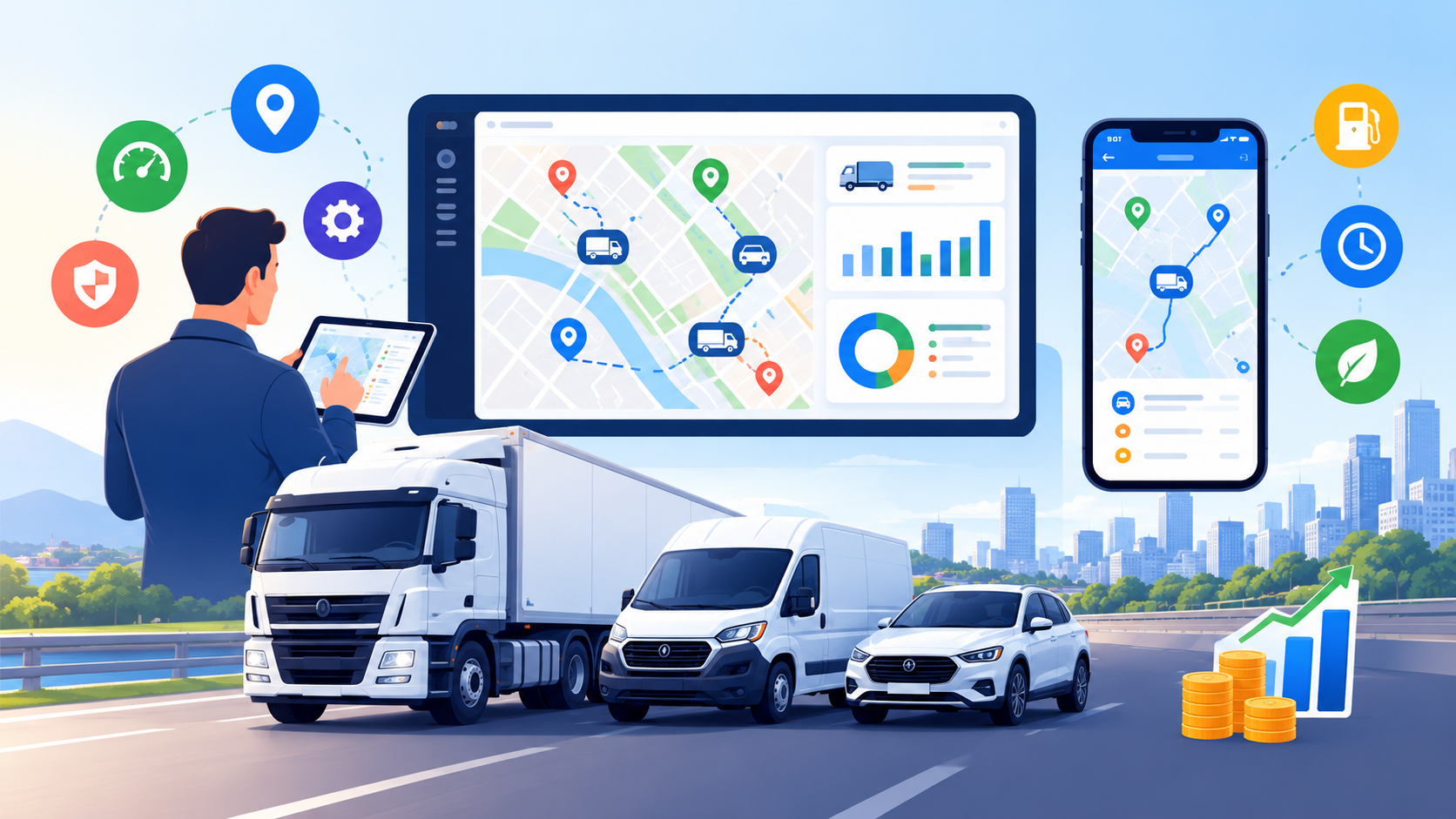
Fleet management software helps businesses monitor vehicles, drivers, routes, fuel usage, maintenance, and overall fleet performance from one platform.
As logistics and transportation operations become more connected, companies are investing in smarter systems with real-time tracking, telematics, automation, and data-driven insights.
However, understanding the fleet management software development cost is essential before starting the project.
The final budget depends on the software’s features, number of vehicles, telematics capabilities, third-party integrations, technology stack, and development approach.
Basic fleet platforms may require fewer resources, while advanced solutions with IoT devices, predictive maintenance, route optimization, AI analytics, and automated reporting can significantly increase development expenses.
This guide explores the major features, telematics, integrations, pricing factors, and development considerations businesses should evaluate when planning a fleet management software solution in 2027.
What Is Fleet Management Software and Why Is It Important in 2027?
Fleet management software is a digital platform that helps businesses monitor vehicles, drivers, routes, fuel consumption, maintenance, and daily operations.
By combining GPS, telematics, analytics, and automation, it gives fleet managers better visibility, control, and efficiency.
1. Improves Fleet Visibility and Control
Fleet management software provides real-time visibility into vehicle locations, driver activities, routes, and fleet performance. Managers can monitor operations from one dashboard instead of relying on manual updates.
This improves decision-making, reduces operational gaps, and makes daily fleet coordination more efficient.
2. Reduces Operational and Fuel Costs
The software helps businesses identify inefficient routes, excessive fuel consumption, unnecessary idling, and maintenance issues.
These insights allow managers to optimize vehicle usage and control expenses. The global fleet management software market is projected to reach $55.97 billion by 2030, growing at a 14.3% CAGR.
3. Strengthens Driver Safety and Compliance
Fleet platforms can track speeding, harsh braking, sudden acceleration, driving hours, and other risky behaviors.
Managers can use these insights to improve driver safety and support compliance requirements. The broader fleet management market is expected to grow from $37.71 billion in 2025 to $70.26 billion by 2030.
4. Supports Predictive Maintenance and Better Planning
Fleet management software can combine vehicle diagnostics, telematics, maintenance records, and usage data to identify potential problems earlier.
Predictive maintenance helps reduce unexpected breakdowns and downtime. It also enables businesses to schedule servicing, manage vehicle lifecycles, and plan fleet operations more effectively.
Key Features to Include in Fleet Management Software
Modern fleet platforms need features that simplify vehicle monitoring, driver management, maintenance, and operational planning.
Businesses investing in fleet management software development services should prioritize practical tools that improve visibility, automate routine tasks, reduce costs, and support better fleet decisions.
1. Real-Time GPS Vehicle Tracking
GPS tracking lets fleet managers monitor vehicle locations and movement in real time. Managers can view routes, stops, speed, and estimated arrival times through a centralized dashboard.
This improves dispatching, strengthens operational visibility, and helps businesses respond quickly to unexpected route changes.
2. Driver Management
Driver management features help businesses maintain profiles, track driving behavior, monitor working hours, and evaluate performance. Managers can review speeding, harsh braking, acceleration, and other driving patterns.
This information supports safer driving practices, improves accountability, and helps identify training requirements.
3. Fleet Maintenance Management
Maintenance management helps businesses schedule inspections, servicing, repairs, and vehicle replacements.
The system can maintain service histories and send automated reminders based on mileage, time, or usage. This reduces unexpected breakdowns, extends vehicle lifespans, and keeps fleet operations running consistently.
4. Fuel Management
Fuel management tools track fuel purchases, consumption, mileage, and expenses across vehicles. Managers can identify unusual consumption patterns, excessive idling, or potential fuel misuse.
Comparing fuel performance across vehicles also helps businesses control operating expenses and improve overall fleet efficiency.
5. Route Planning and Optimization
Route optimization helps managers create efficient routes based on distance, traffic conditions, delivery schedules, vehicle capacity, and service locations.
Dynamic routing can adjust plans when conditions change. This helps reduce unnecessary mileage, improve delivery times, lower fuel consumption, and increase vehicle utilization.
6. Reports and Analytics
Analytics and reporting tools transform fleet data into actionable insights. Managers can generate reports covering fuel usage, maintenance expenses, vehicle utilization, driver performance, and operational costs.
Custom dashboards help decision-makers identify inefficiencies, compare performance, and make informed fleet management decisions.
Telematics Technologies Behind Modern Fleet Management Systems
Modern fleet systems rely on telematics to connect vehicles, drivers, and software platforms.
A custom software development company can combine GPS, sensors, cloud platforms, and analytics to deliver real-time visibility, improve fleet efficiency, and support smarter transportation decisions more efficiently.
1. GPS Vehicle Tracking
GPS tracking technology collects vehicle location data and sends it to fleet management platforms. Managers can monitor routes, stops, speed, and movement in real time.
This visibility supports better dispatching, reduces unnecessary travel, and helps businesses respond to operational changes.
2. Vehicle Diagnostics
Vehicle diagnostics systems collect information from engines, batteries, brakes, and other components.
Fleet managers can review fault codes and vehicle health through centralized dashboards. Early visibility into mechanical problems helps teams schedule repairs, reduce downtime, and maintain vehicles more efficiently.
3. IoT Sensors
IoT sensors capture information such as temperature, fuel levels, tire pressure, cargo conditions, and vehicle usage. Connected sensors transmit this information to software platforms.
Businesses can monitor assets remotely, identify unusual conditions, and take action before issues become costly problems.
4. Telematics Hardware
Telematics hardware connects vehicles with fleet management software and enables continuous data collection. Devices can capture location, speed, engine information, and other operational details.
Selecting compatible hardware ensures reliable communication between vehicles, sensors, cloud platforms, and fleet management applications.
5. Connectivity and APIs
Choosing telematics hardware, connectivity options, APIs, cloud infrastructure, and analytics capabilities directly affects the automotive software development cost.
Businesses should evaluate required data frequency, vehicle compatibility, integration complexity, and scalability before selecting technologies. Careful planning helps avoid unnecessary implementation expenses.
6. OBD and CAN Bus Integration
OBD and CAN bus technologies allow fleet systems to access vehicle data from electronic systems.
They can provide information about engine performance, fuel consumption, mileage, and diagnostic events. Integrating this data helps managers understand vehicle health and improve maintenance planning.
7. Driver Behavior Monitoring
Telematics platforms can monitor driver behavior by analyzing speeding, harsh braking, sudden acceleration, cornering, and idle time.
Managers can use these insights to identify risky patterns, improve driver training, encourage safer driving habits, and potentially reduce accidents and operating expenses.
8. Cloud-Based Telematics
Cloud-based telematics platforms store and process vehicle data while making information accessible across connected devices. Fleet managers can view dashboards, reports, alerts, and trends remotely.
Cloud infrastructure also supports scalability, software updates, integrations, and advanced analytics as fleet requirements grow.
Fleet Management Software Development Cost in 2027: Complete Breakdown
The fleet management software development cost depends on features, integrations, telematics, platforms, and complexity.
Businesses should consider the GPS tracking app development cost when planning their budget. In 2027, advanced analytics, automation, IoT, and real-time monitoring can further influence pricing.
1. GPS Tracking and Location Management
GPS tracking is a component of fleet management software, helping businesses monitor vehicle locations, routes, stops, and movement.
Development costs increase when platforms require live location updates, geofencing, route history, driver tracking, and map integrations across different devices and regions.
|
Cost Element |
Estimated Cost |
Description |
|
GPS Integration |
500–600 |
Connects GPS services with the software. |
|
Live Tracking |
700–800 |
Enables real-time vehicle monitoring. |
|
Geofencing |
900–1,000 |
Creates location-based alerts and boundaries. |
2. Driver Management
Driver management features help businesses create profiles, monitor driving behavior, track working hours, and evaluate performance.
Development may require dashboards, alerts, compliance records, and reports. Advanced systems can integrate telematics data to identify speeding, harsh braking, and unsafe driving patterns.
|
Cost Element |
Estimated Cost |
Description |
|
Driver Profiles |
500–600 |
Stores driver information and documents. |
|
Behavior Monitoring |
900–1,000 |
Tracks driving patterns and activities. |
|
Performance Dashboard |
1,000–1,100 |
Displays driver performance insights. |
3. Fleet Maintenance Management
Fleet maintenance modules help businesses schedule inspections, repairs, servicing, and vehicle replacements.
Costs depend on reminder systems, service histories, maintenance calendars, parts tracking, and diagnostic integrations. Predictive maintenance features can increase development expenses by requiring data analysis and intelligent alerts.
|
Cost Element |
Estimated Cost |
Description |
|
Maintenance Scheduling |
700–800 |
Organizes upcoming vehicle services. |
|
Service History |
900–1,000 |
Maintains records of repairs and servicing. |
|
Maintenance Alerts |
1,000–1,100 |
Sends automated maintenance reminders. |
4. Fuel Management
Fuel management features track fuel purchases, consumption, mileage, and expenses across vehicles. Development costs depend on reporting depth, fuel card integrations, sensor connectivity, and automated alerts.
Advanced systems can identify unusual consumption patterns and provide analytics for reducing fuel-related expenses.
|
Cost Element |
Estimated Cost |
Description |
|
Fuel Tracking |
500–600 |
Records vehicle fuel consumption. |
|
Fuel Card Integration |
1,000–1,100 |
Connects fuel transactions with fleet records. |
|
Fuel Analytics |
1,200–1,300 |
Analyzes consumption and spending patterns. |
5. Route Optimization
Route optimization features help fleet managers plan efficient journeys using traffic conditions, vehicle capacity, delivery schedules, service locations, and distance.
Costs rise when software requires dynamic routing, multiple stops, live traffic APIs, automated rerouting, or advanced optimization algorithms for fleets.
|
Cost Element |
Estimated Cost |
Description |
|
Route Planning |
700–800 |
Creates efficient routes for vehicles. |
|
Traffic Integration |
1,000–1,100 |
Uses live traffic information. |
|
Dynamic Routing |
1,300–1,400 |
Automatically adjusts routes when conditions change. |
6. Real-Time Dashboard and Analytics
Real-time dashboards bring vehicle, driver, fuel, maintenance, and operational information together in one interface.
Development costs depend on dashboard complexity, visualization requirements, user roles, customizable reports, and data processing needs. Advanced analytics can provide predictive insights and support faster decisions.
|
Cost Element |
Estimated Cost |
Description |
|
Admin Dashboard |
900–1,000 |
Centralizes fleet management information. |
|
Data Visualization |
1,000–1,100 |
Presents operational data through charts and graphs. |
|
Advanced Analytics |
1,500–1,600 |
Provides deeper performance insights. |
7. Third-Party Integrations
Integrations connect fleet software with accounting platforms, ERP systems, CRM tools, fuel cards, logistics platforms, mapping services, and telematics providers.
The required integrations directly influence the logistics software development cost because APIs require different authentication, data formats, testing, and maintenance.
|
Cost Element |
Estimated Cost |
Description |
|
Mapping API |
700–800 |
Connects mapping and location services. |
|
Telematics API |
1,200–1,300 |
Transfers vehicle and sensor data. |
|
ERP/CRM Integration |
1,500–1,600 |
Connects business management systems. |
8. Mobile Fleet Management Applications
Mobile applications allow drivers and fleet managers to access information while working remotely.
Costs depend on whether separate Android and iOS apps are required, along with features such as navigation, job updates, messaging, inspections, notifications, and offline functionality for operations.
|
Cost Element |
Estimated Cost |
Description |
|
Driver Mobile App |
1,000–1,100 |
Supports driver activities and job updates. |
|
Manager Mobile App |
1,200–1,300 |
Provides remote fleet monitoring. |
|
Offline Functionality |
1,500–1,600 |
Enables selected features without internet access. |
9. Security and User Management
Security and user management protect fleet data, vehicle information, customer details, and administrative accounts.
Development expenses increase with multi-factor authentication, role-based permissions, encryption, audit logs, secure APIs, and compliance requirements. Strong security architecture becomes especially important for large commercial fleets.
|
Cost Element |
Estimated Cost |
Description |
|
User Authentication |
700–800 |
Secures user account access. |
|
Role-Based Access |
1,000–1,100 |
Controls permissions for different users. |
|
Data Encryption |
1,300–1,400 |
Protects sensitive fleet information. |
10. AI-Powered Fleet Analytics
AI-powered analytics can help predict maintenance needs, optimize routes, analyze driver behavior, forecast fuel usage, and identify operational inefficiencies.
These capabilities increase development costs because they require quality datasets, machine learning models, cloud infrastructure, specialized integrations, testing, and model improvements.
|
Cost Element |
Estimated Cost |
Description |
|
Predictive Analytics |
1,500–1,600 |
Identifies potential fleet issues. |
|
AI Route Optimization |
2,000–2,100 |
Improves routing through intelligent analysis. |
|
Predictive Maintenance |
2,500–2,600 |
Predicts maintenance requirements using fleet data. |
Integrations Required for Fleet Management Software
Fleet management software becomes more powerful when connected with external platforms and connected devices. Businesses should plan integrations based on operational needs, scalability, and data requirements.
These choices can also influence the overall energy software development cost when specialized systems are involved.
1. GPS and Mapping APIs
GPS and mapping APIs enable accurate vehicle tracking, route planning, geofencing, distance calculations, and location-based services.
Integrating these APIs allows fleet managers to view vehicles on interactive maps and optimize routes using real-time location and traffic information.
2. Telematics Systems
Telematics integrations connect fleet software with vehicle tracking devices and sensors.
They collect information such as location, speed, mileage, engine status, fuel consumption, and driver behavior. This data gives managers deeper visibility into vehicle performance and everyday fleet operations.
3. Fuel Management Systems
Fuel management integrations connect fleet platforms with fuel cards, fuel stations, and consumption tracking systems.
They help businesses monitor purchases, fuel usage, mileage, and expenses. Automated data synchronization can also identify unusual consumption patterns and potential fuel-related inefficiencies.
4. ERP and Accounting Software
ERP and accounting integrations connect fleet operations with financial and business management systems. Businesses can synchronize expenses, invoices, vehicle costs, payroll information, and purchasing data.
This reduces manual data entry and gives organizations a more centralized view of operational and financial performance.
5. CRM Platforms
CRM integrations help businesses connect fleet activities with customer information, service requests, deliveries, and communication records.
This is especially useful for logistics and field-service companies. Managers can coordinate customer requirements with vehicle assignments, delivery schedules, and service updates more efficiently.
6. IoT and Sensor Platforms
IoT integrations allow fleet software to receive information from connected sensors installed in vehicles or cargo areas.
Sensors can monitor temperature, tire pressure, fuel levels, vehicle conditions, and cargo environments. Real-time alerts help managers respond quickly when predefined conditions change.
7. Communication and Notification Services
Communication integrations support automated SMS, email, push notifications, and in-app messages. Fleet managers can notify drivers about assignments, route changes, maintenance reminders, and important alerts.
Customers can also receive delivery updates, estimated arrival times, booking confirmations, and service notifications.
8. Insurance and Compliance Platforms
Insurance and compliance integrations help businesses manage vehicle documents, insurance information, inspections, licenses, and regulatory requirements.
Automated reminders can alert managers about expiring documents or upcoming inspections. Connecting these systems reduces administrative work and helps maintain fleet compliance consistently.
Final Thoughts
Fleet management software is becoming an essential tool for businesses managing vehicles, drivers, deliveries, and transportation operations.
A well-designed platform can bring GPS tracking, telematics, maintenance, fuel management, route optimization, analytics, and third-party integrations into one centralized system.
The right feature set helps businesses improve visibility, reduce operational inefficiencies, strengthen driver safety, and make better decisions using real-time data.
However, development planning should consider software complexity, integrations, scalability, security, and telematics requirements from the beginning.
The overall fleet management software development cost in 2027 can range from $7,000 to $80,000, depending on project requirements and advanced capabilities.
Starting with an MVP can help businesses validate their idea, control initial investment, gather user feedback, and gradually expand the platform with advanced features as operational needs grow.
FAQ's
Fleet management software development can cost approximately $7,000 to $80,000, depending on features, telematics, integrations, platform requirements, security, and overall software complexity.
Fleet management software is a digital platform that helps businesses monitor vehicles, drivers, routes, fuel consumption, maintenance, expenses, and other transportation operations from a centralized system.
Essential features include GPS tracking, driver management, vehicle maintenance, fuel management, route optimization, dashboards, reporting, notifications, user management, and telematics integration.
Telematics collects vehicle data such as location, speed, mileage, engine status, fuel consumption, and driver behavior. This information helps businesses monitor vehicles, improve safety, schedule maintenance, and optimize fleet operations.
Important integrations can include GPS and mapping APIs, telematics systems, fuel management platforms, ERP software, accounting tools, CRM systems, IoT sensors, communication services, and compliance platforms.
Yes. AI can support predictive maintenance, intelligent route optimization, driver behavior analysis, demand forecasting, fuel optimization, and automated operational insights.
A mobile application can be valuable for drivers and fleet managers who need access to routes, assignments, vehicle information, notifications, inspections, and operational updates while working remotely.
Development time depends on the project's scope. A basic MVP can be developed faster, while platforms with advanced telematics, AI, IoT, multiple integrations, and mobile applications require additional development and testing time.

CrinPro
CrinPro Solutions is a leading IT company that helps startups and enterprises build innovative digital products. From intuitive mobile applications and high-performance websites to AI-powered solutions and enterprise software, our team delivers scalable, secure, and user-focused products tailored to unique business needs. With expertise across multiple industries, we transform ideas into digital experiences that drive growth, improve efficiency, and create long-term business value.