Key Takeaways:
- Courier delivery app development costs in 2026-27 typically range from $7,000 to $60,000, depending on features and platform complexity.
- Real-time GPS tracking, route optimization, and secure payments are core, non-negotiable features for a competitive delivery platform.
- Most builds take 4-6 months, covering planning, core booking and tracking features, dispatch tools, and thorough testing.
- Starting with a lean MVP and reusing existing components helps control costs without sacrificing reliability or quality.
- Partnering with a logistics-experienced development team reduces costly rework and speeds up time to a competitive launch.
Businesses considering their own courier delivery service in 2026 or 2027 face a common first question: what will it actually cost to build a competitive app?
Pricing for these platforms varies significantly, and understanding realistic courier delivery app development cost benchmarks upfront helps businesses avoid budget surprises before committing to a project.
Costs depend heavily on features like real-time GPS tracking, route optimization, driver management tools, and payment processing, alongside platform choice and the development team you hire.
A basic single-service app costs far less than a multi-vendor logistics platform supporting dozens of drivers and delivery zones simultaneously.
This guide breaks down realistic pricing for 2026-27, the features that shape those numbers, and the key factors that explain why courier app costs vary so widely between providers.
What Is a Courier Delivery App, and Why Does Cost Planning Matter in 2026-27?
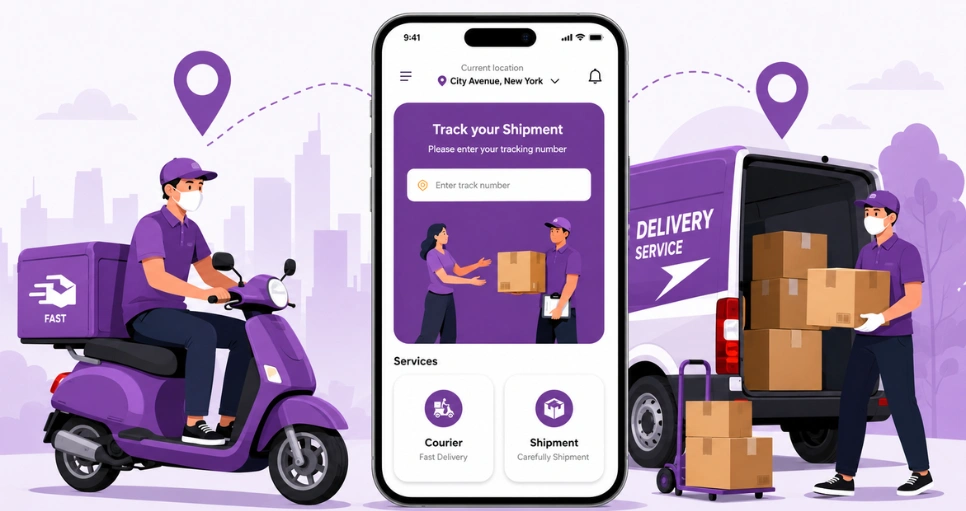
A courier delivery app connects customers, drivers, and dispatchers through real-time booking, tracking, and route management.
Understanding realistic courier delivery app development budgets matters more than ever as more businesses enter this rapidly expanding logistics space.
1. Rising Parcel Volumes Are Straining Manual Systems
E-commerce growth continues pushing parcel volumes higher every year, making manual dispatch and phone-based booking systems increasingly unsustainable.
This shift is pushing courier businesses to prioritize app-based platforms capable of handling growing order volumes efficiently.
2. Strong, Sustained Global Market Growth Through 2026
The global last-mile delivery market is projected to grow from $184.2 billion in 2025 to $199.68 billion in 2026, reaching $277.76 billion by 2030 at an 8.6% CAGR.
3. Continued Expansion Through 2027 and Beyond
The broader last-mile delivery market is projected to reach $207.10 billion in 2026 and $378.59 billion by 2033, growing at a 9.0% CAGR, reflecting sustained investment in delivery technology.
Must-Have Features That Shape Courier Delivery App Development Cost
The right courier delivery app features directly influence your final development budget. From real-time tracking to secure payments, each functionality adds complexity, cost, and long-term operational value to your delivery platform.
1. Real-Time Order Booking and Scheduling
Customers need a simple interface to book pickups, schedule deliveries, and select service speed instantly.
Fast, intuitive booking flows reduce friction and encourage repeat use, especially for businesses managing frequent, recurring shipments.
2. Live GPS Tracking and Delivery Updates
Real-time location tracking lets customers and dispatchers monitor package movement from pickup to drop-off.
Reliable courier delivery software development requires accurate ETAs and live notifications to build trust and reduce support inquiries about delays.
3. Multi-Stop Route Optimization
Efficient last-mile delivery app development requires smart routing algorithms that minimize travel time across multiple stops.
This feature significantly reduces fuel costs and delivery times, especially for businesses handling high shipment volumes daily.
4. Driver Management and Dispatch Tools
A dedicated dispatcher dashboard assigns deliveries, monitors driver availability, and manages workload distribution efficiently.
Strong driver management ensures faster response times and more efficient resource allocation during busy delivery periods.
5. Secure Payment and Invoicing System
Integrated payment processing, automated invoicing, and support for multiple payment methods streamline transactions for both individual and business customers.
Reliable billing systems reduce disputes and improve overall customer satisfaction.
6. Proof of Delivery and Digital Signatures
Photo confirmation, digital signatures, and delivery timestamps protect both businesses and customers from disputes.
This feature is essential for accountability, especially for high-value or time-sensitive shipments handled daily.
Courier Delivery App Development Cost Breakdown by Stage
The total courier delivery app development cost typically ranges from $7,000 to $60,000, depending on features, integrations, and platform complexity.
Understanding baseline mobile app development cost benchmarks alongside this breakdown helps you see exactly where your budget goes.
1. UI/UX Design and Wireframing
Design costs cover wireframes, prototypes, and a polished interface tailored to your brand identity.
Understanding the full courier delivery app development cost at this stage helps you decide between simple templates and fully custom design work.
|
Element |
Description |
Cost |
|
Wireframing |
Basic layout structure and flow |
500-900 |
|
UI Design |
Custom screens and branding |
1,200-2,500 |
|
Prototyping |
Interactive clickable prototype |
700-1,400 |
2. Restaurant and Vendor Onboarding
Building a structured system for onboarding businesses or individual senders requires clean registration flows and verification.
Understanding the full cost to develop a courier delivery app at this stage helps you plan for scalable onboarding as your network grows.
|
Element |
Description |
Cost |
|
Sender Registration |
Business or individual signup flow |
900-1,700 |
|
Verification System |
Identity and business validation |
700-1,300 |
|
Onboarding Dashboard |
Guided setup for new senders |
800-1,500 |
3. Real-Time Order Booking System
Building booking, scheduling, and service-speed selection requires structured backend logic.
This stage often represents a meaningful share of overall software development cost, since it supports every delivery request added afterward.
|
Element |
Description |
Cost |
|
Booking Interface |
Pickup and delivery scheduling |
1,100-2,200 |
|
Service Speed Selection |
Standard vs express delivery options |
700-1,300 |
|
Order Confirmation |
Automated booking confirmations |
500-1,000 |
4. GPS Tracking and Route Optimization
Live tracking and smart routing algorithms minimize delivery delays and fuel costs across multiple stops.
Understanding related logistics app development cost benchmarks helps teams budget accurately for this technically demanding functionality.
|
Element |
Description |
Cost |
|
GPS Tracking |
Live driver location updates |
1,200-2,400 |
|
Route Optimization |
Multi-stop routing algorithms |
1,600-3,000 |
|
ETA Calculation |
Real-time delivery estimates |
700-1,300 |
5. Driver App and Dispatch Tools
A dedicated driver-facing app manages navigation, assignments, and earnings tracking.
Reliable courier tracking app development ensures dispatchers can monitor driver availability and workload distribution efficiently across busy periods.
|
Element |
Description |
Cost |
|
Driver Assignment System |
Order routing to available drivers |
1,300-2,600 |
|
In-App Navigation |
Turn-by-turn delivery directions |
900-1,700 |
|
Earnings Dashboard |
Driver payout and history tracking |
700-1,300 |
6. Payment and Invoicing System
Secure payment gateways and automated invoicing streamline transactions for both individual and business customers.
Solid delivery app development treats billing accuracy as essential for maintaining customer trust and reducing disputes.
|
Element |
Description |
Cost |
|
Payment Gateway Integration |
Multi-method payment processing |
800-1,700 |
|
Automated Invoicing |
Recurring billing for business clients |
600-1,200 |
|
Transaction Security |
Encryption and fraud prevention |
500-1,000 |
7. Admin Panel and Analytics Dashboard
A robust admin dashboard lets platform owners manage orders, drivers, and reporting from one place.
Comprehensive courier management software development treats analytics and reporting as essential, not optional, for long-term business growth.
|
Element |
Description |
Cost |
|
Order Management |
Centralized order processing dashboard |
1,100-2,200 |
|
Driver Controls |
Account management and verification |
800-1,600 |
|
Analytics & Reporting |
Delivery and performance insights |
700-1,400 |
8. Proof of Delivery Features
Photo confirmation, digital signatures, and delivery timestamps protect both businesses and customers from disputes.
Any serious custom courier delivery app development project treats accountability features as essential for high-value or time-sensitive shipments.
|
Element |
Description |
Cost |
|
Digital Signature Capture |
Customer sign-off on delivery |
600-1,200 |
|
Photo Confirmation |
Delivery proof photo upload |
500-1,000 |
|
Delivery Timestamps |
Automatic completion logging |
400-800 |
9. Backend and Database Architecture
A scalable backend handles user data, orders, and delivery history across potentially thousands of shipments.
Strong logistics software development requires this foundation to prevent slowdowns during peak order volumes.
|
Element |
Description |
Cost |
|
Database Design |
Scalable schema architecture |
1,300-2,600 |
|
Server Configuration |
Cloud or on-premises setup |
900-1,700 |
|
API Development |
Backend-to-frontend connectivity |
1,100-2,000 |
10. QA Testing and Post-Launch Support
Thorough testing across devices, order flows, and payment scenarios prevents costly post-launch issues.
Any experienced courier delivery app development company provides ongoing maintenance to keep the platform stable after deployment.
|
Element |
Description |
Cost |
|
Manual & Automated Testing |
Functional and regression testing |
1,000-2,000 |
|
Bug Fixing |
Pre-launch issue resolution |
600-1,200 |
|
Ongoing Maintenance |
Annual updates and support |
1,800-3,800 |
Factors That Can Increase or Reduce Your Development Budget
Several variables influence the total courier delivery app development cost, from feature complexity to integration requirements.
Understanding these factors upfront helps businesses plan realistic budgets and avoid unexpected expenses partway through the build process.
1. App Complexity and Feature Scope
A basic booking platform costs far less than one packed with route optimization, live tracking, and advanced dispatch tools.
Overall courier delivery app development costs climb quickly as custom functionality and integrations increase in number.
2. Multi-Stop and Route Optimization Requirements
Building smart algorithms that minimize travel time across multiple stops adds significant backend complexity.
Reliable courier delivery app development requires advanced mapping logic, which increases both development time and overall project cost.
3. Development Team Location and Expertise
Where you hire significantly affects pricing. Strong courier delivery software development teams based in North America and Western Europe typically charge more per hour than teams in South Asia or Eastern Europe.
4. Level of Platform Customization
Choosing fully custom courier delivery software development over template-based solutions increases upfront costs but delivers greater scalability and differentiation compared to generic, pre-built delivery frameworks.
5. Real-Time Tracking and Logistics Complexity
Building a reliable parcel delivery app development platform requires GPS integration, live ETA updates, and backend systems capable of handling multiple simultaneous deliveries without performance issues or delays.
6. AI and Automation Integration
Partnering with experienced AI app development companies for demand forecasting, fraud detection, or smart routing adds sophistication but increases cost. These intelligent features improve efficiency while requiring specialized technical expertise.
How to Reduce Costs Without Compromising Quality?
Controlling development costs doesn't mean cutting corners on reliability or performance.
Following a practical enterprise web application development guide approach, combined with smart planning at every stage, helps businesses stay within budget while delivering a solid product.
1. Start with a Clear MVP Scope
Defining core features first, like booking and basic tracking, rather than building every module at once keeps initial costs manageable.
Launching a lean version lets teams validate demand before investing in advanced parcel delivery app development features.
2. Prioritize Requirements Gathering Upfront
Thorough planning prevents costly scope changes mid-project.
Understanding the full last mile delivery app development scope early, including integrations and compliance needs, helps leaders avoid budget surprises later in development.
3. Choose Modular, Scalable Architecture
Building with modular components allows teams to add features incrementally rather than rebuilding entire systems.
Solid courier management software development practices ensure scalability decisions made early prevent expensive rework as needs evolve.
4. Reuse Existing Components and Templates
Leveraging pre-built modules, authentication systems, and design templates reduces development time significantly.
Reliable mobile app development services help teams identify which components can be reused versus which require custom building.
5. Automate Testing and Quality Assurance
Automated testing tools catch bugs faster and reduce manual QA hours over time.
This is especially valuable for any custom courier delivery app development project handling complex booking, tracking, and payment flows.
6. Leverage Cloud Infrastructure Strategically
Cloud-based hosting reduces upfront infrastructure costs compared to on-premise servers.
Flexible, usage-based cloud pricing models help businesses scale server capacity as delivery volume grows rather than overpaying for unused capacity upfront.
7. Outsource Strategically Based on Expertise
Combining in-house teams with specialized external developers for complex integrations balances cost and quality.
Understanding realistic courier delivery app development cost benchmarks helps businesses decide where outsourcing makes the most financial sense.
8. Plan for Phased Rollouts
Releasing features in phases rather than all at once spreads costs over time and allows for feedback-driven adjustments.
This approach reduces risk while ensuring each phase delivers real business value before the next investment.
Final Thoughts
Building a courier delivery app in 2026-27 comes down to smart planning around features, platform choice, and budget management from the very start.
As this guide shows, development costs typically range from $7,000 to $60,000, depending on complexity, integrations, and platform scope.
Prioritize real-time tracking, secure payments, and reliable dispatch tools before investing in advanced extras like AI-driven route optimization.
Starting with a clear MVP, choosing modular architecture, and reusing existing components all help control costs without sacrificing quality or reliability.
With careful budgeting and a clear development roadmap, businesses can launch a competitive, scalable courier platform that keeps customers, drivers, and dispatchers satisfied while positioning the company for sustainable growth in a rapidly expanding delivery market.
FAQ's
Development costs typically range from $7,000 to $60,000, depending on features, platform choice, integrations, and the development team you hire.
Most courier delivery apps take 4-6 months to develop, factoring in planning, core development, advanced features, and thorough testing before launch.
Yes, starting with a basic MVP focused on booking, tracking, and payments keeps initial costs closer to $7,000-$18,000.
Yes, smart routing algorithms significantly reduce fuel costs and delivery times, making this feature essential for businesses handling higher shipment volumes.
Yes, most successful platforms build dedicated driver and dispatcher tools, improving navigation, workload management, and overall delivery efficiency compared to a single shared app.
AI-powered route optimization, real-time GPS tracking, and multi-stop dispatch logic typically add the most to your overall development budget.
Yes, launching on either iOS or Android alone reduces development and testing costs significantly compared to building for both platforms simultaneously.
Plan for server maintenance, security updates, and feature enhancements, which typically add $1,800-$3,800 annually depending on your app's scale and usage.
Yes, common revenue streams include subscription plans for businesses, premium same-day delivery charges, and volume-based pricing tiers for frequent shippers.
Yes, a specialized company understands routing, dispatch, and real-time tracking challenges, reducing costly errors compared to hiring a generalist development team.

CrinPro
CrinPro Solutions is a leading IT company that helps startups and enterprises build innovative digital products. From intuitive mobile applications and high-performance websites to AI-powered solutions and enterprise software, our team delivers scalable, secure, and user-focused products tailored to unique business needs. With expertise across multiple industries, we transform ideas into digital experiences that drive growth, improve efficiency, and create long-term business value.