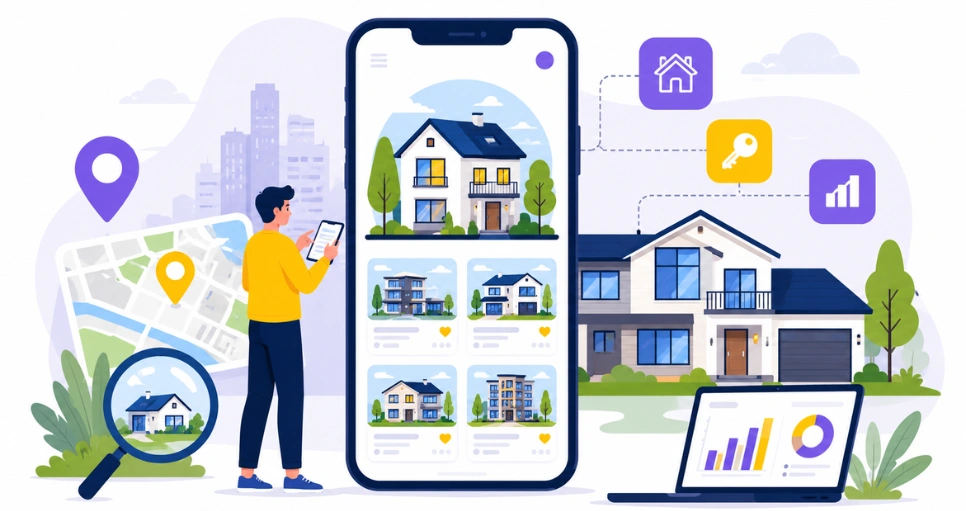
Key Takeaways:
- Real estate apps simplify property discovery, management, and communication for buyers, sellers, and agents.
- Choosing the right features and technology stack is essential for building a scalable platform.
- Development costs depend on app complexity, integrations, supported platforms, and future scalability.
- Multiple monetisation models, including subscriptions and featured listings, can generate sustainable revenue.
- Emerging technologies like AI, AR/VR, and blockchain are shaping the future of digital real estate.
The real estate industry has embraced digital transformation, making property buying, selling, renting, and management more accessible than ever. Instead of relying solely on agents or physical visits, buyers and tenants now expect to browse listings, schedule property tours, compare prices, and communicate with agents directly from their smartphones.
This shift has encouraged real estate agencies, property developers, brokers, and startups to invest in mobile applications that simplify property transactions while improving customer engagement. Modern real estate apps not only showcase property listings but also provide virtual tours, mortgage calculators, AI-powered recommendations, and secure communication, creating a seamless experience for users.
Whether you're building a platform for residential properties, commercial real estate, rentals, or property management, understanding the development process is essential. This guide covers everything you need to know about building a successful real estate application in 2026.
Real Estate App Market Statistics
The real estate industry is rapidly embracing digital technologies, with mobile applications and property management software transforming how people buy, sell, rent, and manage properties. Rising demand for virtual property experiences, AI-powered recommendations, and cloud-based management platforms continues to drive investment in real estate app development.
- The global real estate software market was valued at USD 12.79 billion in 2025 and is projected to reach USD 31.96 billion by 2033, growing at a CAGR of 12.2%.
- The global PropTech market reached USD 45.12 billion in 2025 and is expected to grow to USD 115.04 billion by 2033, registering a CAGR of 12.6%. North America accounted for 55.5% of the global market in 2025.
- The property management software market was valued at USD 26.55 billion in 2025 and is forecast to reach USD 52.21 billion by 2032, expanding at a CAGR of 10.1%.
- The global property management software market was also estimated at USD 3.61 billion in 2025 and is projected to reach USD 5.89 billion by 2033, driven by increasing adoption of SaaS-based property management solutions.
Why Real Estate Apps Are Transforming the Property Industry
Technology has fundamentally changed how people search for, buy, rent, and manage properties. Instead of relying solely on newspapers or visiting multiple real estate offices, customers can now browse thousands of verified listings, compare prices, schedule site visits, and connect with agents through a single mobile application.
This growing demand has accelerated property app development, enabling businesses to deliver personalised experiences while streamlining property management and customer interactions.
- Digital platforms offer benefits such as the following:
- Faster property discovery
- Real-time listing updates
- AI-powered property recommendations
- Virtual tours and interactive maps
- Secure communication between buyers and agents
- Digital documentation and payment support
For real estate businesses, adopting digital platforms improves operational efficiency while expanding market reach.
Benefits of Real Estate Mobile Apps for Property Businesses
The modern property market is highly competitive, making customer convenience a key differentiator. A mobile application allows businesses to engage users throughout their property-buying journey while reducing manual processes.
1. Improved Customer Experience
A dedicated real estate mobile app development strategy enables users to browse listings, save favourite properties, receive instant notifications, and contact agents from anywhere.
2. Better Lead Generation
Applications capture valuable customer data, helping businesses understand user preferences and deliver personalised recommendations.
3. Increased Operational Efficiency
Property listings, appointments, customer enquiries, and documentation can all be managed through a centralised platform, reducing administrative work.
4. Enhanced Brand Visibility
A professionally designed application strengthens brand credibility and helps businesses build long-term relationships with buyers, sellers, and tenants.
5. Competitive Advantage
Companies investing in modern digital solutions can respond faster to customer needs while staying ahead of competitors relying on traditional methods.
Popular Types of Real Estate Apps for Modern Businesses
Real estate businesses have different operational requirements depending on their target audience and services. Choosing the right application type ensures your platform addresses specific user needs while supporting long-term business growth.
1. Property Listing Applications
A property listing app development solution enables buyers and renters to search properties using advanced filters such as location, budget, property type, amenities, and availability. These apps often include interactive maps, image galleries, virtual tours, and direct communication with property owners or agents.
Best for: Real estate agencies, property marketplaces, and broking firms.
2. Property Management Applications
Property owners and managers use property management app development solutions to streamline rent collection, maintenance requests, tenant communication, lease management, and financial reporting from a centralised dashboard.
Best for: Property management companies, landlords, and commercial real estate firms.
3. Realtor Applications
A dedicated realtor app development platform helps real estate agents manage leads, schedule property visits, track client interactions, and share property details with prospective buyers more efficiently.
Best for: Independent agents and real estate broking firms.
4. Rental Marketplace Applications
Rental platforms connect tenants with landlords while simplifying property discovery, booking requests, document verification, and online rent payments. These applications are particularly popular in urban areas where rental demand is high.
Best for: Residential and commercial rental businesses.
5. Enterprise Real Estate Solutions
Large real estate organisations often require customised platforms that integrate CRM systems, analytics dashboards, document management, customer portals, and marketing automation into one ecosystem. Businesses planning an end-to-end digital platform should also evaluate the web app development cost when building web portals for agents, administrators, and customers alongside their mobile application.
Best for: Enterprise real estate firms and large property developers.
Core Features That Power Modern Real Estate Apps
The success of a real estate application depends on how effectively it simplifies property discovery and communication. Below are the essential features every modern real estate app should include.
Features for Buyers and Renters
|
Feature |
Purpose |
|
User Registration |
Secure sign-up using email, phone, or social accounts. |
|
Advanced Search Filters |
Search properties by location, budget, size, and amenities. |
|
Property Details |
Display images, videos, pricing, floor plans, and specifications. |
|
Interactive Maps |
Show nearby schools, hospitals, transport, and local amenities. |
|
Favorites |
Save preferred properties for future viewing. |
|
Virtual Property Tours |
Explore properties remotely through 360° images or videos. |
|
Push Notifications |
Receive alerts for new listings and price updates. |
|
In-App Chat |
Connect directly with property owners or agents. |
Features for Property Owners & Agents
|
Feature |
Purpose |
|
Property Listing Management |
Add, edit, and remove property listings. |
|
Lead Management |
Track buyer enquiries and appointments. |
|
Analytics Dashboard |
Monitor listing performance and user engagement. |
|
Document Sharing |
Upload contracts, brochures, and property documents securely. |
|
Appointment Scheduling |
Organise property visits with potential buyers. |
Features for Admin
|
Feature |
Purpose |
|
User Management |
Manage buyers, sellers, agents, and administrators. |
|
Listing Approval |
Review and verify property listings before publishing. |
|
Content Management |
Update banners, blogs, and promotional content. |
|
Reports & Analytics |
Track revenue, user activity, and platform performance. |
|
Payment Management |
Monitor subscriptions and transaction history. |
Well-designed real estate app features not only improve user engagement but also help businesses automate workflows, reduce manual effort, and enhance customer satisfaction.
Planning Your Real Estate App Strategy
Every successful real estate platform begins with a clear strategy. Before starting development, businesses should identify their target audience, define core features, and select a scalable business model that supports future growth.
As the project grows, partnering with experienced mobile app development companies can help ensure the platform remains secure, scalable, and optimised for long-term business success.
1. Understand Your Target Users
Different users have different expectations. Homebuyers look for detailed property information, and tenants prioritise affordability and availability, while investors focus on market insights and ROI. Understanding these requirements helps create a more personalised user experience.
2. Define Your Core Value Proposition
Determine what makes your platform unique. Your app could specialise in luxury properties, rental housing, commercial real estate, property management, or AI-powered property recommendations.
3. Choose the Right Revenue Model
Real estate apps can generate revenue through:
- Property listing subscriptions
- Featured property promotions
- Commission on successful transactions
- Premium memberships
- In-app advertising
- Lead generation services
Businesses investing in real estate software development should prioritise scalable architecture that can support increasing listings, users, and future feature enhancements without affecting performance.
Building a Real Estate App: Step-by-Step Guide
Developing a successful real estate application requires more than an attractive interface. It involves careful planning, user-focused design, scalable architecture, and continuous improvements to deliver a seamless experience for buyers, sellers, agents, and property managers.
Step 1: Research the Market and Define Your Goals
Start by identifying your target audience and business objectives. Analyse competitors, study market trends, and determine whether your platform will focus on property sales, rentals, commercial listings, or property management. A clear roadmap helps reduce development risks and aligns the application with business goals.
Step 2: Finalize Features and User Roles
Define the functionalities for each user type, including buyers, sellers, agents, property managers, and administrators. Since real estate platforms involve property searches, scheduling visits, and secure transactions, they share several workflows with booking app development, making intuitive navigation and streamlined user journeys essential.
Step 3: Create UI/UX Designs
Design wireframes and interactive prototypes before development begins. A clean and responsive interface helps users browse properties, compare listings, schedule visits, and communicate with agents effortlessly.
Step 4: Build the Frontend and Backend
This stage includes developing the mobile application, web dashboard, APIs, databases, and cloud infrastructure. Businesses often choose custom real estate app development to build platforms tailored to their operational workflows, branding, and long-term scalability.
Step 5: Integrate Third-Party Services
Modern real estate applications rely on several external integrations, including:
- Google Maps API
- Mortgage calculators
- Payment gateways
- CRM platforms
- Document verification services
- Push notification systems
- Cloud storage
- Analytics tools
Step 6: Testing and Quality Assurance
Comprehensive testing ensures the application performs smoothly across devices and operating systems. Testing generally includes:
- Functional testing
- Performance testing
- Security testing
- API testing
- Compatibility testing
- User acceptance testing (UAT)
Step 7: Launch and Ongoing Improvements
After deployment, continuously monitor user behaviour, platform performance, and customer feedback. Regular updates, security improvements, and feature enhancements help maintain user engagement and support business growth.
Real Estate App Development Cost Breakdown
The investment required for a real estate application depends on its complexity, supported platforms, design requirements, integrations, and feature set. Businesses should evaluate the real estate app development cost based on their project goals and long-term growth plans.
Estimated Development Cost by Project Complexity
|
Development Level |
What's Included |
Estimated Cost (USD) |
|
Basic |
Property listings, search filters, user registration, maps, and contact forms |
$8,000 – $20,000 |
|
Standard |
Saved properties, chat, appointment scheduling, push notifications, payment integration, and admin dashboard |
$20,000 – $40,000 |
|
Advanced |
AI property recommendations, virtual tours, CRM integration, analytics, and multi-user management |
$40,000 – $55,000 |
|
Enterprise |
Property management, multiple user roles, cloud infrastructure, automation, advanced reporting, and enterprise integrations |
$55,000 – $70,000+ |
Beyond the initial investment, businesses should also estimate the overall software development cost, including maintenance, cloud infrastructure, security updates, and future feature enhancements.
Conclusion
The real estate industry is becoming increasingly digital, with buyers, sellers, agents, and property managers relying on mobile applications for faster, smarter, and more convenient property transactions. From browsing listings and scheduling property visits to managing rentals and completing secure transactions, real estate apps have become an essential tool for modern property businesses.
Whether you're building a property marketplace, rental platform, or property management solution, investing in a scalable and user-centric application can improve customer engagement, streamline operations, and support long-term business growth. By focusing on the right features, modern technologies, and a well-planned development strategy, businesses can create real estate applications that stand out in a competitive market and deliver lasting value to users.
FAQ's
The development cost depends on the app's complexity, features, supported platforms, and integrations, typically ranging from $8,000 to $80,000+
Essential features include property listings, advanced search filters, interactive maps, virtual tours, chat, appointment scheduling, and push notifications.
A basic app can take around 2–3 months, while advanced real estate platforms generally require 7–10 months.
A real estate app improves customer engagement, streamlines operations, generates quality leads, and enhances the overall property buying and renting experience.
Yes. AI can power personalised property recommendations, automate customer support, predict pricing trends, and improve lead management.
Popular technologies include Flutter, React Native, Kotlin, Swift, Node.js, Python, AWS, Google Cloud, and PostgreSQL for building scalable applications.
Revenue can be generated through featured listings, subscription plans, transaction commissions, premium services, and in-app advertising.

CrinPro
CrinPro Solutions is a leading IT company that helps startups and enterprises build innovative digital products. From intuitive mobile applications and high-performance websites to AI-powered solutions and enterprise software, our team delivers scalable, secure, and user-focused products tailored to unique business needs. With expertise across multiple industries, we transform ideas into digital experiences that drive growth, improve efficiency, and create long-term business value.