Key Takeaways :
- Consumer expectations for instant service access are only growing. Businesses that build thoughtfully designed on-demand platforms in 2026 position themselves ahead of competitors who are still relying on outdated service delivery models.
- Real-time tracking, seamless payments, two-way ratings, and smart scheduling are not optional extras. They are the core features that determine whether users come back after their first experience or never open the app again.
- On-demand app development costs range between $8,000 and $80,000. Where that budget gets allocated across design, development, and testing determines how well the platform performs when real users start engaging with it daily.
- Skipping discovery, rushing design, or underinvesting in QA testing creates problems that are far more expensive to fix after launch than they would have been to prevent during the build. Every stage of the process exists for a reason.
- Post-launch monitoring, user feedback, bug fixes, and planned feature updates are what separate on-demand apps that grow from ones that stagnate. Building a strong post-launch plan before going live is just as important as the development itself.
The way people access services has changed completely. Nobody wants to wait days for something they can get in hours or minutes.
From rides and food to home repairs and personal care, instant access has become the new standard across nearly every industry.
Businesses that recognize this shift and act on it are pulling ahead fast, while those that ignore it are losing ground to competitors who move quicker and think smarter. Building the right platform to meet that demand is where the real opportunity lives.
That is exactly where on-demand app development becomes the most important decision a business can make in 2026.
In this guide, we cover everything worth knowing, from the features that make on-demand apps work to the real costs involved and the step-by-step process that takes an idea all the way to a successful launch.
Understanding the On-Demand App Market Before You Build
Jumping into custom on-demand app development without understanding the market is one of the most expensive mistakes a business can make.
Knowing where the opportunity is and who you are competing with changes every decision that follows.
1. The On-Demand Economy Is Still Growing Fast
The numbers are hard to ignore. According to Statista, the global on-demand economy is projected to reach $335 billion by 2025, driven by increasing smartphone penetration, faster internet speeds, and a consumer base that now treats instant service delivery as a baseline expectation rather than a premium offering.
2. Every Major Industry Has an On-Demand Version Now
Transportation, healthcare, home services, beauty, grocery, and logistics all have thriving on-demand platforms competing for the same customer attention.
Understanding which vertical you are entering and how saturated it already is determines how differentiated your product needs to be to win real market share.
3. Consumer Behavior Has Permanently Shifted Toward Instant Access
PwC research found that 86 percent of consumers are willing to pay more for a better customer experience, and speed of service ranks among the top factors driving that willingness.
On-demand platforms that deliver fast, reliable, and frictionless experiences consistently outperform those that treat speed as secondary.
Core Features Every On-Demand App Needs to Succeed
on-demand app features are what separate an on-demand app that users keep from one they delete after the first disappointing experience. Getting the core feature set right from the beginning is what drives retention, trust, and long-term revenue growth.
1. Smart User Onboarding and Profile Management
First impressions in on-demand apps are made during onboarding. A fast, frictionless registration process with social login options, clear profile setup, and immediate access to core features reduces drop-off significantly and sets the tone for every interaction that follows inside the platform.
2. Real-Time Service Tracking and Live Updates
Users expect to know exactly what is happening with their order or service request at every stage. Real-time GPS tracking combined with automated push notifications for each status update builds the kind of post-booking confidence that drives repeat usage and reduces inbound support requests dramatically.
3. Seamless In-App Payment and Multiple Checkout Options
Checkout friction kills conversions faster than almost anything else. Supporting cards, digital wallets, and saved payment methods inside a single fast checkout flow removes the final barrier between a user who intends to book and one who actually completes the transaction without second-guessing their decision.
4. Ratings, Reviews, and Two-Way Feedback System
Trust is the foundation of every on-demand platform. A two-way ratings system where both customers and service providers can leave feedback creates accountability on both sides, improves overall service quality over time, and gives new users the social proof they need to book with confidence.
5. Smart Scheduling and Booking Management
Not every on-demand service needs to be instant. Giving users the ability to schedule services in advance, modify bookings, and manage upcoming appointments directly inside the app adds significant flexibility that expands your addressable audience well beyond users who only need something right now.
6. In-App Customer Support and Help Center
When something goes wrong, users need help immediately. A built-in support system with live chat, automated FAQs, and easy order dispute resolution keeps frustration from turning into permanent churn. Fast, accessible support is one of the highest-impact features any on-demand platform can invest in.
From Idea to Launch: The Complete Development Roadmap
Every successful on-demand app development project follows a deliberate, structured process. Skipping stages or rushing through them is where most budgets break down and timelines fall apart. Here is the complete roadmap from first idea to final launch.
Step 1: Market Research and Idea Validation
Strong on-demand mobile app development always starts with validation before a single line of code gets written. Study your target market, analyze competitors, identify gaps, and confirm that real demand exists for your specific solution before committing significant time and budget to building anything.
Step 2: Define Your Business Model and Revenue Strategy
Reliable on-demand app development services begin with a clear business model. Decide how your platform generates revenue through commissions, subscriptions, service fees, or a combination before moving into design or development. A clear monetization strategy shapes every technical and product decision that follows.
Step 3: Choose the Right Development Partner
Selecting experienced app development companies with a proven track record in on-demand platforms is one of the most important decisions in the entire process. Review portfolios, check client references, and confirm they understand the technical complexity of real-time systems before signing any agreement.
Step 4: Discovery Phase and Technical Planning
The on-demand app development process gains clarity during discovery. This stage covers detailed requirements gathering, user persona definition, technical architecture planning, and feature prioritization. Everything decided here becomes the blueprint your development team follows through every subsequent stage of the build.
Step 5: UI/UX Design and Prototyping
A skilled on-demand app development company invests heavily in design before writing any code. Wireframes, user flow mapping, and interactive prototypes validate the experience with real users early, catching costly design mistakes before they get built into the product and become expensive to fix.
Step 6: Core Development and AI Integration
This is where the platform comes to life. Partnering with an experienced artificial intelligence development company during this stage ensures smart features like personalized recommendations, dynamic pricing, and predictive demand tools get built into the core architecture rather than bolted on awkwardly as afterthoughts later.
Step 7: Third-Party Integrations and API Connections
Payments, mapping, SMS notifications, and analytics platforms all need to connect seamlessly. This stage of on-demand app development requires careful API management to ensure every integration works reliably under real traffic conditions without creating performance bottlenecks or security vulnerabilities in your platform.
Step 8: Quality Assurance and Testing
Custom on-demand app development demands comprehensive testing before any public release. Functional testing, performance testing, security audits, and real device compatibility checks all happen here. Every bug caught during QA is one fewer negative review waiting to damage your platform's reputation on launch day.
Step 9: Soft Launch and Beta Testing
Before going fully public, experienced on-demand mobile app development teams recommend a controlled soft launch to a limited user group. Real usage data from beta testers reveals issues that internal testing misses and gives you the feedback needed to make meaningful improvements before full release.
Step 10: Full Launch and Post-Launch Optimization
Reputable AI app development companies understand that launch day is the beginning, not the finish line. Monitor performance metrics, gather user feedback, prioritize bug fixes, and plan your first feature update before going live so post-launch momentum stays strong from the very first day.
Full Cost Breakdown of On-Demand App Development in 2026
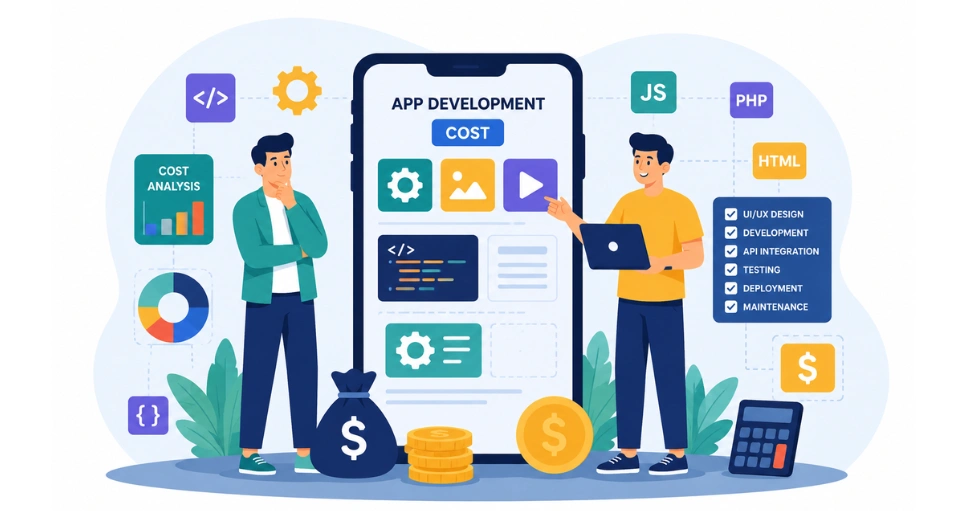
Every on-demand app budget looks different depending on features, complexity, and team location. Understanding the real cost to develop a mobile app keeps your planning sharp and your expectations realistic. Costs typically range between $8,000 and $80,000 for a fully functional platform. Here is exactly where that investment goes across every major development component.
|
Development Component |
What It Covers |
Estimated Cost |
|
UI/UX Design |
Wireframes, user flow mapping, interactive prototypes, and final screen designs for a seamless user experience |
$800 – $1,500 |
|
Frontend Development |
Mobile app screens for iOS and Android built with React Native or Flutter for smooth cross-platform performance |
$1,500 – $2,800 |
|
Backend Development |
Server-side logic, database architecture, API development, and all core third-party service integrations |
$2,500 – $4,500 |
|
Real-Time Tracking System |
GPS-based live tracking, service provider location updates, and a dynamic ETA calculation engine |
$1,200 – $2,200 |
|
Payment Gateway Integration |
Multi-method payment setup including cards, digital wallets, and recurring billing with full PCI compliance |
$700 – $1,300 |
|
Ratings and Review System |
Two-way feedback engine, review moderation tools, and service quality scoring across the platform |
$500 – $900 |
|
Push Notifications and Alerts |
Automated order updates, promotional messages, and re-engagement campaigns via Firebase Cloud Messaging |
$400 – $700 |
|
Admin Panel and Dashboard |
Operations management interface covering orders, users, service providers, analytics, and promotional tools |
$1,800 – $3,200 |
|
QA Testing and Bug Fixing |
Functional, performance, security, and device compatibility testing across iOS and Android versions |
$900 – $1,600 |
|
Launch and Post-Launch Support |
App store submission, ASO setup, performance monitoring, and 30-day post-launch issue resolution |
$600 – $1,000 |
Final Thoughts
Building an on-demand app in 2026 is one of the most strategic moves a business can make in a market where consumer expectations for speed and convenience have never been higher.
The features, costs, and development process covered in this guide give you a complete picture of what it actually takes to build something that works in the real world and holds up under real user demand.
Success in the on-demand space does not come from rushing to launch. It comes from planning deliberately, choosing the right development partner, and building a platform that solves a genuine problem better than anything already out there.
Start with a clear vision, invest in the right foundation, and launch with a product your users will trust, recommend, and return to every single time they need it.
FAQ's
On-demand app development is the process of building platforms that connect users with services or products instantly through a mobile or web application.
Costs typically range between $8,000 and $80,000 depending on features, platform choice, team location, and the overall complexity of your on-demand platform.
A basic on-demand app takes 3 to 4 months to build. A fully featured platform with real-time tracking, payments, and admin tools can take 6 to 9 months.
Core features include real-time tracking, seamless payments, push notifications, ratings and reviews, smart scheduling, user onboarding, and a powerful admin dashboard for managing daily operations.
Cross-platform development using React Native or Flutter is the smarter choice for most businesses. It delivers strong performance on both iOS and Android at a significantly lower development cost.
Transportation, food delivery, healthcare, home services, beauty, grocery, and logistics are among the highest-performing verticals for on-demand platforms in 2026 and beyond.
Real-time tracking is non-negotiable. It builds user trust, reduces support inquiries, and directly impacts how satisfied customers feel about the overall service experience your platform delivers.
Absolutely. Starting with a focused MVP that covers core booking, payment, and tracking functionality is the smartest way to validate your business model before investing in advanced features.
React Native or Flutter for mobile, Node.js for backend, PostgreSQL for database, Google Maps API for tracking, Stripe for payments, and Firebase for push notifications form a reliable foundation.
Look for proven experience in on-demand platforms, a strong and relevant portfolio, transparent pricing, clear communication, and reliable post-launch support commitments before making any final hiring decision.

CrinPro
CrinPro Solutions is a leading IT company that helps startups and enterprises build innovative digital products. From intuitive mobile applications and high-performance websites to AI-powered solutions and enterprise software, our team delivers scalable, secure, and user-focused products tailored to unique business needs. With expertise across multiple industries, we transform ideas into digital experiences that drive growth, improve efficiency, and create long-term business value.