Key Takeaways:
- Last-mile delivery software improves route planning, GPS tracking, dispatch, and proof of delivery.
- Custom solutions can reduce fuel waste, failed deliveries, manual work, and cost per stop.
- Essential features include order management, driver apps, live ETAs, customer alerts, and delivery analytics.
- Development costs range from $8,000 to $90,000+, depending on features, integrations, and system complexity.
- Start with clear requirements, test with a small delivery pilot, and scale after fixing key issues.
Ever had a delivery arrive late because the driver took a longer route or the tracking updates stopped?
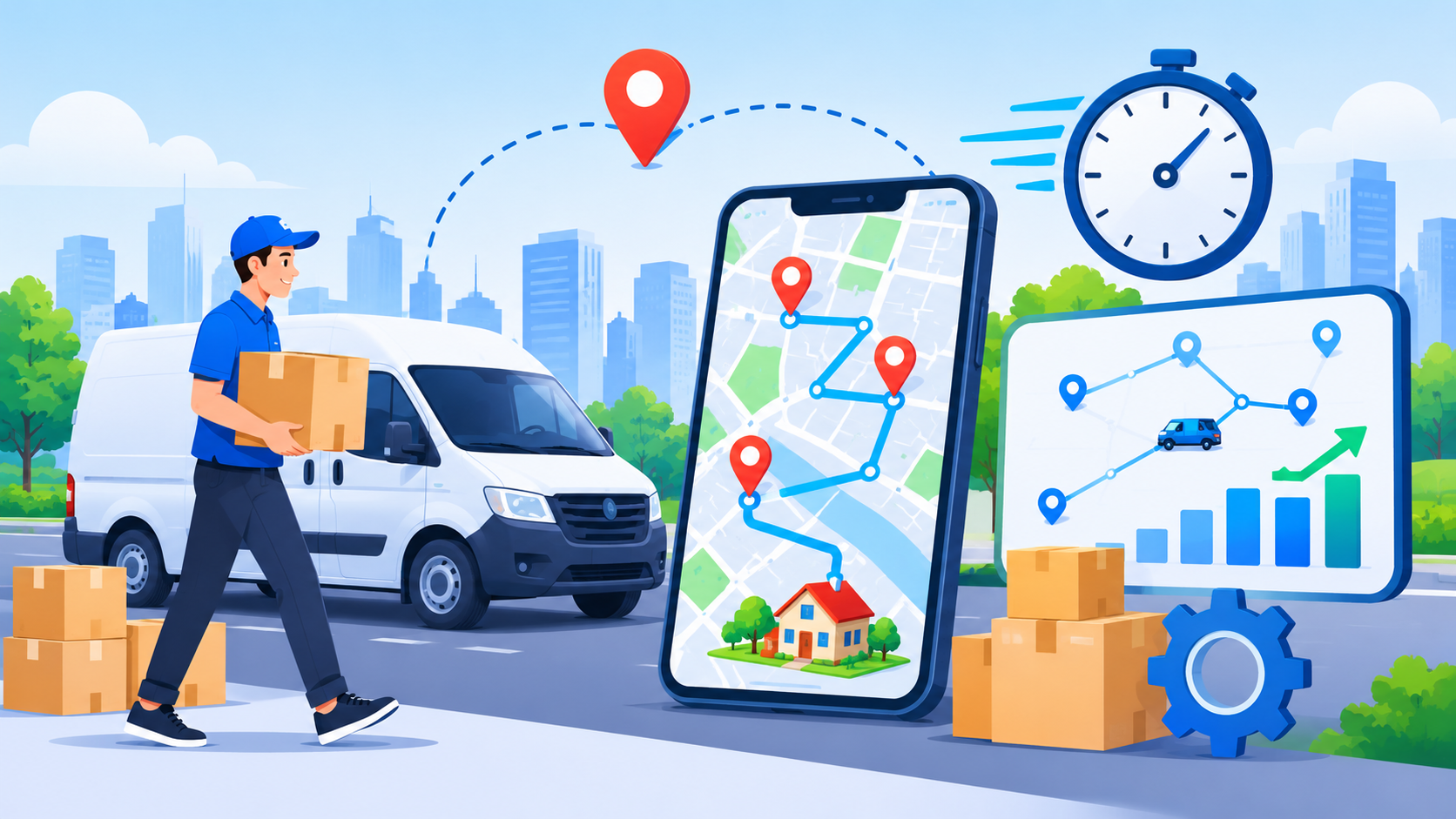
These small issues can frustrate customers and drive up costs. Last-mile delivery software development helps businesses manage orders, optimize delivery routes, track drivers in real time, and improve proof of delivery.
With tools like GPS tracking, automated dispatch, and AI-powered ETA predictions, companies can make smarter delivery decisions.
This guide covers essential features, the development process, 2027 technology trends, cost factors, and common mistakes to avoid.
What Is Last Mile Delivery Software? And Market Overview
Last-mile delivery software helps businesses manage the final step of shipping, from a local distribution hub to the customer’s door. It supports route optimization, driver dispatch, GPS tracking, delivery scheduling, real-time updates, and proof of delivery.
Last Mile Delivery Market Overview: Key Statistics
The last mile delivery market is growing as online shopping, same-day shipping, and customer demand for real-time tracking put pressure on logistics teams. Here are the key figures for the U.S. market and the wider industry.
- The Last Mile Delivery Software Market was valued at $27.62 billion in 2024 and is projected to reach $32.37 billion in 2025 and $158.44 billion by 2035, growing at a CAGR of 17.21%.
- The Last Mile Delivery Software Market is projected to grow from USD 15.2 billion in 2025 to USD 41.5 billion by 2035, at a CAGR of 10.6%.
What Are the Business Benefits of Custom Last Mile Delivery Software in 2027?
Custom last-mile delivery software helps businesses cut delivery costs, improve driver productivity, track orders, and provide faster, more reliable service.
1. Reduce Delivery Costs and Fuel Waste
Route optimization helps drivers avoid traffic, reduce unnecessary miles, and complete more stops per shift. Businesses can lower fuel costs, vehicle wear, and the cost per delivery.
2. Improve Delivery Speed and On-Time Rates
Automated dispatch assigns orders based on driver location, vehicle capacity, and delivery windows. Real-time traffic data and dynamic routing help teams adjust plans when delays occur.
3. Give Customers Real-Time Delivery Visibility
GPS tracking, live ETAs, and automated SMS or email alerts keep customers informed. A branded tracking page reduces “Where is my order?” calls and builds trust in the delivery experience.
4. Scale Operations With Less Manual Work
Custom software can handle growing order volumes without adding the same level of manual effort. With AI automation software development, businesses can automate dispatch, predict delays, and flag failed deliveries sooner.
5. Make Better Decisions With Delivery Data
Analytics dashboards show delivery success rates, driver performance, fuel use, and cost per stop. These insights help logistics managers spot bottlenecks, plan fleet capacity, and improve last-mile delivery operations.
Essential Features to Include in Last Mile Delivery Software
The right features help delivery teams manage orders, plan routes, track drivers, reduce failed deliveries, and keep customers informed.
1. Order Management and Delivery Scheduling
Manage incoming orders, delivery addresses, time slots, and priority levels from one dashboard. Order scheduling helps dispatchers assign deliveries, avoid booking conflicts, and handle busy periods with less manual work.
2. Route Optimization and Automated Dispatch
Use route optimization to plan efficient stops based on traffic, delivery windows, driver availability, and vehicle capacity. Automated dispatch assigns orders faster and helps reduce fuel use, delays, and unnecessary miles.
3. GPS Tracking and Live Delivery Status
GPS tracking shows driver locations and delivery progress in real time. Live ETAs help teams respond to delays. When planning your budget, review factors that affect GPS tracking app development cost, including map APIs, location updates, and tracking accuracy.
4. Customer Notifications and Delivery Tracking Page
Send automatic SMS or email alerts when an order ships, approaches the destination, or arrives. A customer tracking page displays delivery status and estimated arrival times, reducing support calls and keeping people in the loop.
5. Electronic Proof of Delivery
Capture digital signatures, delivery photos, timestamps, and recipient details when an order arrives. Electronic proof of delivery creates a clear record, helps resolve disputes, and gives dispatchers evidence of completed deliveries.
6. Failed Delivery and Returns Management
Record failed delivery attempts, customer unavailability, incorrect addresses, and damaged packages. Return scheduling and redelivery workflows help teams recover orders, reduce repeat trips, and manage reverse logistics with fewer delays.
7. Analytics, Reporting, and Role-Based Access
Use dashboards to track on-time delivery rates, cost per stop, driver performance, and failed deliveries. Role-based access lets dispatchers, drivers, and managers see the information they need while protecting sensitive customer and business data.
8. Driver Mobile App and Navigation
A driver app gives delivery workers access to assigned orders, optimized routes, customer details, and delivery instructions. A reliable courier app development company can build features such as turn-by-turn navigation, status updates, and offline support for weak-signal areas.
How to Build a Last Mile Delivery Software Solution
Building last-mile delivery software starts with clear business goals, the right tech stack, and careful testing. Each step should solve a real delivery problem and support future growth.
1. Define Delivery Workflows and Business Requirements
Start by mapping how orders move from checkout to the customer’s door. List the problems your delivery team faces today, such as late orders, poor route planning, or failed deliveries.
Define the main users: dispatchers, drivers, warehouse staff, managers, and customers. Each group needs different tools.
Set clear goals, such as reducing delivery time, lowering fuel costs, or improving on-time rates.
Key requirements to define:
- Order flow: How orders enter the system and get assigned.
- Delivery rules: Time slots, priority orders, service areas, and vehicle limits.
- Tracking needs: Live GPS location, delivery status, and estimated arrival times.
- Business goals: Delivery volume, target costs, and expected growth.
These details create a clear project plan and help prevent costly changes later.
2. Choose Between Custom Development and an Existing Platform
Next, decide how to build the system. An existing delivery platform may suit a small business with simple needs. Custom software is often a better fit when you need special workflows, deeper integrations, or more control over delivery operations.
|
Factor |
Custom software |
Existing platform |
|
Initial cost |
Usually higher |
Often lower |
|
Launch time |
Takes longer |
Usually faster |
|
Custom features |
Built around your needs |
Limited by available features |
|
System integration |
Can fit your current tools |
Depends on platform support |
|
Long-term control |
Greater control |
Depends on the vendor |
If you need expert help, on-demand app development services can help you plan and build a solution around your delivery model.
Compare setup fees, monthly charges, API limits, support costs, and future upgrades before making a choice. The cheapest option today may cost more as order volume grows.
3. Design the Dispatcher Dashboard, Driver App, and Customer Interface
Plan the main screens before development begins. Keep them simple. A dispatcher should be able to assign orders quickly, while a driver should see the next stop without digging through menus.
The system usually needs three main interfaces:
- Dispatcher dashboard: Shows incoming orders, driver locations, route plans, delays, and delivery status.
- Driver mobile app: Displays assigned jobs, turn-by-turn directions, customer notes, and proof-of-delivery tools.
- Customer interface: Shows order status, estimated arrival time, delivery updates, and contact options.
Good courier delivery app development focuses on real delivery tasks, not just attractive screens. Test early designs with dispatchers and drivers. Their feedback can catch small problems before they slow down an entire delivery shift.
4. Select the Technology Stack and Third-Party APIs
Choose tools that support real-time tracking, secure data handling, and reliable performance during busy delivery hours. Your technology stack should match your budget, team skills, and expected order volume.
Here is one practical stack to consider. The final choice depends on your needs and the skills of your development team.
|
Software component |
Technology options |
Main purpose |
|
Web dashboard |
React or Next.js |
Dispatcher and manager screens |
|
Backend |
Node.js with NestJS |
Business rules and order processing |
|
Mobile app |
Flutter or React Native |
Driver app for iOS and Android |
|
Database |
PostgreSQL with PostGIS |
Orders, addresses, and location data |
|
Real-time updates |
WebSockets |
Live driver and delivery status |
|
Maps and routing |
Google Maps Platform or Mapbox |
Maps, directions, and route planning |
|
Cloud hosting |
AWS, Microsoft Azure, or Google Cloud |
Hosting, storage, and scaling |
|
Notifications |
Firebase Cloud Messaging, SMS APIs |
Push alerts and delivery messages |
|
Payments, if needed |
Stripe or another payment provider |
Delivery fees and online payments |
Check third-party API costs early. Map requests, GPS updates, SMS messages, and cloud services may add up as usage grows. Also plan for access controls, encryption, backups, and monitoring from the start.
5. Develop, Integrate, and Test the System
Build the software in stages. Start with the core features, then add more advanced tools after the main delivery flow works.
A practical development plan includes:
- Build the core system: Create order management, delivery scheduling, driver assignment, and user accounts.
- Add integrations: Connect mapping services, GPS tracking, inventory systems, e-commerce platforms, and notification tools.
- Test key workflows: Check route changes, duplicate orders, failed deliveries, and poor network connections.
- Test security and performance: Check user access, data protection, system speed, and behavior during peak demand.
Testing matters because a small error can send a driver to the wrong address or leave a customer waiting. Fix these problems before launch, not during the lunch rush.
6. Pilot the Software Before Scaling
Launch the first version with a small group of drivers, one delivery area, or a limited number of orders. This lets you test the system in real working conditions without putting the entire operation at risk.
Track these measures during the pilot:
- On-time delivery rate
- Average delivery time
- Cost per delivery
- Failed delivery rate
- Driver app errors
- Customer complaints and support calls
Ask drivers and dispatchers what feels slow or confusing. Review the data, fix the main problems, and test again. Once the software works reliably, expand to more drivers, routes, and service areas.
Budget tip: When estimating logistics software development cost, include planning, UI/UX design, software development, API fees, testing, cloud hosting, maintenance, and future upgrades. The total depends on feature complexity, integrations, team location, and delivery volume.
Last Mile Delivery Software Development Cost in 2027
Last mile delivery software costs $8,000 to $90,000+, depending on features, integrations, tracking needs, and system complexity.
|
Software type |
Estimated development cost (USD) |
Estimated timeline |
|
Basic MVP |
$8,000–$15,000 |
4–8 weeks |
|
Standard delivery solution |
$15,000–$30,000 |
8–12 weeks |
|
Advanced tracking and route optimization |
$30,000–$55,000 |
12–18 weeks |
|
Enterprise delivery management system |
$55,000–$90,000+ |
4–8 months |
|
AI-powered delivery platform |
$90,000+ |
5–9+ months |
Common Mistakes to Avoid During Last Mile Delivery Software Development
Small planning mistakes can lead to missed deliveries, higher costs, and unhappy customers. Avoid these five common errors.
1. Ignoring Real Delivery Workflows
Mistake: Building software without studying order volumes, driver schedules, delivery zones, and real dispatch problems.
Solution: Map daily workflows first. Talk to drivers and dispatchers, then define clear requirements for routing, scheduling, and order handling.
2. Choosing Poor Route Optimization Tools
Mistake: Using basic routes that ignore traffic, delivery windows, vehicle capacity, and driver availability.
Solution: Use route optimization APIs and live traffic data to plan efficient routes, cut fuel waste, and improve on-time delivery rates.
3. Overlooking GPS Accuracy and App Reliability
Mistake: Poor GPS signals, delayed tracking updates, or app crashes can leave drivers and customers without useful delivery information.
Solution: Test GPS tracking, offline access, battery use, and live status updates across different phones and network conditions.
4. Skipping Security and System Integration
Mistake: Weak access controls or poor API links can expose customer data and cause errors between delivery, inventory, and order systems.
Solution: Use encryption, role-based access, secure APIs, and audit logs. Test each integration before moving the software into production.
5. Launching Without Real-World Testing
Mistake: Releasing the full system without a pilot can expose route errors, confusing screens, and failed delivery workflows at scale.
Solution: Start with a small delivery zone. Track delivery success, cost per stop, and app errors. Fix issues before expanding operations.
Conclusion
Last mile delivery software can help businesses cut delivery costs, improve route planning, track drivers in real time, and keep customers informed. But the results depend on building the right features and testing them in real delivery conditions.
Last Mile Delivery Software Development should start with clear business goals, reliable GPS tracking, secure system integrations, and room to grow.
Plan your budget carefully, listen to driver feedback, and test with a small delivery area before scaling.
A well-built solution can turn daily delivery challenges into smoother operations and happier customers.
FAQ's
Last mile delivery software manages the final stage of shipping. It helps businesses plan routes, assign drivers, track orders, and confirm deliveries.
Development can cost around $8,000 to $90,000 or more. The final price depends on features, integrations, GPS tracking, and system complexity.
A basic MVP may take 4–8 weeks. A complex delivery platform with advanced routing, integrations, and AI features can take several months.
Key features include order management, route optimization, GPS tracking, automated dispatch, driver apps, customer alerts, proof of delivery, and analytics.
GPS tracking shows driver locations and delivery progress in real time. It helps dispatchers respond to delays and gives customers more accurate ETAs.
Choose custom software for specific workflows, integrations, and greater control. An existing platform may suit businesses that need standard features and a faster launch.
Yes. AI can predict delivery times, suggest better routes, forecast demand, and flag possible delays. These tools can help reduce wasted miles and improve planning.
Use route optimization, smart dispatch, real-time tracking, and delivery data. These tools can reduce fuel waste, failed deliveries, repeat trips, and manual work.

CrinPro
CrinPro Solutions is a leading IT company that helps startups and enterprises build innovative digital products. From intuitive mobile applications and high-performance websites to AI-powered solutions and enterprise software, our team delivers scalable, secure, and user-focused products tailored to unique business needs. With expertise across multiple industries, we transform ideas into digital experiences that drive growth, improve efficiency, and create long-term business value.