Key Takeaways:
- Building a medicine delivery app like Capsule can cost $8,000 to $90,000+, depending on features and integrations.
- Start with an MVP featuring prescription uploads, pharmacist review, secure payments, and real-time delivery tracking.
- Plan for HIPAA obligations, state pharmacy licensing, prescription verification, and patient data security before launch.
- Choose a scalable tech stack and connect pharmacy systems, payment gateways, and delivery services.
- Generate revenue through delivery fees, pharmacy partnerships, subscriptions, and permitted service fees while keeping patient needs first.
Need to build a medicine delivery app, but unsure where to start? The challenge goes beyond delivering prescriptions.
You need secure prescription management, pharmacist workflows, real-time order tracking, and reliable delivery operations.
How to build a medicine delivery app Like Capsule in 2027 starts with the right business model, essential features, and a clear development plan.
This guide covers the technology stack, development costs, U.S. pharmacy regulations, and launch strategy to help you plan a reliable pharmacy delivery platform.
What Is a Capsule App, and a Market Overview
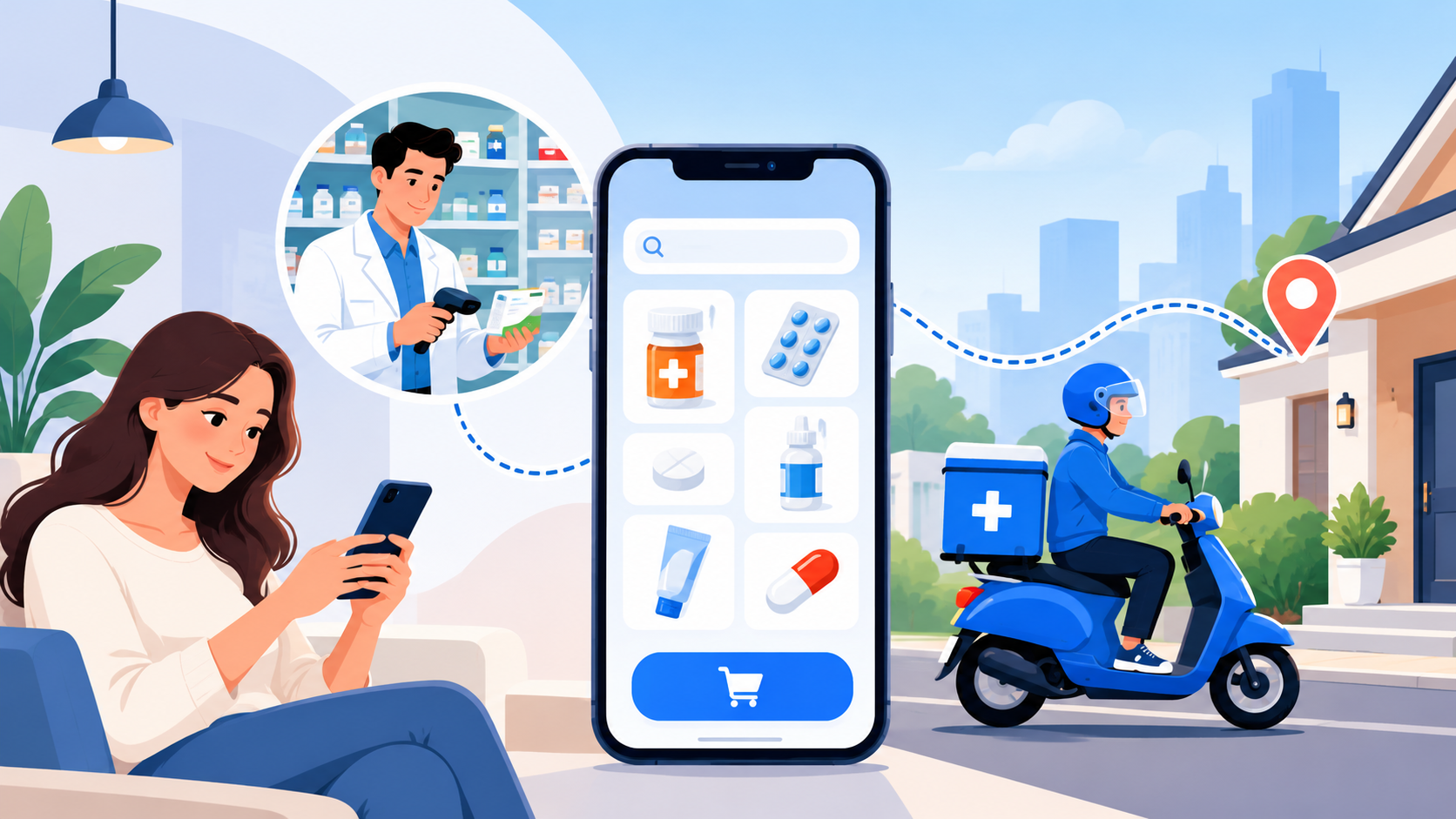
Ever wished your prescriptions could arrive at your door without a pharmacy trip? Capsule is a digital pharmacy app that lets customers manage prescriptions, request refills, and get medications delivered to their homes.
It connects patients, pharmacists, and delivery services through a simple online experience.
The market is growing fast, too:
- Pharma e-commerce market: Valued at $134.02 billion in 2025, it is projected to reach $571.19 billion by 2034, growing at a 17.48% CAGR.
- Online pharmacy market: Valued at $131.77 billion in 2024, it could reach $472.09 billion by 2032, with the U.S. market projected to hit $165.16 billion. North America held 38% of the pharma e-commerce market share in 2025.
Why Should You Build a Capsule-Like Medicine Delivery App?
A Capsule-like medicine delivery app makes prescription refills easier, saves patients time, and helps pharmacies serve more customers through convenient home delivery.
1. Meet Growing Demand for Online Pharmacies
Busy patients value home delivery and easy prescription refills. A digital pharmacy app offers a simple way to order medications and track deliveries.
2. Make Prescription Refills More Convenient
Let users manage prescriptions, request refills, receive reminders, and check order status. These features can improve the patient experience and encourage repeat use.
3. Reach More Customers Beyond Local Pharmacies
An online pharmacy platform can help participating pharmacies serve eligible customers across their permitted delivery areas, subject to state licensing and pharmacy regulations.
4. Build Trust Through Safe Medication Handling
Features such as secure patient data, pharmacist review, prescription verification, and HIPAA-aligned privacy practices help protect sensitive health information and support patient safety.
5. Create a Scalable Digital Pharmacy Business
With on-demand app development services, you can build a pharmacy delivery platform with real-time tracking, payment integration, and inventory management, with room to expand as demand grows.
Essential Features of a Medicine Delivery App Like Capsule
A Capsule-like medicine delivery app needs simple ordering, secure prescription handling, smooth payments, and smart tools that help patients and pharmacists manage medications safely.
1. User Registration and Patient Profiles
Allow users to sign up, manage delivery addresses, add insurance details, and view medication history. Use secure authentication and access controls to protect sensitive health information.
2. E-Prescriptions and Prescription Verification
Let patients upload prescriptions or connect with authorized prescribers. Add pharmacist review, prescription status updates, and refill requests to support safe dispensing under applicable U.S. regulations.
3. Medicine Search and Digital Catalog
Help users find medications by name, dosage, brand, or generic alternative. Show clear pricing, availability, usage information, and pharmacist guidance where appropriate.
4. Secure Payments and Insurance Processing
Support credit cards, digital wallets, copays, and eligible insurance workflows. Your mobile payment app development cost will depend on payment gateways, fraud controls, and integration complexity.
5. Real-Time Order and Delivery Tracking
Show order confirmation, pharmacy processing, dispatch updates, and estimated delivery times. GPS tracking and delivery notifications help patients know when their medications will arrive.
6. AI-Powered Medication Support
Use AI chatbots to answer general app questions, send refill reminders, and guide users through orders. Keep clinical advice under qualified professional oversight and protect patient data.
7. Pharmacist Dashboard and Analytics
Give pharmacists tools to manage prescriptions, inventory, refill requests, and delivery status. Advanced analytics can forecast demand and flag unusual patterns. Your healthcare app development cost will vary with integrations, security, and AI features.
Step-by-Step Process to Develop a Medicine Delivery App Like Capsule
Building a medicine delivery app like Capsule takes more than adding a shopping cart and delivery button. You need a clear pharmacy model, safe prescription workflows, reliable technology, and a delivery system patients can trust. Here’s how to approach each step.
1. Define Your Business and Pharmacy Operating Model
Start by deciding how your medicine delivery business will work. Your operating model affects licensing, technology, staffing, and delivery costs.
- Choose your model: Partner with licensed pharmacies, operate a licensed online pharmacy, or build a platform connecting patients with pharmacy partners.
- Define your service area: Decide which states or regions you will serve. Pharmacy and prescription delivery rules vary by state.
- Plan your revenue: Consider delivery fees, pharmacy partnerships, service fees, or eligible subscription plans.
- Set compliance requirements: Review applicable state pharmacy laws, HIPAA obligations, prescription rules, and controlled-substance requirements with qualified legal and pharmacy professionals.
2. Research Users and Map Prescription Workflows
Understand what patients and pharmacists need before designing the app. A confusing refill process can frustrate users and create extra work for pharmacy staff.
- Study your audience: Identify common needs, such as prescription refills, insurance questions, medication reminders, and home delivery.
- Map the patient journey: Outline registration, prescription submission, pharmacist review, payment, order preparation, and delivery.
- Consult pharmacy professionals: Validate dispensing steps, prescription verification, medication substitutions, and refill approval rules.
- Review competitors: Study Capsule and other U.S. online pharmacies to identify useful features and service gaps.
Create a workflow diagram before development begins. It helps your team spot delays and missing steps early.
3. Plan the MVP and User Experience
Your minimum viable product (MVP) should solve the main patient problem without packing in every possible feature. Start with a simple, dependable experience, then expand based on feedback.
- Build core features: Include patient profiles, prescription uploads, refill requests, secure payments, order updates, and delivery notifications.
- Design clear screens: Make medicine search, prescription status, and checkout easy to understand.
- Create pharmacy tools: Give staff a dashboard to review prescriptions, manage orders, and update inventory.
- Plan future upgrades: Add AI-powered support, refill predictions, or advanced analytics after validating the core product.
Use clickable prototypes to test the design with real users before investing in full development.
4. Select Your Technology Stack
Choose technologies that support secure health data, reliable performance, and future growth. The right stack depends on your budget, team skills, integrations, and expected order volume.
- Mobile app: Consider React Native or Flutter for cross-platform development, or native Swift and Kotlin for separate iOS and Android apps.
- Backend: Use a suitable framework, such as Node.js or Django, to manage users, prescriptions, orders, and business rules.
- Database and hosting: Select secure database and cloud services with suitable access controls, backups, monitoring, and encryption.
- Security: Apply role-based access, audit logs, secure authentication, and data-minimization practices. Assess HIPAA requirements based on your role and data flows.
Choose tools your team can maintain. A trendy stack is not much help if nobody can support it six months after launch.
5. Build Pharmacy, Payment and Delivery Integrations
A medicine delivery app relies on several systems working together. Plan these integrations early because they can affect both development time and operating costs.
- Pharmacy systems: Connect with pharmacy management software, prescription processing systems, and inventory tools where supported.
- Payment services: Integrate a suitable payment gateway and handle copays, refunds, receipts, and payment security.
- Delivery partners: Use courier APIs or build delivery management tools for dispatch, driver assignment, proof of delivery, and delivery status updates.
- Location services: Add address validation, route planning, and live order tracking where appropriate.
6. Test, Validate, and Prepare for Launch
Before going live, test the complete journey—from prescription submission to final delivery. A polished interface means little if an order gets lost or sensitive information reaches the wrong person.
- Functional testing: Check registration, prescription uploads, refill requests, payments, notifications, and order status updates.
- Security testing: Review access permissions, encryption, audit logs, vulnerabilities, and relevant privacy requirements.
- Workflow testing: Confirm that prescription approval, pharmacist review, inventory updates, and delivery handoffs work correctly.
- Usability testing: Ask patients and pharmacy staff to complete common tasks and report confusing steps.
- Pilot launch: Start in a limited service area, track delivery times and failed orders, and fix issues before expanding.
After launch, monitor app crashes, order completion rates, customer support requests, and delivery performance. Use those findings to guide updates and future features.
How Much Does It Cost to Build a Medicine Delivery App Like Capsule in 2027?
Building a medicine delivery app in 2027 may cost $8,000 to $90,000+, depending on features, pharmacy integrations, security needs, and delivery tracking.
|
App Type |
Estimated Development Cost |
Estimated Timeline |
|
Basic MVP |
$8,000–$15,000 |
2–3 months |
|
Standard Medicine Delivery App |
$15,000–$35,000 |
3–5 months |
|
Advanced Pharmacy App |
$35,000–$60,000 |
5–7 months |
|
Feature-Rich App Like Capsule |
$60,000–$90,000+ |
6–9+ months |
Medicine Delivery App Compliance, HIPAA, and Security Requirements
A medicine delivery app must protect that information while following U.S. pharmacy laws and healthcare privacy rules.
1. Prescription Verification and Licensed Pharmacy Operations
Every prescription medicine order needs proper verification. Your app should connect patients with licensed pharmacies and qualified pharmacists who can review prescriptions, check refill requests, and flag invalid orders.
Build clear workflows for prescription validation, pharmacist approval, and medication records. Never treat prescription drugs like ordinary items in a shopping cart.
2. HIPAA and Health Data Privacy Considerations
If your app handles protected health information for a covered healthcare provider or business associate, HIPAA may apply.
Use safeguards such as encryption, secure data storage, role-based access, and business associate agreements when required. Collect only the health data you need, and explain your privacy practices clearly.
3. State Pharmacy Licensing and Delivery Rules
Pharmacy laws vary by state. Before launching, check the licensing rules for the pharmacy, pharmacist, and business model in every state you plan to serve.
You may also need to follow rules for prescription transfers, medication packaging, delivery records, and controlled substances.
Review the National Association of Boards of Pharmacy resources and the relevant state board of pharmacy requirements before expanding into a new market.
4. Payment Security, Audit Logs, and Access Controls
Protect customer payments and sensitive health records with encryption, secure payment processing, and multi-factor authentication for staff accounts.
Use role-based access controls so employees can see only the information needed for their jobs.
Audit logs should record important actions, such as prescription changes, account access, and order updates.
5. App Store and Google Play Health App Requirements
Publishing a pharmacy app involves more than passing a technical review. Apple and Google have rules covering health-related services, privacy disclosures, sensitive data, and permitted app functionality.
Provide an accurate privacy policy, request only necessary permissions, and explain how health information is used.
Common Mistakes to Avoid When Building a Capsule Clone Medicine Delivery App
Small development mistakes can lead to prescription errors, delivery delays, and privacy risks. Spot these problems early to protect patients and control costs.
1. Ignoring Pharmacy Laws and Licensing
Mistake: Launching without checking state pharmacy licenses, prescription rules, and HIPAA obligations can create legal and privacy risks.
Solution: Work with a qualified medicine delivery app development company that understands U.S. pharmacy regulations, healthcare privacy, and licensing needs.
2. Skipping Prescription Verification
Mistake: Accepting prescription orders without proper validation can lead to unsafe dispensing, invalid refills, and medication errors.
Solution: Add prescription validation, pharmacist review, refill checks, and secure records to support safe and compliant medication dispensing.
3. Choosing an Unreliable Delivery System
Mistake: Poor courier tracking, late deliveries, and weak route planning can damage customer trust and disrupt medication schedules.
Solution: Invest in courier delivery app development with GPS tracking, delivery status updates, route optimization, and proof of delivery.
4. Overlooking Patient Data Security
Mistake: Weak passwords, broad staff access, or exposed health records can put sensitive patient information at risk.
Solution: Use encryption, multi-factor authentication, role-based access, audit logs, and appropriate HIPAA safeguards to protect health data.
5. Adding Too Many Features to the MVP
Mistake: Building every feature at launch can raise development costs, delay testing, and make the app harder for patients to use.
Solution: Start with essential features like prescription uploads, secure payments, order tracking, and pharmacist support. Add more after user feedback.
6. Underestimating Maintenance and Integration Costs
Mistake: Ignoring pharmacy systems, payment gateways, delivery tools, and ongoing updates can strain your budget after launch.
Solution: Budget for third-party integrations, security updates, testing, support, and system maintenance before setting your medicine app development budget.
How to Monetize Your Medicine Delivery App Like Capsule?
Build steady revenue through pharmacy partnerships, delivery fees, subscriptions, and healthcare services while keeping medication access affordable.
- Prescription Order Fees: Earn revenue through pharmacy partnerships or permitted service fees, with clear pricing for patients and healthcare providers.
- Delivery Charges: Charge reasonable fees for same-day or scheduled delivery, based on distance, urgency, and fulfillment costs.
- Subscription Plans: Offer monthly plans with delivery perks, refill reminders, and eligible membership benefits without promising medication discounts you cannot provide.
- Pharmacy Partnerships: Generate revenue through compliant agreements with licensed pharmacies for app access, order management, or technology services.
- Healthcare Service Partnerships: Connect users with eligible telehealth providers or medication management services through transparent, legally reviewed partnerships.
- Delivery Optimization: Control operating costs with route planning and live tracking. Estimate GPS tracking app development costs before investing in tracking features.
Conclusion
Building a medicine delivery app like Capsule in 2027 starts with a clear business plan, patient-focused features, and a reliable pharmacy network.
Understanding how to build a medicine delivery app like Capsule in 2027 also means planning for development costs, prescription verification, HIPAA obligations, and secure delivery tracking.
Start with an MVP, work with licensed pharmacy partners, and test every step before launch. A safe, simple experience can help build patient trust and support long-term business growth.
FAQ's
A medicine delivery app can cost $8,000 to $90,000+, depending on features, integrations, security needs, and development time.
Development can take 2–9 months or longer, depending on app complexity, pharmacy integrations, testing, and compliance needs.
Key features include patient profiles, prescription uploads, pharmacist review, secure payments, refill reminders, order tracking, and delivery notifications.
They can earn through delivery fees, subscriptions, pharmacy partnerships, permitted service fees, and healthcare service partnerships.
HIPAA may apply if the app handles protected health information for a covered entity or business associate. Requirements depend on its role and data flows.
Use encryption, secure authentication, role-based access, audit logs, limited data collection, and appropriate privacy safeguards.
Yes. You can use Flutter or React Native for cross-platform development, or build separate apps with Swift and Kotlin.
Requirements depend on your business model and states served. Check pharmacy licensing, prescription rules, and delivery laws with qualified legal and pharmacy professionals.

CrinPro
CrinPro Solutions is a leading IT company that helps startups and enterprises build innovative digital products. From intuitive mobile applications and high-performance websites to AI-powered solutions and enterprise software, our team delivers scalable, secure, and user-focused products tailored to unique business needs. With expertise across multiple industries, we transform ideas into digital experiences that drive growth, improve efficiency, and create long-term business value.