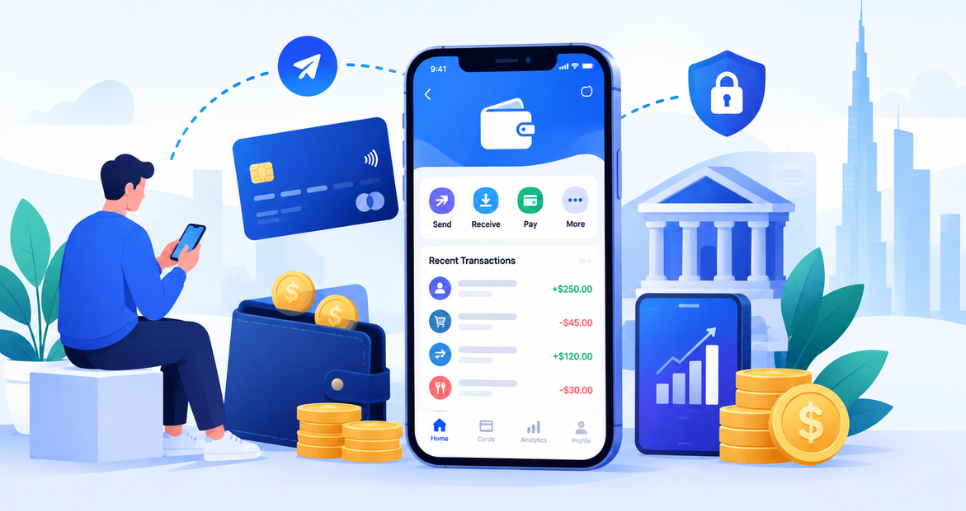
Key Takeaways:
- Trust drives adoption: users need confidence their money is secure before they'll actively use a fintech app.
- Regulatory compliance can't be an afterthought: KYC, AML, and licensing requirements shape the entire development timeline and budget.
- Costs scale with complexity: basic apps cost far less than platforms supporting multi-currency transactions and advanced fraud detection.
- Security has to be built in from day one: encryption, fraud detection, and biometric authentication aren't optional add-ons.
- The right development partner reduces risk: experienced fintech teams help avoid costly compliance gaps and security vulnerabilities.
Money has gone digital, and the apps handling it need to be flawless.
From mobile banking to peer-to-peer payments and investment platforms, fintech app development has become one of the most demanding and rewarding corners of the software industry.
Users trust these apps with their actual money, which means there's zero room for bugs, security gaps, or clunky user experiences.
But building a fintech app isn't like building a typical consumer app. It comes with strict regulatory requirements, heightened security standards, and technical complexity that most businesses underestimate going in.
This guide breaks down exactly what it takes, features, cost, technology, and the development process, so you know precisely what building a successful fintech app actually involves before you start.
Fintech App Development: Overview and Market Opportunities
Fintech software development has moved from a niche specialty into one of the most active corners of the tech industry, powering everything from digital banking to peer-to-peer payments and robo-advisory platforms.
Understanding the market opportunity helps businesses see why investment here keeps accelerating.
1. The Fintech Market Is Growing at an Exceptional Pace
This isn't slow, steady growth; it's genuinely explosive. The global fintech market is projected to grow from $328.66 billion in 2026 to $1,982 billion by 2034, at a CAGR of 25.18%.
Businesses investing in fintech app development now are entering a market still in its early growth curve.
2. AI Is Reshaping Core Fintech Functionality
The AI segment within fintech is expected to register a CAGR of 19.5%, propelled by increasing spending on AI-based technology to improve user experience via chatbots in the banking sector.
Businesses pursuing custom fintech app development increasingly need to build AI-driven features, like fraud detection and personalized insights, into the core product rather than treating them as optional extras.
3. Fraud Detection and Security Dominate Investment Priorities
The fraud monitoring segment is projected to dominate the fintech market, contributing 38.45% to the market's share in 2025, driven by increasing demand for risk management and fraud prevention solutions.
This reflects just how central security has become to user trust and regulatory compliance in fintech products.
4. Mobile Is the Primary Interface for Fintech Users
Mobile apps represented 70.21% of the United States fintech market share in 2025, while digital payments captured 46.78% of overall market share.
This confirms that for most fintech businesses, the mobile app isn't a secondary channel; it's the primary product users interact with.
Essential Features of a Fintech App
A fintech app succeeds or fails based on trust, and trust comes from getting the fundamentals right.
These core fintech app features determine whether users feel confident enough to manage their actual money through your platform every single day.
1. Secure Onboarding and KYC Verification
First impressions matter enormously in fintech. A smooth sign-up flow with fast, automated identity verification keeps drop-off rates low without sacrificing the compliance checks regulators require.
Users abandon apps that make sign-up feel slow or invasive, so balancing speed with thorough verification matters from day one.
2. Real-Time Transaction Processing
Users expect transfers, payments, and balance updates to happen instantly, not after a delay.
Solid financial app development ensures transactions process quickly and reliably, since even brief delays or unclear pending states create anxiety for users trusting the app with their actual money.
3. Multi-Account and Multi-Currency Support
Users increasingly manage multiple accounts, banks, cards, or even crypto wallets, from a single app.
Strong digital finance app development supports this flexibility, letting users view and manage everything in one place rather than juggling separate apps for different financial accounts and currencies.
4. Third-Party Banking and Payment Integrations
Fintech apps rarely operate in isolation, connecting to banking APIs, payment processors, and financial data aggregators.
Reliable fintech app integration with these systems ensures accurate data syncing and smooth transactions, since broken connections directly undermine user trust in the app's core financial functionality.
5. Biometric Authentication and Fraud Monitoring
Passwords alone aren't enough for apps handling real money. Fingerprint and facial recognition add convenient, strong security, while real-time fraud monitoring flags suspicious activity before it becomes a real problem.
True fintech app security requires this layered approach rather than relying on a single protective measure.
6. Transaction History and Financial Insights
Users want clear visibility into their spending, income, and financial trends over time.
A searchable transaction log paired with basic analytics helps users understand their financial habits, turning the app into a tool they check regularly rather than one used only for occasional transactions.
Benefits of Fintech App Development for Businesses
Investing in fintech app development pays off well beyond serving customer demand for digital finance.
Businesses building in this space gain real, measurable advantages that extend across revenue, customer relationships, and long-term competitive positioning in a fast-growing market.
1. New Revenue Streams Through Transaction Fees
Fintech apps generate income through transaction fees, subscription tiers, or premium features like instant transfers.
This creates a direct revenue model businesses control entirely, rather than relying solely on traditional banking partnerships that share profits with intermediaries at every step of the transaction.
2. Direct Access to Customer Financial Data
Owning the app means owning the data on how customers spend, save, and manage money.
This first-party insight fuels smarter product decisions, personalized offers, and targeted features that competitors relying on third-party financial platforms simply can't replicate with the same level of accuracy or depth.
3. Stronger Customer Loyalty Through Daily Utility
Financial apps that users check regularly, tracking spending, transferring money, or monitoring investments, build habitual engagement that's hard for competitors to displace.
This daily utility creates stickier customer relationships than apps used only occasionally, strengthening retention and reducing churn over time.
4. Expansion Into Adjacent Financial Services
A successful core product, like money transfer app development, often opens the door to adjacent services: lending, insurance, or investment tools.
Businesses can expand their offering incrementally once they've built trust and a solid user base, rather than launching every feature simultaneously at once.
5. Competitive Differentiation in a Crowded Market
Businesses that build thoughtful, secure, user-friendly fintech apps stand out from competitors still relying on outdated banking processes or generic financial tools.
This differentiation matters significantly in a market where speed, trust, and convenience increasingly determine which platform customers choose to use.
6. Scalability Without Proportional Cost Growth
Once built, fintech platforms can handle significantly more users and transactions without a proportional increase in operational costs.
This scalability lets businesses grow their customer base efficiently, turning a well-built fintech app into a genuinely profitable, long-term asset rather than a one-time product launch.
Technology Stack for Fintech App Development
Building an app that handles real money requires a technology foundation capable of speed, security, and scale simultaneously.
Choosing the right fintech app technology stack shapes everything from transaction reliability to how well the platform handles regulatory compliance.
1. Frontend Frameworks: React Native and Flutter
Cross-platform frameworks let businesses build for iOS and Android from a single codebase, reducing development time significantly.
Many fintech application development services rely on React Native or Flutter for their strong performance in handling complex transaction screens and real-time balance updates without sacrificing native-like responsiveness.
2. Backend: Node.js or Java Spring Boot
The backend processes transactions, user data, and business logic, so speed and reliability matter enormously here.
Node.js handles real-time features efficiently, while Java Spring Boot suits larger, more complex fintech systems requiring extensive compliance logic and higher transaction volumes across multiple financial products simultaneously.
3. Database: PostgreSQL or MongoDB
Financial data demands accuracy and consistency above all else. PostgreSQL handles relational data like transactions and account balances reliably, while MongoDB offers flexibility for unstructured data like user activity logs.
Choosing between them depends on how complex the app's financial data relationships actually are.
4. Payment Processing and Banking APIs
A fintech app needs real connections to financial infrastructure.
Reliable payment gateway integration through providers like Stripe or Plaid handles the heavy lifting of processing transactions and linking bank accounts, reducing the technical burden of building payment rails from scratch entirely.
5. Encryption and Security Protocols
Protecting sensitive financial data requires layered security, AES-256 encryption for stored data and TLS protocols for data in transit.
This foundational security work directly affects overall fintech app development cost, since cutting corners here creates far more expensive problems if a breach occurs later.
6. Cloud Infrastructure: AWS or Google Cloud
Fintech apps need infrastructure that scales during high-traffic periods without downtime, since failed transactions directly damage user trust.
AWS and Google Cloud both offer auto-scaling, compliance certifications, and strong uptime guarantees built specifically for handling sensitive, high-stakes financial workloads reliably.
7. Biometric Authentication SDKs
Native Face ID and fingerprint APIs from Apple and Google let users confirm transactions quickly without repeatedly entering passwords.
Solid financial app development integrates these SDKs directly, since users trust built-in biometric security far more than unfamiliar third-party authentication tools layered on top.
8. Compliance and Fraud Detection Tools
Fintech apps face strict regulatory requirements, including KYC, AML, and regional financial regulations.
Third-party compliance platforms automate identity verification and transaction monitoring, flagging suspicious patterns in real time rather than requiring businesses to build this complex regulatory infrastructure entirely from scratch.
Step-by-Step Fintech App Development Process
Building a fintech app that users trust with real money takes more than good coding.
A structured fintech app development process reduces risk, ensures regulatory compliance, and delivers a platform that actually performs reliably under real financial workloads.
1. Discovery and Requirement Gathering
Every successful mobile payment app development project starts with understanding target users, competitor platforms, and regulatory requirements specific to the markets being served.
This foundation shapes every decision that follows, from feature priorities to which financial services the app will support at launch.
2. Market Research and Feasibility Study
Teams assess competitor solutions and validate genuine market demand before committing resources.
Reputable fintech app development companies use this stage to confirm the project's direction aligns with actual user needs rather than untested assumptions made during early planning conversations.
3. Budget Planning and Resource Allocation
Once research wraps up, teams estimate timelines and costs.
Understanding fintech software development requirements upfront helps businesses avoid mid-project budget surprises, especially given the added complexity of compliance infrastructure and security measures fintech projects specifically require.
4. UI/UX Design and Prototyping
Design happens before development begins. Wireframes and interactive prototypes let stakeholders test the user flow, ensuring transactions feel simple and trustworthy.
Custom fintech app development benefits enormously from early user testing here, since confusing financial interfaces erode trust almost immediately.
5. Backend Architecture and Database Setup
This stage builds the engine behind the app, servers, databases, and APIs that process transactions reliably.
Understanding banking software development cost at this stage matters, since a poorly structured backend causes slowdowns or errors as transaction volume grows significantly over time.
6. Security Implementation and Compliance
Security gets built in throughout development, not bolted on afterward. This phase covers encryption, biometric authentication, and fraud detection systems.
True fintech app security also means implementing KYC and AML compliance before launch, since retrofitting these requirements later costs far more.
7. Third-Party and Banking Integrations
Fintech apps need to connect with real financial infrastructure, banks, card networks, and payment processors.
Getting fintech app integration right the first time prevents transaction failures down the road, since broken connections directly undermine the platform's core financial functionality.
8. Frontend Development and Testing
Developers build the user-facing app, connecting it to backend systems built earlier.
Solid digital finance app development requires careful testing at each integration point, ensuring the interface works smoothly alongside backend logic without introducing bugs into sensitive financial workflows.
9. Quality Assurance and Security Testing
Before launch, the app undergoes rigorous testing, functional, security, load, and penetration testing all matter here.
Teams building anything from simple tools to comprehensive eWallet app development cost estimates must budget for this stage properly, since financial apps demand far more thorough testing than typical consumer apps.
10. Launch, Monitoring, and Continuous Improvement
Launch isn't the finish line. Teams monitor transaction success rates, security alerts, and user feedback closely during the first few weeks.
Ongoing updates based on real usage patterns keep the app secure, compliant, and competitive well beyond the initial release date.
Fintech App Development Cost: Pricing Breakdown
There's no single number that fits every project. Overall mobile app development cost for a fintech platform typically ranges from $8,000 to $70,000, depending on features, security requirements, and regulatory complexity.
|
Development Stage |
What's Included |
Estimated Cost |
|
Discovery & Requirement Gathering |
Market research, regulatory mapping, feature roadmap |
$500-$600 |
|
UI/UX Design & Prototyping |
Wireframes, clickable prototypes, user flow testing |
$700-$800 |
|
Frontend Development |
User-facing interface across iOS and/or Android |
$900-$1,000 |
|
Backend Development |
Server architecture, database setup, transaction logic |
$900-$1,000 |
|
Payment Gateway & Banking API Integration |
Stripe, Plaid, or banking network connections |
$700-$800 |
|
Security & Compliance |
Encryption, biometric auth, KYC/AML implementation |
$900-$1,000 |
|
Fraud Detection & Monitoring Systems |
Real-time transaction monitoring and alerts |
$700-$800 |
|
Third-Party Integrations |
CRM, analytics, and financial data aggregators |
$500-$600 |
|
QA & Security Testing |
Functional, security, and penetration testing |
$700-$800 |
|
Deployment & Post-Launch Support |
App store submission, monitoring, first round of updates |
$500-$600 |
Key Factors Influencing Fintech App Development Cost
Two businesses building seemingly similar fintech apps can end up with very different final numbers.
Fintech app development cost depends on several variables that shift pricing significantly, often driven by regulatory and security requirements unique to financial products.
1. Regulatory Compliance Requirements
Fintech apps face strict regulations that vary by region, including KYC, AML, and licensing requirements.
Meeting these standards adds both development time and specialized legal consultation costs, since compliance infrastructure needs to be built correctly from the start rather than retrofitted after launch at much higher expense.
2. Security and Fraud Prevention Complexity
Apps handling real money demand layered security, encryption, biometric authentication, and real-time fraud monitoring.
Building robust protection against financial fraud specifically requires specialized expertise beyond standard app security practices, adding meaningfully to overall development cost compared to typical consumer applications.
3. Number of Supported Payment Methods
Supporting multiple payment methods, cards, bank transfers, digital wallets, or cryptocurrency, increases both development complexity and ongoing integration costs.
Each additional payment rail requires separate testing and maintenance, since payment failures directly damage user trust in ways few other bugs can match.
4. Third-Party Banking and API Integrations
Connecting to banking networks, payment processors, and financial data aggregators adds licensing fees and integration time.
Each additional third-party service increases both development cost and ongoing operational expenses, since most financial APIs charge per-transaction or subscription fees that scale with usage.
5. Platform and Device Support
Building for iOS, Android, and web simultaneously costs significantly more than launching on a single platform first.
Cross-platform frameworks reduce this expense somewhat, but supporting multiple platforms still requires additional testing, since performance issues on one platform can damage trust just as easily as on another.
6. Custom Features and Design Complexity
Basic transaction and balance-checking functionality costs far less than advanced features like investment tracking, budgeting tools, or personalized financial insights.
Businesses aiming for a distinctive, feature-rich product typically invest more in both design and backend logic to support these differentiated capabilities.
7. Geographic Scope and Multi-Currency Support
Launching in multiple countries means navigating different regulations, currencies, and banking systems.
This complexity adds both development time and legal consultation costs, since apps supporting international transfers require significantly more testing than those operating within a single regulatory jurisdiction.
8. Development Team Expertise and Location
Rates vary significantly based on whether you hire local developers, offshore teams, or a specialized fintech development agency.
Teams with proven fintech experience typically charge more per hour but deliver fewer compliance gaps and security vulnerabilities, reducing costly rework later in the project.
Key Challenges in Fintech App Development and Their Solutions
Even well-funded fintech projects hit predictable roadblocks. Beyond typical software development cost concerns, fintech apps involve regulatory complexity, security demands, and user trust requirements that create unique challenges most standard software never faces.
1. Navigating Complex Regulatory Requirements
Fintech apps face strict regulations that vary by state and country, including licensing, AML rules, and KYC standards.
Missing a requirement can delay launch or trigger legal penalties, and regulations often shift, making compliance a moving target rather than a one-time checklist businesses complete before launch.
Solution: Bring in compliance experts or legal counsel early, before development starts. Partner with licensed banking providers who already handle regulatory complexity, reducing your direct compliance burden significantly.
2. Preventing Fraud Without Hurting User Experience
Strong fraud detection sometimes means extra verification steps, which frustrates legitimate users trying to complete transactions quickly.
Balancing security with a smooth experience is tricky, since overly aggressive fraud filters block real transactions while lenient ones expose the platform to costly chargebacks and losses.
Solution: Use risk-based authentication that adds friction only for suspicious transactions. Machine learning fraud models improve accuracy over time, catching real threats without slowing down trusted users.
3. Ensuring Data Privacy and Security
Fintech apps handle sensitive financial and personal data, making them prime targets for cyberattacks.
A single breach can destroy user trust instantly and trigger serious legal consequences, especially given how much scrutiny financial data protection receives compared to other types of consumer applications.
Solution: Build encryption, secure authentication, and compliance requirements into the architecture from the earliest development stages, not as a late-stage addition after core features are complete.
4. Managing Third-Party Integration Failures
Fintech apps depend on external banking APIs, payment gateways, and verification services.
When one of these partners experiences downtime or changes their API, transactions can fail unexpectedly, leaving users confused and support teams scrambling to explain delays that weren't caused by the app itself.
Solution: Build redundancy with backup providers for critical services. Monitor third-party API health continuously and set up automatic alerts for failures before users notice problems.
5. Building User Trust from Day One
New fintech apps face real skepticism, since users hesitate to trust an unfamiliar platform with their actual money.
Without an established reputation, users may avoid linking bank accounts or sending larger amounts, which slows early adoption even when the underlying technology works perfectly well.
Solution: Start with smaller transaction limits to build confidence gradually. Display transparent security certifications and real user reviews prominently to ease new user hesitation.
6. Ensuring Uptime During High-Traffic Periods
Traffic spikes during paydays, holidays, or market volatility can overwhelm servers not built for sudden load increases.
A crash during a critical financial moment damages trust instantly, since users expect their money and transactions to remain accessible regardless of overall platform demand.
Solution: Build on cloud infrastructure with auto-scaling capabilities from day one. Load-test the app regularly against realistic peak-traffic scenarios before they happen in production.
7. Balancing Innovation with Regulatory Caution
Fintech businesses want to innovate quickly with new features, but regulators often move more slowly, creating tension between speed and compliance.
Launching features before proper regulatory review risks penalties or forced rollbacks that damage both user trust and business momentum.
Solution: Involve compliance and legal teams early in the feature planning process, rather than treating regulatory review as a final checkpoint before launch.
8. Controlling Development Costs Without Cutting Corners
Fintech projects carry inherently higher costs due to security and compliance requirements, and rushing development to save money often introduces vulnerabilities or compliance gaps that cost far more to fix later than building things correctly from the start.
Solution: Launch a focused MVP with core, compliant functionality first. Use real user feedback to prioritize which features to build next, rather than overbuilding upfront.
Conclusion
Fintech app development sits at the intersection of technology, finance, and trust, where users hand over access to their actual money and expect flawless performance every single time.
From essential features and technology choices to realistic costs and the regulatory hurdles unique to this space, building a successful fintech app requires far more planning than a typical consumer application.
Businesses that treat security, compliance, and user trust as foundational priorities, not afterthoughts, are the ones building fintech products that actually gain traction in an increasingly crowded market.
Whether you're launching a focused MVP or a full-featured financial platform, the roadmap covered here gives you a realistic, practical starting point for building something users can genuinely rely on.
FAQ's
Costs typically range from $8,000 for a basic MVP to $70,000 or more, depending on features, security requirements, and regulatory complexity across target markets.
Most fintech apps take four to nine months to build, depending on complexity, compliance requirements, and how many financial integrations the app needs to support.
It depends on your business model. Many fintech apps partner with licensed banks or payment processors instead of becoming a licensed institution themselves, simplifying compliance significantly.
Weak authentication and unencrypted data transmission are the most common risks. Skipping biometric login or proper encryption protocols leaves user funds and data exposed to breaches.
Yes. Most fintech apps launch with core functionality first, then expand into lending, investment tools, or insurance once the core product proves reliable and trusted.
Budget for server hosting, compliance audits, fraud monitoring, customer support, and regular updates. Post-launch maintenance typically costs 15-20% of the original development budget annually.
Cross-platform frameworks like Flutter save time and money for most fintech apps. Native development makes sense only if you need deep, platform-specific security or hardware features.
Poor security, clunky user experience, and lack of regulatory compliance are the top reasons fintech apps lose users or face legal setbacks after going live.
Not always. Many businesses benefit more from integrating existing payment solutions rather than building a proprietary fintech platform, depending on their specific financial service needs.
Track transaction volume, user retention, average balance held, and support ticket volume. These metrics show whether users genuinely trust the app with their financial activity.

CrinPro
CrinPro Solutions is a leading IT company that helps startups and enterprises build innovative digital products. From intuitive mobile applications and high-performance websites to AI-powered solutions and enterprise software, our team delivers scalable, secure, and user-focused products tailored to unique business needs. With expertise across multiple industries, we transform ideas into digital experiences that drive growth, improve efficiency, and create long-term business value.