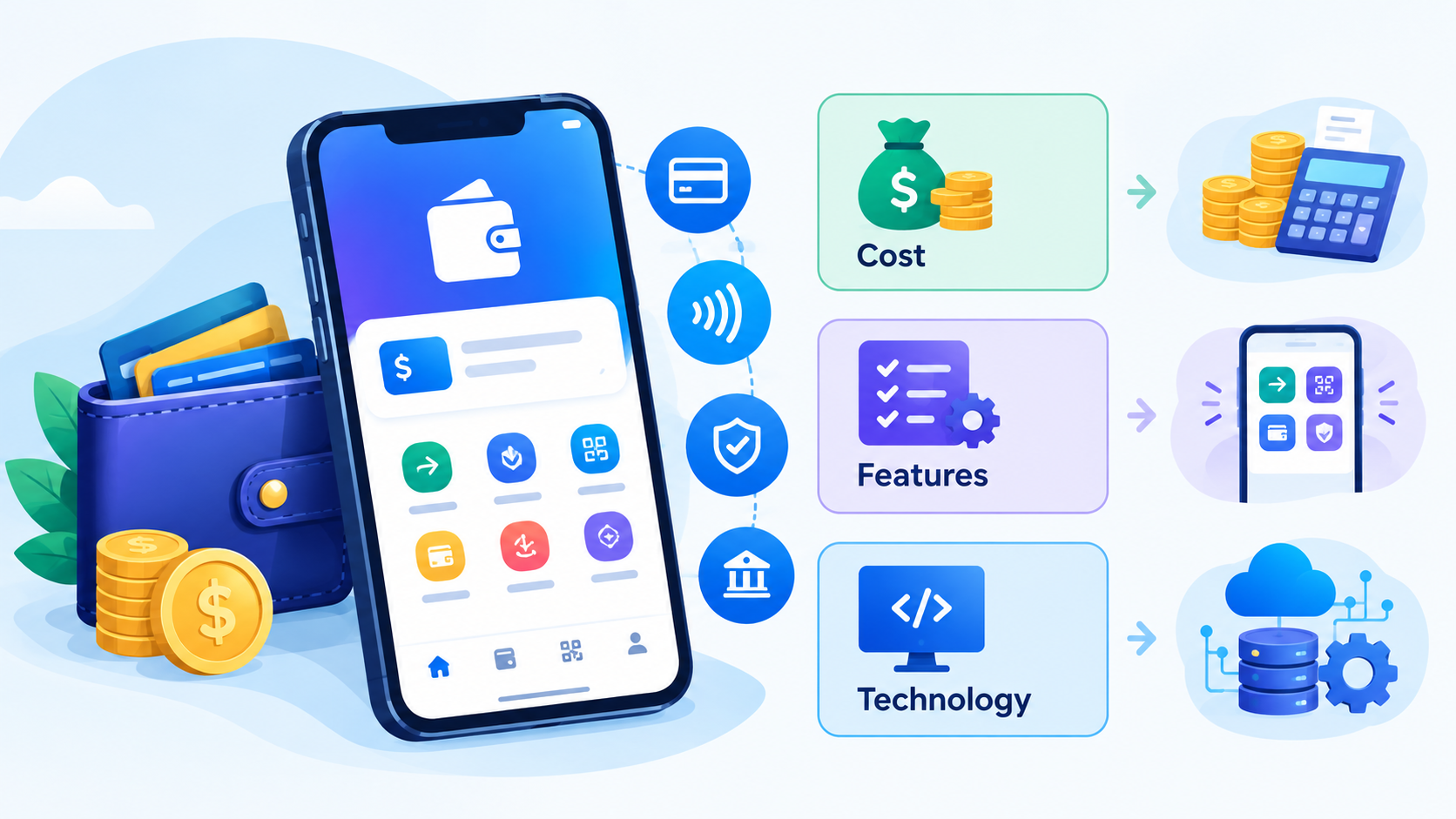
Key Takeaways:
- User expectations have shifted fast; secure, cashless payments are now the default, not a bonus feature businesses can skip.
- Security can't be an afterthought encryption, biometric authentication, and compliance need to be built in from day one, not added later.
- Costs vary widely by scope; a basic MVP costs far less than a full-featured wallet with advanced fraud detection and multi-currency support.
- The right tech stack matters: choosing scalable frameworks and reliable payment gateways prevents costly rebuilds down the road.
- Partner selection drives outcomes: an experienced fintech development team reduces risk, speeds up launch, and delivers a more secure final product.
Cash is quickly becoming optional. From splitting a dinner bill to paying for parking, people expect to tap, scan, or click instead of digging through their wallet.
That shift is exactly why eWallet app development has turned into one of the smartest moves a business can make right now.
Whether you're a startup founder or an established brand, a well-built digital wallet gives customers speed, security, and control they didn't have before, and it gives you a direct line to their spending habits.
But building one isn't as simple as slapping a "Pay Now" button on an app. You need the right features, a secure tech stack, a realistic budget, and a development process that actually works.
This guide breaks down all four, so you know exactly what you're getting into before you spend a dime.
What Is an eWallet App and Why Are Businesses Investing in One?
An eWallet app lets users store payment info, loyalty cards, and even IDs on their phone, then pay with a tap. For businesses, digital wallet app development isn't just a trend it's becoming table stakes for staying competitive.
1. Consumer Demand Has Already Shifted
People don't want to dig for cards anymore. They want speed at checkout, whether they're grabbing coffee or shopping online.
Businesses that skip this expectation lose customers to competitors who already offer it. By mid-2025, 65% of adults in the United States were using a digital wallet, up from 57% in 2024. That gap keeps widening every quarter.
2. The Market Is Growing Fast and Early Movers Win
This isn't a niche opportunity anymore. The global digital wallet market is projected to grow from $56.77 billion in 2025 to $68.02 billion in 2026, at a compound annual growth rate of 19.8%.
Businesses that build now capture market share before the space gets crowded and customer acquisition costs climb.
3. It Builds Direct Customer Relationships
An eWallet app cuts out third-party payment processors sitting between you and your customer. You get first-party data on spending habits, purchase frequency, and preferences.
That data fuels smarter loyalty programs, personalized offers, and repeat business you'd otherwise never see.
4. Security and Trust Are Built In
Modern eWallets use encryption, tokenization, and biometric login, which makes them safer than swiping a physical card.
Customers notice that extra layer of protection. When people trust your payment system, they spend more freely and return more often.
Must-Have Features Every eWallet App Needs in 2026
Not every eWallet app features list looks the same, but a few core pieces separate a mediocre wallet from one users actually keep on their phone. Here are the six that matter most for functionality, security, and everyday usability.
1. Seamless Onboarding and KYC Verification
First impressions decide whether users stick around. Good mobile wallet app development starts with a fast sign-up flow, minimal friction, and automated identity verification.
If users have to fill out ten fields or wait days for approval, they'll abandon the app before they ever make a payment. Speed here builds trust immediately.
2. Multiple Payment Methods and Currency Support
Users expect flexibility. They want to link debit cards, bank accounts, and even crypto wallets in one place.
Solid digital payment app development means supporting multiple currencies and payment rails without forcing users to juggle separate apps for different transaction types. More options mean more reasons to stay loyal.
3. Biometric Authentication and Fraud Detection
Passwords alone aren't enough anymore. Fingerprint and facial recognition add a security layer users actually appreciate rather than resent.
Truly secure eWallet app development also includes real-time fraud monitoring that flags unusual activity before it becomes a real problem. Users need to feel protected every time they open the app.
4. QR Code and NFC Payments
Contactless payment isn't optional in 2026. Users expect to tap their phone at checkout or scan a QR code and be done in seconds.
This feature alone drives daily engagement, since it replaces the physical wallet for routine purchases like coffee, groceries, and parking without any extra steps involved.
5. Transaction History and Spending Insights
People want visibility into where their money goes. A clean, searchable transaction log paired with basic spending analytics keeps users coming back to check patterns and set budgets.
This feature turns a simple payment tool into something users rely on daily, not just when they need to pay someone.
6. Push Notifications and In-App Support
Real-time alerts for payments, low balances, or suspicious activity keep users informed without them having to check manually.
Pairing that with responsive in-app chat support means problems get solved fast, which matters most during payment failures.
Together, these two features build the kind of trust that keeps users active.
Best Tech Stack for Building a Secure eWallet App
Picking the right eWallet app technology stack determines whether your app scales smoothly or breaks under pressure.
From frontend frameworks to backend infrastructure, each layer plays a role in speed, security, and long-term reliability. Here's what actually matters.
1. Frontend Frameworks: Flutter and React Native
Cross-platform frameworks let you launch on iOS and Android from a single codebase, cutting development time significantly.
Most custom eWallet development projects lean on Flutter or React Native for their speed and native-like performance. Both handle complex UI smoothly, which matters when users interact with payment screens constantly throughout the day.
2. Backend: Node.js or Java Spring Boot
Your backend handles transactions, user data, and business logic, so it needs to be fast and reliable under load.
Node.js works well for real-time features, while Java Spring Boot suits larger, more complex systems. Either choice supports money transfer app development at scale without buckling during high-traffic payment periods.
3. Database: PostgreSQL or MongoDB
Transaction data needs structure, consistency, and speed. PostgreSQL handles relational data like user accounts and payment records reliably, while MongoDB offers flexibility for unstructured data like activity logs.
Most eWallet app development teams pick based on how complex their data relationships are and how fast they need to scale.
4. Encryption: AES-256 and TLS Protocols
Data protection can't be an afterthought. AES-256 encryption secures stored data, while TLS protects information moving between the app and server.
Together, they form the backbone of eWallet app security, keeping sensitive details like card numbers and personal information safe from interception during every single transaction users make.
5. Payment Gateway Integration: Stripe, PayPal, or Plaid
A wallet app needs to connect to real financial infrastructure. Stripe and PayPal handle card processing reliably, while Plaid links directly to users' bank accounts for verification and transfers.
Choosing a gateway with strong documentation and US banking support saves months of integration headaches down the road.
6. Cloud Infrastructure: AWS or Google Cloud
Wallet apps need infrastructure that scales instantly during peak usage, like holiday shopping seasons. AWS and Google Cloud both offer auto-scaling, load balancing, and built-in security compliance tools.
Either platform reduces downtime risk and gives your team room to grow without rebuilding server infrastructure every time traffic spikes.
7. Biometric SDKs: Face ID and Touch ID Integration
Native biometric APIs from Apple and Google let users log in and authorize payments with a fingerprint or face scan.
Integrating these SDKs directly, rather than building custom solutions, saves development time and ensures compatibility across devices. Users trust built-in security features more than unfamiliar third-party alternatives anyway.
8. Compliance Tools: PCI DSS and KYC/AML Software
US regulations require strict compliance with PCI DSS standards for handling card data, plus KYC and AML checks to prevent fraud.
Third-party compliance tools automate identity verification and transaction monitoring, so your team doesn't have to build regulatory infrastructure from scratch or risk costly violations later.
Step-by-Step eWallet App Development Process
Building a wallet app isn't a one-and-done task it's a structured journey from idea to launch. Successful mobile payment app development follows clear, sequential stages that reduce risk and keep the final product secure, functional, and ready for real users.
1. Discovery and Market Research
Every solid eWallet app development project starts with research. You need to understand your target audience, study competitor apps, and define what makes your wallet different.
This stage also includes figuring out regulatory requirements for your market, since compliance needs shape almost every decision that follows in development.
2. Planning and Feature Roadmap
Once research wraps up, the team maps out features, timelines, and budget. This stage of the eWallet app development process turns ideas into an actionable plan.
Prioritizing must-have features over nice-to-haves here prevents scope creep later and keeps the project realistic in both cost and delivery timeline.
3. UI/UX Design and Prototyping
Design comes before code. Wireframes and clickable prototypes let stakeholders test the user flow before developers write a single line.
This stage also plans out payment gateway integration points early, since payment screens need to feel instant and trustworthy. Clean, intuitive design directly impacts user retention later.
4. Backend and Frontend Development
This is where the actual build happens. Developers code the frontend interface alongside backend logic, databases, and APIs simultaneously.
Development timelines and team size heavily influence eWallet app development cost at this stage, so clear specs and agile sprints keep the project on budget and moving forward steadily.
5. Security Implementation and Compliance
Security isn't bolted on at the end it's built in throughout. This phase includes encryption, biometric authentication, and fraud detection systems.
Solid digital wallet app development also means meeting PCI DSS and KYC/AML standards before launch, since retrofitting compliance later costs far more time and money.
6. Third-Party Integrations
Wallets rarely work alone. This stage handles eWallet app integration with banks, card networks, and identity verification services.
Getting these connections right the first time prevents transaction failures down the road. Testing each integration thoroughly here saves major headaches once real users start moving real money.
7. Quality Assurance and Testing
Before launch, the app goes through rigorous testing: functional, security, load, and usability testing all matter here.
Bugs in banking software development can cost trust instantly, so teams simulate high-traffic scenarios and attempted breaches to catch weaknesses. Nothing ships until it survives worst-case usage conditions.
8. Beta Testing and User Feedback
Before a full public release, real users get early access to try the app in everyday situations. Their feedback surfaces usability issues and bugs that internal testing often misses.
This stage lets teams fine-tune the experience based on actual behavior, not assumptions, before the wallet reaches a wider audience.
9. Launch, Monitoring, and Updates
Launch isn't the finish line. Post-launch monitoring tracks crashes, user feedback, and performance metrics in real time. Ongoing mobile wallet app development means regular updates, security patches, and new features based on user behavior.
Partnering with an experienced digital payment app development team, ideally a proven fintech app development company, keeps your wallet competitive long after day one.
10. Marketing and App Store Optimization
A great wallet app still needs visibility to succeed. Optimizing app store listings with the right keywords, screenshots, and descriptions helps users discover it organically.
Pairing that with targeted marketing campaigns and referral incentives drives early downloads and builds the momentum needed to grow a loyal user base.
How Much Does It Cost to Build an eWallet App?
There's no single number that fits every project. eWallet app development cost typically ranges from $8,000 to $70,000, depending on features, platform choice, security requirements, and team location.
A basic wallet with core payment features costs far less than a full-scale app with biometric security, multi-currency support, and advanced fraud detection. Here's a realistic breakdown.
|
Development Stage |
What's Included |
Estimated Cost |
|
Discovery & Planning |
Market research, competitor analysis, feature roadmap, technical documentation |
$400-$600 |
|
UI/UX Design |
Wireframes, clickable prototypes, user flow mapping, brand-aligned visual design |
$600-$900 |
|
Frontend Development |
Cross-platform UI build (iOS + Android), payment screens, navigation |
$1,200-$1,800 |
|
Backend Development |
Server architecture, APIs, database setup, transaction processing logic |
$1,500-$2,200 |
|
Payment Gateway Integration |
Stripe, PayPal, Plaid, or bank API connections and testing |
$700-$1,000 |
|
Security & Compliance |
Encryption, biometric auth, PCI DSS, KYC/AML implementation |
$900-$1,400 |
|
Admin Panel & Dashboard |
Backend management tools for transactions, users, and reporting |
$600-$900 |
|
Third-Party Integrations |
Bank connections, ID verification services, notification systems |
$600-$900 |
|
QA & Testing |
Functional, security, load, and usability testing across devices |
$700-$1,000 |
|
Deployment & Post-Launch Support |
App store submission, monitoring setup, first round of updates |
$400-$700 |
Choosing the Right Development Partner for Your eWallet App
The right team makes or breaks your project. Quality eWallet app development services combine technical skill, fintech experience, and clear communication.
Here's what to look for before signing a contract, so your wallet launches on time and performs the way you expect.
1. Proven Experience in Fintech Projects
Not every development shop understands payment systems. Look for a team with a track record in secure eWallet app development specifically, not just general app building.
Ask for case studies and past client references in the fintech space. Experience here directly reduces the risk of costly mistakes during development.
2. Ability to Deliver Custom Solutions
Off-the-shelf templates rarely fit unique business needs. A strong partner offers custom eWallet development tailored to your specific audience, features, and growth plans.
Avoid teams that push the same generic wallet framework on every client, since that approach limits differentiation and often creates scaling problems down the road.
3. Strong Security and Compliance Expertise
Payment apps handle sensitive data, so security can't be an afterthought for your partner. Confirm the team has real experience with encryption, biometric authentication, and regulatory standards like PCI DSS. Solid eWallet app security requires specialized knowledge, not general best practices borrowed from unrelated industries or standard mobile apps.
4. Experience with Third-Party Integrations
Your wallet needs to connect smoothly with banks, card networks, and identity verification services. Ask potential partners about their experience handling eWallet app integration specifically, since this is where many projects hit unexpected delays.
Teams with established relationships and integration playbooks move faster and avoid common technical pitfalls.
5. Transparent Communication and Project Management
Development delays often come from poor communication, not poor coding. Choose a partner who provides regular updates, clear timelines, and honest budget conversations from day one.
Agile workflows with visible sprint progress let you catch issues early, rather than discovering problems only after months of silent development work.
6. Post-Launch Support and Maintenance
Launch day isn't the end of the relationship. Your app will need bug fixes, security patches, and feature updates over time.
Confirm what support looks like after launch, including response times for critical issues. A partner who disappears after delivery leaves you scrambling when something inevitably breaks later.
7. Portfolio of Similar Apps
Reviewing a company's past work tells you more than any sales pitch. Look at wallet apps they've built, check their design quality, and if possible, test the apps yourself.
A strong portfolio in payment or fintech apps signals they understand the unique challenges this space presents better than generalists do.
8. Pricing That Matches Value, Not Just Budget
The cheapest option often costs more later through bugs, security gaps, or missed deadlines. Compare quotes based on what's included, not just the bottom-line number.
A slightly higher upfront investment with an experienced team usually saves money and headaches across the entire lifespan of your wallet app.
Conclusion
Building an eWallet app in 2026 isn't just a tech project; it's a business decision that can reshape how you connect with customers.
From must-have features like biometric authentication and QR payments to picking a secure tech stack and budgeting realistically, every stage matters.
The businesses winning right now aren't necessarily the ones spending the most; they're the ones building smart, secure, and user-focused wallets that solve real problems.
Whether you're a startup testing an MVP or an established brand ready to scale, the process outlined here gives you a clear roadmap.
The digital wallet space isn't slowing down, and businesses that move now, with the right development partner, position themselves ahead of competitors still relying on outdated payment systems.
FAQ's
Most eWallet apps take three to nine months to build, depending on features, complexity, and whether you're launching an MVP or a full-featured product with advanced security and integrations.
Yes. Launching on a single platform, usually iOS or Android, cuts initial costs significantly. You can expand to the other platform once you've validated demand and gathered user feedback.
Weak authentication and unencrypted data transmission are the most common risks. Skipping biometric login or proper encryption protocols leaves user funds and personal data exposed to potential breaches.
It depends on your business model. Many wallets partner with licensed banks or payment processors instead of becoming a licensed institution themselves, which simplifies compliance and speeds up launch timelines.
Yes. Most modern eWallet apps are built with modular architecture, so crypto wallets, multi-currency support, or new payment methods can be added after launch without rebuilding the entire app.
Budget for server hosting, security updates, compliance audits, customer support, and regular feature updates. Post-launch maintenance typically costs 15-20% of the original development budget annually.
Cross-platform frameworks like Flutter save time and money for most wallet apps. Native development makes sense only if you need deep, platform-specific features that cross-platform tools can't fully support.
Poor security, clunky user experience, and lack of post-launch updates are the top reasons wallet apps lose users. Regular improvements based on real feedback keep an app relevant and trusted.
Not every small business needs a custom wallet. Many benefit more from integrating existing payment solutions like Apple Pay or Google Pay instead of building a proprietary app from scratch.
Track metrics like daily active users, transaction volume, retention rate, and average transaction value. These numbers show whether users find real value in the app beyond just downloading it.

CrinPro
CrinPro Solutions is a leading IT company that helps startups and enterprises build innovative digital products. From intuitive mobile applications and high-performance websites to AI-powered solutions and enterprise software, our team delivers scalable, secure, and user-focused products tailored to unique business needs. With expertise across multiple industries, we transform ideas into digital experiences that drive growth, improve efficiency, and create long-term business value.