Key Takeaways:
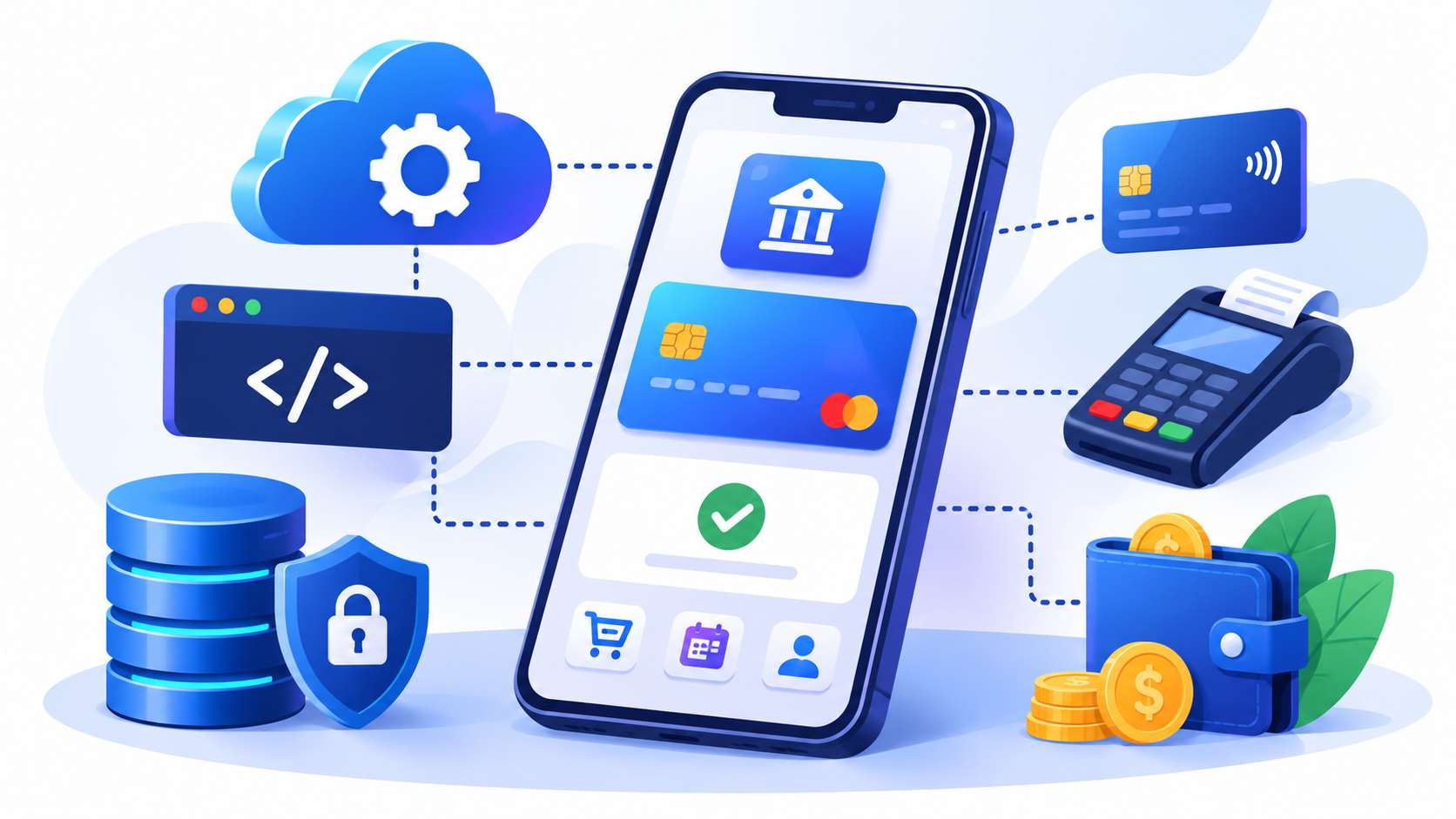
- Embedded finance apps integrate payments, digital wallets, and lending directly into existing business platforms.
- Embedded finance app development costs range from $8,000 to $90,000+, depending on features and complexity.
- Development timelines range from 6–10 weeks for basic apps to 6–9+ months for enterprise platforms.
- Secure API integration, regulatory compliance, fraud prevention, and accurate transaction ledgers are essential for success.
- Start with a focused MVP, choose reliable financial partners, and scale features based on customer needs.
What if your customers could pay, access credit, or use a digital wallet without leaving your platform? That’s the promise of embedded finance. But building it in 2027 involves more than adding a payment button.
You need secure APIs, trusted financial partners, smooth onboarding, and the right compliance measures. For U.S. businesses, these choices can shape customer trust an;d long-term growth.
This guide covers embedded finance app development, including payments, lending, digital wallets, API integration, essential features, development costs, timelines, security, and how to choose the right development partner.
Embedded Finance Explained: Market Size, Growth & Industry Insights
Embedded finance means adding financial services, such as payments, lending, insurance, or digital wallets, directly into a non-financial business’s app or website. Customers can access these services while shopping, booking rides, or using software without visiting a separate bank or financial provider.
- The embedded finance market was valued at USD 145.03 billion in 2025 and is projected to reach USD 1,921.96 billion by 2034, growing at a 33.26% CAGR (2026–2034).
- The global embedded finance market was valued at USD 83.32 billion in 2023 and is projected to reach USD 588.49 billion by 2030, growing at a 32.8% CAGR (2024–2030).
Why Businesses Are Adopting Embedded Finance in 2027
Businesses are adding financial services to simplify transactions, create new revenue streams, and build stronger customer relationships within their own platforms.
1. Boosting Customer Retention
Integrated wallets and rewards encourage repeat purchases. Ewallet app development services can help businesses add wallet features that keep customers engaged.
2. Improving Checkout Experience
Embedded payments help customers pay without leaving a website or app, reducing checkout friction and making purchases easier.
3. Creating New Revenue Streams
Businesses can earn through lending, payment fees, and financial partnerships while expanding their services without becoming banks themselves.
4. Industry-Specific Use Cases
E-commerce, SaaS, marketplaces, and mobility platforms can embed payments or lending to meet customer needs. Planning these features also affects the business mobile app development costs.
Core Building Blocks of an Embedded Finance App
Explore the essential features, APIs, payment systems, security tools, and compliance layers that power embedded finance apps.
1. Embedded Payments
Connect payment gateways, acquiring, and processing with UPI, cards, ACH, SEPA, and RTP. Add split payments, cross-border payouts, tokenization, and a smooth checkout experience.
2. Embedded Lending
Support BNPL, merchant cash advances, revenue-based financing, and microloans.
Use alternative data and machine learning for credit decisioning, with loan origination, servicing, collections, and co-lending workflows.
3. Digital Wallets
Build closed-loop, semi-closed, or open-loop wallets with KYC tiers, balance limits, and secure top-up and withdrawal flows. Add stored-value features, loyalty points, and rewards.
4. Other Add-Ons
Expand your platform with embedded insurance, bank accounts, card issuing, and investment services.
Strong banking software development and regulated financial partners help support secure integrations and compliant operations.
Essential Features of an Embedded Finance App
An embedded finance app needs more than a payment button or wallet screen. It must connect customer actions with secure financial workflows, clear transaction records, and reliable partner systems.
Here are the core features to plan for.
1. User Registration, KYC, and Identity Verification
- User workflow: Let customers create accounts, verify their identity, and submit required documents through a simple onboarding flow.
- Verification workflow: Integrate identity checks, risk screening, and applicable Know Your Customer (KYC) requirements through approved providers.
- Partner workflow: Banks and financial partners may set verification rules, approval steps, and transaction limits.
2. Payment Checkout, Refunds, and Transaction History
- Customer payments: Support cards, digital wallets, and relevant local payment methods through payment gateway APIs.
- Refunds and records: Show payment status, receipts, failed transactions, and refund progress in one place.
- Partner workflow: Payment processors handle authorization and settlement, while webhooks help your app track status updates securely.
3. Wallet Balance and Transaction Ledger
- Customer wallet: Display available balances, deposits, withdrawals, transfers, and transaction history.
- Ledger management: Use a reliable transaction ledger to record every credit and debit, with reconciliation to identify mismatches.
- Security controls: Apply wallet limits, access checks, and clear rules for pending or reversed transactions.
4. Lending Applications, Eligibility, and Repayment Tracking
- Borrower workflow: Allow users to apply for credit, review available offers, and track application decisions and repayment dates.
- Credit assessment: Connect with lending partners for eligibility checks, credit decisioning, disclosures, and loan approval.
- Servicing workflow: Track loan disbursement, payment schedules, outstanding balances, and overdue payments. Lending decisions should follow applicable fair-lending and consumer-protection rules.
5. Admin Dashboard and Reconciliation
- Admin controls: Give authorized staff tools to review transactions, manage exceptions, monitor account activity, and investigate failed payments.
- Financial reporting: Reconcile app records with processor, bank, and lending-partner statements to spot missing or mismatched entries.
- Operational monitoring: Track transaction success rates, settlement delays, refunds, and unresolved cases.
6. Notifications, Dispute Management, and Customer Support
- Customer alerts: Send email, SMS, or push notifications for payments, refunds, wallet activity, loan decisions, and repayment reminders.
- Dispute workflow: Let users report incorrect charges and upload supporting information, with clear case status updates.
- Support tools: Give agents a secure view of relevant transaction details so they can resolve issues without exposing unnecessary financial data.
7. Role-Based Access and Audit Logs
- Role-based access control (RBAC): Set permissions for customers, support agents, administrators, and financial partners based on their responsibilities.
- Audit trails: Record sensitive actions, permission changes, approvals, and financial adjustments with timestamps and user identifiers.
- Security monitoring: Use encryption, multi-factor authentication, and alerts for suspicious access or unusual activity.
Embedded Finance App Feature Matrix
Not every feature needs to launch on day one. Prioritize the workflows required to deliver your first financial service safely, then expand based on customer needs and partner capabilities.
|
Feature |
MVP |
Later release |
Partner dependency |
|
Registration and KYC |
Account setup and required identity checks |
Risk-based onboarding improvements |
Identity verification provider; bank or regulated partner rules |
|
Payments and refunds |
Core checkout, payment status, basic refunds |
More payment methods and cross-border flows |
Payment gateway, processor, acquiring bank |
|
Wallet and ledger |
Balance display and accurate transaction records |
Rewards, advanced transfers, multiple currencies |
Wallet provider or regulated financial partner, depending on model |
|
Lending |
Application and eligibility flow, if lending is in scope |
Alternative data models and more lending products |
Lender, credit data providers, and loan servicing partners |
|
Admin and reconciliation |
Transaction monitoring and exception handling |
Advanced reporting and automated reconciliation |
Processor, bank, or lending partner data feeds |
|
Notifications and disputes |
Payment alerts and basic support cases |
Automated dispute workflows and smart alerts |
Email, SMS, payment, and dispute providers |
|
RBAC and audit logs |
Defined permissions and essential audit records |
Advanced fraud monitoring and security analytics |
Identity provider and partner security requirements |
Step-by-Step Embedded Finance App Development Roadmap
Building an embedded finance app takes more than writing code. You need a clear business case, the right financial partners, secure API integrations, and a product that handles real transactions reliably. Here are the seven steps to follow.
1. Validate the Market and Use Case
Start by identifying the financial problem your app will solve. For example, an e-commerce platform may need embedded payments, while a B2B marketplace may want to offer working capital to sellers.
- Define your audience: Identify customer needs, payment habits, and common financial problems.
- Study competitors: Compare their features, pricing models, onboarding flows, and customer feedback.
- Choose a business model: Decide how the app will earn revenue through transaction fees, lending referrals, subscriptions, or other services.
- Test demand: Interview potential users and validate the idea before investing in full development.
- Deliverable: A validated use case, target audience, competitor analysis, and initial revenue model.
2. Select Regulatory Requirements and Financial Partners
Embedded finance often relies on regulated banks, payment processors, lenders, or Banking-as-a-Service (BaaS) providers. Your legal obligations depend on the services offered, your role, and the states where you operate.
- Map compliance needs: Review applicable KYC, AML, consumer protection, privacy, and payment security requirements.
- Choose partners: Evaluate banks, payment gateways, identity verification providers, and lending platforms.
- Review partner terms: Check API capabilities, transaction fees, settlement times, service-level agreements, and data ownership.
- Define responsibilities: Confirm who handles customer funds, identity checks, disputes, lending decisions, and regulatory reporting.
3. Define the MVP Scope
Your first release should solve one core problem well. Trying to launch payments, lending, wallets, insurance, and investments at once can increase costs and delay testing.
- Prioritize essential features: Include account registration, required identity checks, core transactions, transaction history, and basic admin tools.
- Separate must-haves from later features: Advanced rewards, multi-currency support, and predictive analytics can often wait.
- Map user journeys: Document how customers, administrators, and financial partners interact with the product.
- Set success metrics: Track payment success rates, onboarding completion, transaction volume, and customer support issues.
- Deliverable: An MVP feature list, user stories, acceptance criteria, and a prioritized product backlog.
4. Design the App and Choose the Architecture
A strong architecture supports secure transactions, reliable records, and future growth. Design the system around the financial services you plan to offer rather than choosing technologies just because they are popular.
- Create the user experience: Build wireframes for onboarding, checkout, wallet balances, loan applications, and transaction history.
- Plan the backend: Define services for payments, identity verification, ledger management, notifications, and partner integrations.
- Design API security: Use appropriate authentication, access controls, encryption, request validation, and webhook verification.
- Plan data reliability: Add idempotency controls, transaction monitoring, audit logs, backups, and recovery procedures.
Recommended Tech Stack for Embedded Finance App Development
The best stack depends on your team's skills, expected traffic, partner APIs, and compliance needs. The following is a practical starting point, not a mandatory combination.
|
Technology layer |
Suggested options |
Main purpose |
|
Mobile app |
React Native or native Swift and Kotlin |
Build iOS and Android experiences. |
|
Web frontend |
React or Next.js |
Customer portals and admin dashboards |
|
Backend |
Java with Spring Boot, C# with .NET, or TypeScript with NestJS |
Business logic and financial workflows |
|
Database |
PostgreSQL |
Store accounts, transaction records, and application data |
|
Cache and queues |
Redis and managed message queues |
Improve performance and process background tasks |
|
API integration |
REST APIs, webhooks, and OAuth 2.0 were supported. |
Connect banks, processors, and verification providers |
|
Cloud infrastructure |
AWS, Microsoft Azure, or Google Cloud |
Host services, monitoring, backups, and scaling |
|
Security and monitoring |
Cloud-native security tools, centralized logs, and alerting |
Detect issues and protect sensitive data |
|
Testing |
Jest, Playwright, and API testing tools |
Validate application behavior and integrations |
5. Develop the App and Integrate Financial APIs
This is where the product takes shape. Developers build the customer interface and backend services, then connect them to the financial partners selected earlier.
- Build core workflows: Implement registration, payment initiation, transaction status, and account management.
- Integrate partner APIs: Connect payment processors, KYC providers, banks, or lenders using their approved SDKs and APIs.
- Handle transaction events: Use signed webhooks, retries, idempotency keys, and clear error handling to prevent duplicate or missing updates.
- Create admin tools: Add transaction searches, reconciliation reports, permission controls, and exception handling.
- Document the system: Record API behavior, failure cases, and operational procedures.
Avoid assuming that an API call means a transaction is complete. Authorization, settlement, and reconciliation are different stages, and the app must represent them correctly.
Deliverable: A working application connected to sandbox or test environments, with documented integration flows.
6. Test Security, Performance, and Compliance
A payment flow may work perfectly in a demo and still fail under real-world conditions. Test both normal activity and the situations that are easy to overlook, such as duplicate requests, delayed webhooks, and interrupted payments.
- Functional testing: Verify onboarding, payments, refunds, wallet updates, and lending workflows.
- Security testing: Check access controls, API authorization, encryption, secrets management, and common vulnerabilities.
- Load testing: Simulate traffic spikes and measure response times, error rates, and system capacity.
- Failure testing: Test timeouts, partner outages, duplicate requests, and recovery after service interruptions.
- Compliance testing: Validate required disclosures, identity checks, transaction records, and partner-specific controls.
- Deliverable: Test reports, resolved critical issues, security review results, and launch approval.
7. Launch, Monitor, and Improve
Launch with a controlled rollout instead of opening the app to everyone at once. A limited release helps your team spot transaction issues and confusing user flows before they affect a larger customer base.
- Start with a pilot: Release to a small group of users or a limited market.
- Monitor key metrics: Track transaction success, failed payments, settlement mismatches, onboarding drop-offs, and support requests.
- Prepare incident response: Set up alerts, escalation paths, rollback plans, and partner contacts.
- Collect customer feedback: Use real support cases and usage data to identify friction.
- Improve in stages: Add new payment methods, wallet features, lending products, or automation when demand supports them.
- Deliverable: A stable production release, monitoring dashboards, an incident response plan, and a roadmap for future updates.
Embedded Finance App Development Cost and Timeline
The cost of embedded finance app development depends on the features, financial API integrations, security needs, and product complexity. A basic payment app costs less than a platform with wallets, lending, and advanced controls.
Embedded Finance App Development Cost and Timeline
The fintech app development cost for an embedded finance solution depends on its features, financial API integrations, security requirements, and overall complexity. A basic payment app generally costs less than a platform that combines digital wallets, lending, and advanced financial controls.
|
App Type |
Estimated Cost (USD) |
Estimated Timeline |
|
Basic |
$8,000–$20,000 |
6–10 weeks |
|
Standard |
$20,000–$40,000 |
10–16 weeks |
|
Advanced |
$40,000–$70,000 |
4–6 months |
|
Enterprise |
$70,000–$90,000+ |
6–9+ months |
Challenges and How to Overcome Them
Embedded finance apps face challenges around compliance, API reliability, fraud, data security, and financial accuracy. The right plan helps reduce risk and control costs.
1. Meeting Financial Regulations and Compliance Requirements
Challenge: U.S. financial rules, KYC checks, AML screening, and state licensing requirements can delay launches and add complexity.
Solution: Work with qualified legal advisors and regulated partners. Define compliance responsibilities early and review applicable CFPB and FinCEN guidance.
2. Integrating Third-Party Financial APIs
Challenge: Bank, payment gateway, and lending APIs may use different formats, limits, and webhook rules, causing failed or delayed transactions.
Solution: Use documented APIs, secure authentication, webhook verification, retries, and idempotency. Test failures and partner outages before launch.
3. Protecting User Data and Preventing Fraud
Challenge: Stolen credentials, account takeovers, payment fraud, and data leaks can damage customer trust and expose sensitive financial information.
Solution: Apply encryption, multi-factor authentication, tokenization, access controls, and fraud monitoring. Follow relevant PCI DSS and security guidance.
4. Keeping Transactions and Ledgers Accurate
Challenge: Duplicate requests, delayed settlements, and missed webhooks can create mismatched balances, refund errors, and reconciliation problems.
Solution: Maintain a reliable transaction ledger, use idempotency keys, and reconcile records with partner reports. Alert teams to unmatched transactions.
5. Managing Development Costs and Delivery Time
Challenge: Extra integrations, compliance reviews, and security fixes can push fintech app development costs beyond the original budget and timeline.
Solution: Start with a focused MVP, confirm partner fees early, and prioritize essential features. Reserve budget for testing, maintenance, and unexpected delays.
How to Monetize an Embedded Finance App
Embedded finance apps can earn revenue through payments, lending, subscriptions, and partner fees while adding value to everyday customer transactions.
- Transaction Fees: Charge a small fee on eligible payments, marketplace transactions, or payouts, with clear pricing for businesses and customers.
- Lending Commissions: Earn referral or origination fees through lending partners when customers qualify for business loans, BNPL, or working capital.
- Subscription Plans: Offer premium financial tools, advanced reporting, automated reconciliation, or higher transaction limits through monthly business subscriptions.
- Interchange Revenue: Earn a share of eligible card interchange revenue through card-issuing partners, subject to agreements and applicable regulations.
- Wallet and Value-Added Services: Generate revenue from permitted wallet services, instant payouts, or premium account features, while clearly disclosing fees.
- API and Integration Fees: Charge businesses for financial API access, custom integrations, or advanced payment tools. Factor in the mobile payment app development cost when setting profitable prices.
Future Outlook: What's Next Beyond 2027
Embedded finance will evolve with AI-powered payments, faster cross-border transfers, connected wallets, and smarter, personalized lending solutions.
1. Agentic AI and Autonomous Payments
Agentic AI may help automate payments, detect unusual activity, and manage financial tasks. Strong approval controls and fraud monitoring will remain essential.
2. Real-Time Cross-Border Settlement
Real-time payment rails and improved API integration could speed up international transfers, reduce settlement delays, and give businesses better visibility into foreign exchange fees.
3. Open Finance and Interoperable Wallets
Open finance APIs may let users connect accounts and wallets across platforms more easily. Secure data sharing and user consent will be key to adoption.
4. Hyper-Personalized Credit
AI-driven credit decisioning may use cash flow and transaction data to tailor loan offers. Fair lending checks and explainable decisions will still matter.
A skilled fintech app development company can help businesses assess these emerging technologies and build a secure, flexible architecture without investing in every new trend at once.
Conclusion
Embedded finance app development in 2027 gives businesses a way to bring payments, digital wallets, and lending directly into their platforms.
Success depends on more than features. Secure API integration, reliable transaction processing, regulatory compliance, and trusted financial partners all matter.
Start with a focused MVP, test core workflows, and expand as customer needs grow. With the right technology stack and cost plan, your business can build an embedded finance app that supports customer trust, new revenue streams, and long-term growth.
FAQ's
Embedded finance app development integrates payments, lending, digital wallets, or other financial services into non-financial apps and websites.
A basic app may cost $8,000–$20,000, while advanced platforms can cost $40,000–$90,000 or more, depending on scope.
Development may take 6–10 weeks for a basic app and 6–9+ months for an enterprise platform with complex integrations.
Core features include KYC verification, payment processing, digital wallets, transaction history, secure APIs, admin tools, and reconciliation.
Common choices include React Native, Swift, Kotlin, Java, .NET, PostgreSQL, REST APIs, cloud platforms, and security monitoring tools.
They can earn through transaction fees, lending referrals, subscriptions, eligible interchange revenue, wallet services, and API access fees.
Requirements depend on the services and business model. They may include KYC, AML controls, consumer protection, privacy rules, and PCI DSS.
Use encryption, multi-factor authentication, role-based access, fraud monitoring, secure API authentication, audit logs, and regular security testing.

CrinPro
CrinPro Solutions is a leading IT company that helps startups and enterprises build innovative digital products. From intuitive mobile applications and high-performance websites to AI-powered solutions and enterprise software, our team delivers scalable, secure, and user-focused products tailored to unique business needs. With expertise across multiple industries, we transform ideas into digital experiences that drive growth, improve efficiency, and create long-term business value.