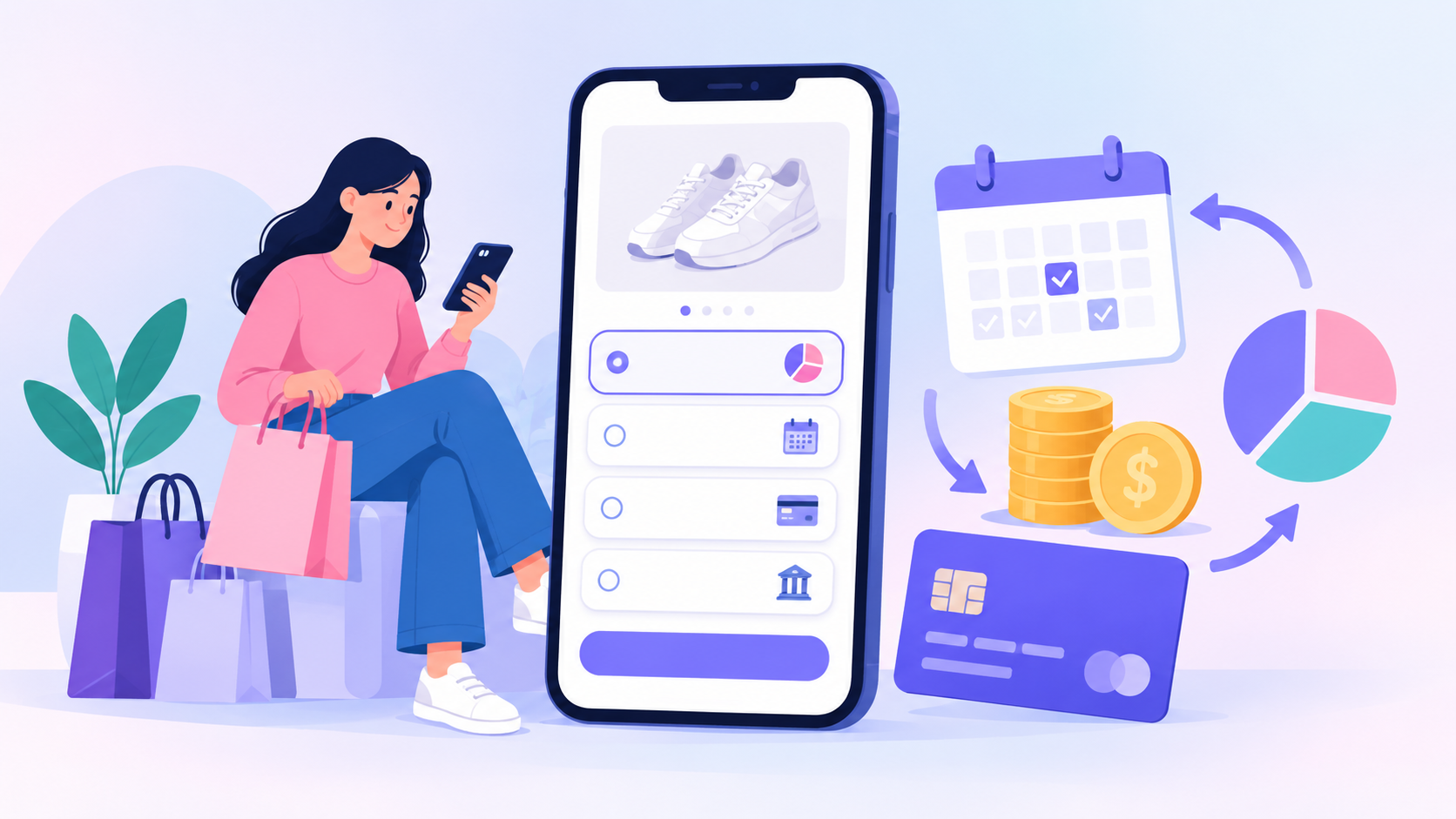
Key Takeaways:
- BNPL app development can cost $8,000 to $70,000 based on features, complexity, integrations, and development requirements.
- Advanced features increase the budget, especially automated risk assessment, payment processing, analytics, personalization, and fraud detection.
- Security and compliance are essential for protecting financial data and supporting responsible BNPL operations.
- Third-party integrations affect development costs, including payment gateways, identity verification, credit checks, banking services, and notification platforms.
- Future scalability matters from the start. A flexible architecture can make future upgrades, integrations, and feature expansion easier.
"Buy now, pay later" sounds simple from the user's side: split a purchase into a few installments, done.
But behind that simplicity sits real financial infrastructure: credit risk assessment, merchant integrations, regulatory compliance, and payment processing that actually needs to work flawlessly, since users are trusting the app with their money and their credit.
Klarna built that infrastructure into a business worth billions, and plenty of founders now want to build something similar.
But before diving in, the question every founder asks first is simple: what will this actually cost? The honest answer depends on far more than basic app development; risk modeling, compliance requirements, and merchant network integrations all add real complexity.
This guide breaks down exactly what goes into pricing a BNPL app in 2027.
Understanding the BNPL Business Model in 2027
Klarna's success didn't come from a clever app; it came from solving a genuine consumer need profitably at scale.
Before pricing out your own build, it helps to understand exactly how this business model actually works and why it continues attracting serious investment.
1. Revenue Comes From Merchants, Not Just Users
BNPL providers typically charge merchants a fee per transaction, similar to a credit card processing fee, in exchange for driving higher conversion and larger basket sizes.
This merchant-funded model is what lets BNPL apps offer interest-free installments to consumers while still remaining profitable.
2. The Market Has Genuinely Massive Scale Already
This isn't an emerging niche anymore. The global BNPL market reached $509.2 billion in 2026 and is projected to approach $1 trillion by 2031, growing at a 14.7% CAGR, with global users expected to surpass 900 million by 2027.
3. Younger Consumers Drive the Majority of Usage
Over 68% of consumers aged 18-35 now use BNPL services, and more than 62% of shoppers under 40 prefer flexible payment options.
This demographic concentration shapes nearly every product decision, from UI design to credit risk modeling built around this audience.
4. Credit Risk and Default Management Are Core to the Business
Roughly 41% of BNPL users report paying late on a loan within the past year, making real-time credit risk assessment and collections infrastructure just as central to the business as the consumer-facing app itself, not an afterthought bolted on later.
Must-Have Features and Their Impact on Cost
Not every feature in a BNPL app costs the same to build, and understanding which ones drive mobile payment app development cost the most helps you prioritize spending where it genuinely matters for launch.
1. Credit Risk Assessment Engine
This is the single most expensive, most critical component. Building or integrating real-time credit scoring that evaluates user risk instantly at checkout requires sophisticated data modeling and often third-party credit bureau integrations, significantly driving up both development time and cost.
2. Merchant Integration and Checkout SDK
BNPL apps need seamless integration into merchant checkout flows, often through an SDK or plugin merchants can embed directly.
Building this integration layer to work reliably across different ecommerce platforms adds meaningful cost but is essential to the entire business model functioning.
3. Installment Payment Processing
Unlike standard one-time payment processing, BNPL requires logic handling scheduled installments, automated reminders, and payment retries for failed charges.
This recurring, scheduled billing infrastructure costs more to build correctly than simple one-time transaction processing.
4. Fraud Detection and Prevention
Given the financial exposure BNPL providers carry, real-time fraud detection monitoring for suspicious account activity or payment patterns adds both development complexity and ongoing cost, since this system needs continuous tuning as fraud tactics evolve.
5. User Dashboard and Repayment Management
Users need clear visibility into upcoming payments, balances, and repayment history.
While less complex than credit scoring, building an intuitive, trustworthy dashboard still requires real design and development investment, since confusing repayment interfaces directly increase late payments and support tickets.
6. Compliance and Regulatory Reporting
BNPL faces increasing regulatory scrutiny worldwide, requiring built-in compliance features like clear fee disclosures, credit reporting integration, and audit trails.
This compliance infrastructure adds cost upfront but prevents far more expensive legal exposure down the road.
BNPL App Development Cost in 2027: A Complete Breakdown
Building a BNPL app in 2027 can cost between $8,000 and $70,000, depending on features, technology, integrations, security, and development complexity.
Understanding the fintech app development cost helps businesses plan their budget and prioritize essential features before development begins.
1. User Registration and Login
User registration creates the entry point for borrowers. It typically includes email or phone verification, password management, social login, and identity checks.
Development costs increase when stronger authentication, biometric verification, or multi-factor security features are added.
|
Element |
Cost Range $ |
Description |
|
Phone/Email Login |
300–400 |
Lets users create accounts and securely access the app using their phone number or email address. |
|
OTP Verification |
500–600 |
Adds one-time password verification to confirm user identity during registration and login. |
|
Biometric Login |
700–800 |
Enables fingerprint or facial authentication for faster and more secure account access. |
2. User Profile Management
A complete profile section lets customers manage personal details, payment preferences, spending limits, and account information.
Developers may also include document uploads and verification status. The final cost depends on customization, security requirements, and supported account features.
|
Element |
Cost Range $ |
Description |
|
Profile Creation |
300–400 |
Allows users to add and update basic personal and account information. |
|
Document Upload |
500–600 |
Lets users securely upload documents required for identity or account verification. |
|
Profile Verification |
700–800 |
Helps verify submitted user information and documents before providing access to financial services. |
3. BNPL Payment Management
Payment management forms the core of a BNPL application. Users should view purchases, installment schedules, upcoming payments, completed transactions, and outstanding balances.
Development complexity rises when flexible repayment plans and automated payment processing are introduced into the platform.
|
Element |
Cost Range $ |
Description |
|
Payment Schedule |
500–600 |
Displays upcoming installment dates, payment amounts, and outstanding balances in one place. |
|
Installment Tracking |
700–800 |
Helps users monitor completed, pending, and overdue installment payments through their account. |
|
Automated Payments |
900–1,000 |
Automatically processes scheduled installment payments using the user's saved payment method. |
4. Merchant Integration
Merchant integration allows customers to use BNPL services during checkout. Developers connect the application with merchant platforms, payment gateways, APIs, and checkout systems.
Costs vary according to integration complexity, supported platforms, transaction volume, and customization requirements across merchants.
|
Element |
Cost Range $ |
Description |
|
Merchant API |
500–600 |
Connects the BNPL platform with merchant systems to exchange customer and transaction information. |
|
Checkout Integration |
700–800 |
Adds BNPL as a payment option during online or in-app merchant checkout. |
|
Multi-Merchant Support |
900–1,000 |
Enables the platform to connect with and manage transactions across multiple merchants. |
5. Credit Assessment System
A BNPL platform needs an effective credit assessment process to determine eligibility and spending limits.
AI automation software development can support automated risk evaluation, financial data analysis, and decision-making while reducing manual assessment work for lending teams.
|
Element |
Cost Range $ |
Description |
|
Eligibility Rules |
700–800 |
Applies predefined rules to determine whether users qualify for BNPL services. |
|
Credit API Integration |
900–1,000 |
Connects the app with external credit data providers for user assessment and verification. |
|
Automated Risk Scoring |
1,000–1,200 |
Uses financial indicators and algorithms to evaluate customer repayment risk automatically. |
6. Payment Gateway Integration
Payment gateways enable secure transactions between customers, merchants, and financial providers.
Developers integrate suitable payment services and configure transaction processing, refunds, failed payments, and reconciliation.
Supporting multiple gateways increases development effort because each provider has different technical requirements.
|
Element |
Cost Range $ |
Description |
|
Single Gateway |
500–600 |
Connects the app with one payment gateway for processing customer transactions securely. |
|
Refund Processing |
700–800 |
Enables merchants or administrators to process eligible refunds through the application. |
|
Multiple Gateways |
900–1,000 |
Supports multiple payment providers, giving users and merchants more transaction options. |
7. Push Notifications
Notifications keep customers informed about payment deadlines, successful transactions, promotional offers, account activity, and repayment reminders.
Developers can create automated notification triggers and personalized messaging.
Costs depend on notification types, scheduling requirements, personalization, and integration with external communication services.
|
Element |
Cost Range $ |
Description |
|
Payment Alerts |
300–400 |
Notifies users about successful payments, failed transactions, and account activity. |
|
Reminder Notifications |
500–600 |
Sends automated reminders about upcoming installment due dates and pending payments. |
|
Personalized Alerts |
700–800 |
Delivers customized notifications based on user activity, payment behavior, and account events. |
8. Admin Dashboard
An admin dashboard gives businesses centralized control over users, transactions, merchants, payments, disputes, and reports.
Developers can add analytics, account management, fraud monitoring, and operational controls. More detailed dashboards require additional backend development, permissions, and data visualization capabilities.
|
Element |
Cost Range $ |
Description |
|
User Management |
700–800 |
Gives administrators tools to view, manage, verify, and update customer accounts. |
|
Transaction Monitoring |
900–1,000 |
Allows administrators to track payments, transactions, refunds, and account activity. |
|
Advanced Analytics |
1,000–1,200 |
Provides detailed reports for analyzing transactions, customers, revenue, and platform performance. |
9. Security and Compliance
Security is essential because BNPL platforms handle financial and personal information. Cybersecurity software development can strengthen encryption, authentication, fraud detection, access controls, and monitoring.
These measures help protect sensitive customer information while supporting the platform's broader security requirements.
|
Element |
Cost Range $ |
Description |
|
Data Encryption |
700–800 |
Protects sensitive customer and transaction information by encrypting stored and transmitted data. |
|
Fraud Detection |
900–1,000 |
Identifies suspicious transactions and unusual account activity using predefined security rules. |
|
Advanced Security |
1,000–1,200 |
Adds stronger authentication, access controls, monitoring, and security measures for financial data. |
10. Testing and Deployment
Testing ensures the BNPL application performs reliably across devices, payment scenarios, user journeys, and backend systems.
Teams conduct functional, security, performance, and usability testing before launch. Deployment costs depend on infrastructure, testing depth, app stores, and production requirements.
|
Element |
Cost Range $ |
Description |
|
Functional Testing |
300–400 |
Checks whether features, workflows, payments, and user interactions work as intended. |
|
Performance Testing |
500–600 |
Measures application speed, stability, and responsiveness under different usage conditions. |
|
Security Testing |
700–800 |
Identifies vulnerabilities and security weaknesses before the application reaches production. |
Compliance and Risk Factors That Affect Your Budget
Compliance and risk controls can shape your fintech budget as much as design or development.
A fintech app development company considers regulations, security standards, fraud prevention, and operational risks early, helping teams avoid costly changes, delays, penalties, and expenses later.
1. Regulatory Compliance Requirements
Financial apps must follow rules covering payments, lending, data protection, and consumer rights.
Meeting these requirements can increase development costs through legal reviews, compliance workflows, documentation, audits, and specialized expertise. Requirements vary by state, business model, and financial services offered.
2. Data Privacy and Protection
Handling sensitive financial and personal data requires strong privacy controls. Budget increases may come from encryption, access management, consent systems, secure storage, data retention policies, and privacy assessments.
Teams serving U.S. customers must also account for federal and state requirements.
3. Fraud Detection and Prevention
Fraud risks can affect fintech development budgets. Real-time transaction monitoring, identity verification, risk scoring, anomaly detection, and automated alerts require additional infrastructure and engineering effort.
Advanced fraud prevention may also involve machine learning models, third-party services, and ongoing monitoring costs.
4. Security Testing and Audits
Security cannot be treated as a final development step. Penetration testing, vulnerability assessments, code reviews, compliance audits, and continuous monitoring add costs but help identify weaknesses before launch.
Required testing depth depends on the app’s features, integrations, data, and obligations.
5. Third-Party Integration Risks
Fintech apps often connect with banks, payment gateways, credit bureaus, identity providers, and financial platforms.
Each integration can introduce security, compliance, maintenance, and availability risks. Budget planning should include integration testing, vendor assessments, API changes, monitoring, and resources for disruptions.
6. Identity Verification and KYC
Know Your Customer processes can add costs when an app handles regulated financial activities.
Identity verification may require document checks, biometric authentication, database screening, sanctions checks, and ongoing monitoring. Expenses depend on verification volume, provider pricing, implementation complexity, and requirements.
7. Business Continuity and Operational Risk
Fintech platforms need safeguards against outages, data loss, cyber incidents, and operational failures.
Building backups, disaster recovery plans, monitoring systems, failover infrastructure, and incident response processes increases upfront spending. These controls can reduce downtime-related losses and support reliable financial services.
8. Compliance Updates and Ongoing Costs
Compliance does not end after launch. Regulations, vendor requirements, and internal controls can change over time.
Your budget should cover compliance reviews, software updates, security monitoring, audits, employee training, and legal guidance to keep the platform aligned with evolving requirements.
Getting the Most Value from Your BNPL Development Budget
Maximizing a BNPL budget requires more than controlling development costs. Teams should prioritize essential features, choose scalable technology, and plan integrations carefully. Working with E-wallet app development services can also help create connected, seamless, secure payment experiences without unnecessary spending.
1. Prioritize Core BNPL Features
Start with the features customers actually need, such as account creation, eligibility checks, payment schedules, notifications, and repayment tracking.
Avoid building advanced capabilities too early. A focused first release reduces development expenses while giving your team room to validate demand.
2. Choose Scalable Technology
Choose a technology stack that supports future growth without creating unnecessary complexity. Scalable architecture can make it easier to add payment methods, merchant tools, analytics, and automation later.
This approach prevents expensive rewrites as transaction volumes and customer expectations increase.
3. Leverage Third-Party Integrations
Use established APIs and trusted third-party providers for payments, identity verification, credit checks, and notifications when appropriate.
Building every service internally can consume significant resources. Selected integrations reduce development time while allowing your team to focus on core BNPL functionality.
4. Keep the User Experience Simple
Design the user experience around simple decisions and clear repayment information. Complicated screens can increase development time without improving customer value.
Keep checkout, approval, payment scheduling, and account management straightforward so users can understand their obligations and complete actions easily.
5. Plan Security Early
Build security and compliance into the architecture from the beginning instead of adding them near launch.
Strong authentication, encryption, fraud controls, monitoring, and compliance workflows can prevent costly rework. Planning also helps reduce operational risks after the app goes live.
6. Use Data to Guide Improvements
Use analytics to measure how customers interact with your BNPL platform after launch. Track approval rates, repayment behavior, checkout completion, and feature usage.
These insights help teams invest in improvements that address real user needs instead of spending on assumptions.
7. Develop in Phases
Plan development in phases and connect spending to measurable goals. Launch the core product first, collect feedback, then prioritize enhancements based on performance and customer demand.
This approach keeps the budget flexible and reduces the risk of funding low-value features.
8. Review Costs Continuously
Monitor development expenses throughout the project instead of reviewing the budget only at major milestones. Track infrastructure, integrations, testing, compliance, and maintenance costs regularly.
Early visibility helps teams identify overspending quickly and make practical adjustments before resources are exhausted.
Conclusion
Building a BNPL app like Klarna in 2027 can cost around $8,000 to $70,000, depending on the app’s features, design, technology stack, security requirements, integrations, and development approach.
A basic BNPL product may stay closer to the lower end, while advanced platforms with automated risk assessment, payment integrations, personalized offers, analytics, and strong security can require a larger investment.
Development is only one part of the budget. Businesses should also plan for compliance, maintenance, third-party services, testing, and future upgrades.
Before development begins, define the target users, core features, revenue model, and regulatory requirements. A clear scope helps control costs and prevents unnecessary development work.
With thoughtful planning, businesses can build a scalable BNPL platform that supports customer convenience while creating room for long-term growth.
FAQ's
Building a BNPL app like Klarna can cost approximately $8,000 to $70,000 in 2027. The final cost depends on features, app complexity, integrations, security requirements, technology choices, and development resources.
Major cost factors include UI/UX design, user registration, payment processing, credit assessment, installment management, notifications, analytics, security, third-party integrations, testing, and administrative features.
A basic BNPL app may take a few months to develop. More advanced platforms can require additional time for integrations, testing, security implementation, compliance requirements, and complex financial workflows.
Common features include user registration, identity verification, credit assessment, purchase financing, installment schedules, payment processing, repayment reminders, transaction history, notifications, customer support, and an admin dashboard.
Yes. BNPL platforms handle sensitive financial and personal information, making security a critical development requirement. Businesses should consider encryption, secure authentication, fraud prevention, access controls, monitoring, and regular security testing.
A very limited prototype may be possible with a smaller budget, but a production-ready BNPL platform generally requires investment in development, integrations, testing, security, and operational infrastructure.
The additional cost varies based on the services integrated. Payment gateways, identity verification, credit bureaus, banking APIs, fraud detection tools, and communication services can all affect the overall development budget.
A custom platform provides greater control over branding, workflows, features, and integrations. Existing solutions can reduce initial development work but may offer less flexibility for businesses with specific requirements.
A BNPL platform can use technologies such as React Native or Flutter for mobile development, Node.js, Java, or Python for backend systems, and PostgreSQL or other databases. The right stack depends on the product requirements.
Businesses should budget for cloud infrastructure, maintenance, security updates, technical support, third-party API charges, compliance-related work, monitoring, bug fixes, and future feature development.

CrinPro
CrinPro Solutions is a leading IT company that helps startups and enterprises build innovative digital products. From intuitive mobile applications and high-performance websites to AI-powered solutions and enterprise software, our team delivers scalable, secure, and user-focused products tailored to unique business needs. With expertise across multiple industries, we transform ideas into digital experiences that drive growth, improve efficiency, and create long-term business value.