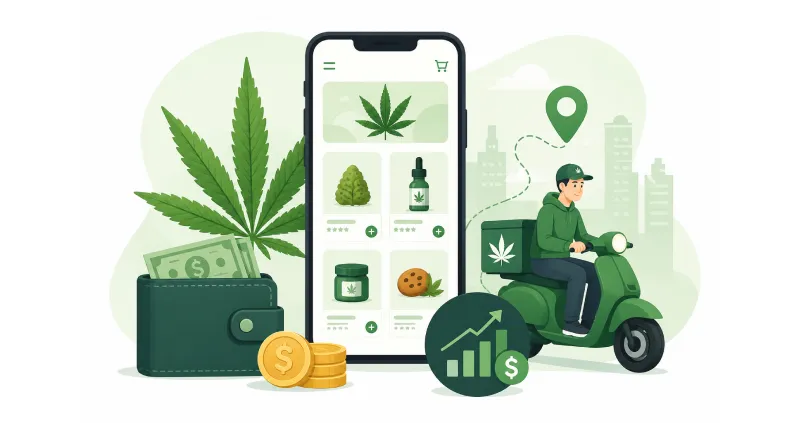
The cannabis industry continues to expand rapidly across legalized states, and delivery apps have become essential tools for dispensaries looking to reach customers conveniently and compliantly.
As more businesses enter this space, one question comes up repeatedly: what's the real cannabis delivery app development cost in 2026?
The answer depends on several factors, including the features you need, state-specific compliance requirements, platform choice, and the development team you hire.
Cannabis apps also carry unique technical demands, like age verification, ID scanning, and delivery tracking, that standard delivery platforms don't require, which affects overall pricing.
This guide breaks down realistic cost estimates, must-have features, and the key variables that influence your final budget.
Whether you're launching a new dispensary delivery service or upgrading an existing platform, this breakdown will help you plan a compliant, competitive app without overspending.
What Is a Cannabis Delivery App, and Why Are Businesses Investing in One?
A cannabis delivery app is a digital platform that lets licensed dispensaries sell and deliver products directly to customers' doors.
Growing legalization and shifting consumer habits are driving increased investment in cannabis delivery app development nationwide.
Rising Consumer Preference for Privacy and Convenience
More customers now prefer ordering cannabis discreetly from home rather than visiting physical dispensaries.
This shift toward private, convenient purchasing is pushing businesses to prioritize delivery infrastructure and mobile ordering over traditional in-store experiences alone.
Explosive Growth in the Delivery Segment
The global cannabis delivery service market is projected to reach $137.7 billion in 2026, reflecting rapid expansion across legalized regions.
Accelerating Shift Toward Online, Direct-to-Consumer Sales
Online direct-to-consumer cannabis channels are projected to grow at a 14.2% CAGR between 2026 and 2031, as delivery increasingly challenges traditional dispensary dominance.
Must-Have Features That Influence Cannabis Delivery App Cost
The right cannabis delivery app features directly shape your development budget and user experience. From product browsing to compliant checkout, each functionality adds complexity, cost, and long-term value to your platform.
1. Product Catalog and Menu Management
Unlike a standard classified marketplace app, cannabis platforms require detailed product listings with strain information, potency levels, and lab test results. Dynamic inventory syncing with dispensary systems keeps menus accurate and compliant in real time.
2. ID Verification and Age Compliance
Every order requires strict age and identity verification before checkout. Integrating government ID scanning and real-time verification tools adds development complexity but remains legally mandatory for compliant cannabis delivery operations across all states.
3. Real-Time Order Tracking and Delivery Management
Customers expect live tracking similar to food delivery apps, showing driver location and estimated arrival times. Building reliable GPS integration and route optimization tools increases backend complexity and overall development investment significantly.
4. Prescription and Patient Verification Tools
A medical cannabis delivery app often needs additional verification layers for prescription validation and patient registry checks. These specialized compliance features add development time but are essential for serving medical marijuana markets legally.
5. Secure, Compliant Payment Processing
Since most banks restrict cannabis transactions, apps often require cashless ATM systems or specialized payment processors. This non-standard payment infrastructure adds both technical complexity and ongoing compliance costs compared to typical delivery apps.
6. Driver App and Route Optimization
A dedicated driver-facing app manages delivery assignments, navigation, and proof-of-delivery confirmation. Building this companion app alongside the customer-facing platform increases overall development scope, timeline, and total project cost significantly.
Cannabis Delivery App Development Cost Breakdown (2026)
Building a cannabis delivery app requires navigating unique regulatory requirements alongside the technical complexity of a standard on-demand platform.
Understanding your mobile app development cost upfront keeps your planning realistic and your budget protected. Costs typically range between $8,000 and $70,000 depending on features, compliance requirements, and your development team.
1. UI/UX Design
Cannabis delivery app development cost starts with design, and investing properly here directly impacts how trustworthy and professional your platform feels to first-time customers.
A clean, compliant, and visually credible interface requires serious design investment from wireframes through final screens to deliver an experience that feels trustworthy and effortless from the very first interaction.
|
Design Component |
What It Covers |
Estimated Cost |
|
Wireframing & Prototyping |
User flow mapping, age verification screen layouts, and clickable prototypes for stakeholder review |
$600 – $1,000 |
|
Visual UI Design |
Final screen designs, typography, color systems, and compliance-conscious brand-aligned visual identity |
$900 – $1,500 |
|
UX Research & Testing |
Customer journey mapping, usability testing, and compliant onboarding flow refinement based on feedback |
$500 – $800 |
2. Frontend Development
The cost to develop a cannabis delivery app frontend increases significantly with the number of user roles and the compliance display requirements your platform must support simultaneously.
Building a fast, visually polished interface across iOS and Android requires developers who understand both performance optimization and cannabis retail compliance requirements for display.
|
Frontend Component |
What It Covers |
Estimated Cost |
|
Mobile App (iOS & Android) |
Cross-platform build using React Native or Flutter for both operating systems |
$2,000 – $3,500 |
|
Product Menu and Browsing Interface |
Strain catalog browsing, category navigation, product detail screens, and cart management |
$1,000 – $1,800 |
|
UI Component Library |
Reusable design components and consistent style system across all app screens |
$600 – $1,000 |
3. Backend Development
A major portion of your software development cost goes toward the backend, which manages product catalogs, order processing, compliance records, and delivery logistics simultaneously.
A well-architected cannabis delivery backend handles real-time inventory synchronization, regulatory reporting requirements, and high-volume order processing without performance issues during peak dispensary hours.
|
Backend Component |
What It Covers |
Estimated Cost |
|
Core API Development |
RESTful APIs for product management, orders, user accounts, and compliance reporting |
$2,500 – $4,000 |
|
Database Architecture |
Structured database setup for products, orders, customers, compliance records, and transaction history |
$1,000 – $1,600 |
|
Third-Party Integrations |
Connecting seed-to-sale tracking systems, payment processors, and analytics platforms via APIs |
$800 – $1,300 |
4. Age Verification and Identity Management
The weed delivery app development cost rises meaningfully when robust identity verification is built correctly from the start rather than added as an afterthought.
Building a compliant ID verification system that checks government-issued identification at account creation and again at delivery requires specialized third-party integrations and careful compliance architecture throughout.
|
Verification Component |
What It Covers |
Estimated Cost |
|
Digital ID Verification System |
Third-party ID scanning integration for government-issued identification at account registration |
$1,200 – $2,000 |
|
Delivery Age Confirmation Flow |
Driver-facing ID check prompts and confirmation logging at the point of delivery |
$600 – $1,000 |
|
Account Compliance Management |
Age-gated account creation, compliance record storage, and audit trail documentation |
$400 – $700 |
5. Seed-to-Sale Compliance Integration
Marijuana delivery app development projects consistently identify seed-to-sale compliance integration as the most technically specialized and legally critical component of the entire build.
Real-time integration with state-mandated tracking systems like Metrc or BioTrackTHC adds significant technical complexity and specialized compliance knowledge costs that standard delivery app development never encounters.
|
Compliance Component |
What It Covers |
Estimated Cost |
|
Metrc or BioTrackTHC Integration |
Real-time state compliance system integration for inventory tracking and sales reporting |
$1,500 – $2,500 |
|
Automated Compliance Reporting |
Transaction-triggered regulatory reports are generated and submitted automatically to state authorities |
$700 – $1,100 |
|
Inventory Compliance Monitoring |
Real-time inventory reconciliation between platform records and state tracking system data |
$500 – $800 |
6. Real-Time Order Tracking and Delivery Management
Strong mobile app development for cannabis delivery requires more sophisticated tracking than standard food delivery because of the regulatory documentation required at each stage.
Building real-time GPS tracking with compliant delivery confirmation workflows, chain of custody documentation, and automatic compliance logging adds meaningful technical complexity beyond standard implementations.
|
Tracking Component |
What It Covers |
Estimated Cost |
|
GPS Live Order Tracking |
Real-time driver location updates and delivery ETA calculation visible to customers |
$900 – $1,400 |
|
Delivery Confirmation and Documentation |
Digital signature capture, ID verification logging, and chain of custody documentation system |
$500 – $800 |
|
Driver Management Dashboard |
Driver assignment, route optimization, active delivery monitoring, and compliance documentation tools |
$400 – $650 |
7. Payment Gateway and Cashless ATM Integration
Experienced cannabis delivery software development teams treat payment infrastructure as one of the most legally sensitive and technically specialized components of the entire project.
Building compliant payment solutions, including cashless ATM systems, ACH transfers, and emerging cannabis-friendly payment processors, requires specialized knowledge and careful compliance architecture throughout.
|
Payment Component |
What It Covers |
Estimated Cost |
|
Cashless ATM and Debit Processing |
PIN debit and cashless ATM system integration for compliant cannabis transaction processing |
$800 – $1,300 |
|
ACH and Bank Transfer Setup |
Direct bank transfer payment option setup with cannabis-compliant processing infrastructure |
$500 – $800 |
|
Digital Wallet and Loyalty Credits |
In-app wallet management, loyalty point crediting, and promotional balance application system |
$350 – $600 |
8. Product Catalog and Menu Management
Custom cannabis delivery app development projects require significantly more structured product data architecture than standard e-commerce because each item needs detailed cannabinoid profiles, lab test results, compliance labels, and strain-specific information built into the catalog management system from the very beginning of the development process.
|
Catalog Component |
What It Covers |
Estimated Cost |
|
Product Menu Builder |
Strain catalog management, category organization, pricing controls, and availability toggles |
$700 – $1,100 |
|
Lab Results and Compliance Labels |
COA document upload, cannabinoid profile display, and compliance label generation system |
$400 – $700 |
|
Real-Time Inventory Sync |
Automatic menu updates based on live inventory levels across all product categories |
$300 – $500 |
9. Admin Panel and Dispensary Dashboard
Your cannabis delivery app development operations dashboard needs to give management full visibility and control over orders, compliance, drivers, and business performance without requiring developer support for routine operational tasks.
A comprehensive dispensary dashboard centralizes every critical operational dimension of your delivery business in one intuitive management interface.
|
Admin Component |
What It Covers |
Estimated Cost |
|
Dispensary Operations Dashboard |
Order management, driver oversight, inventory controls, and daily compliance monitoring interface |
$1,000 – $1,600 |
|
Sales Analytics and Reporting |
Revenue tracking, product performance insights, customer behavior analytics, and compliance reporting |
$500 – $800 |
|
Promotions and Loyalty Management |
Discount campaign setup, loyalty program configuration, and customer retention tool management |
$300 – $500 |
10. QA Testing and Launch Support
Every reputable cannabis delivery app development company treats compliance testing as equally important as functional testing because regulatory failures carry legal consequences that go well beyond typical app reputation damage.
Comprehensive testing across every compliance flow, payment scenario, and delivery confirmation workflow ensures your platform meets regulatory standards from day one.
|
Launch Component |
What It Covers |
Estimated Cost |
|
Functional and Compliance Testing |
End-to-end testing of all ordering, verification, payment, and compliance reporting flows |
$700 – $1,100 |
|
Performance and Load Testing |
Stress testing under peak order volumes to ensure platform stability and reliability |
$400 – $700 |
|
App Store Submission and ASO |
Listing setup, compliance-conscious screenshots, keyword optimization, and store review management |
$200 – $400 |
Factors That Can Increase or Reduce Your Development Budget
Several variables influence the total cost of cannabis delivery app development, from feature complexity to regulatory requirements.
Understanding these factors upfront helps operators plan realistic budgets and avoid unexpected expenses partway through the build process.
1. Development Team Location and Expertise
Where you hire significantly affects pricing. mobile app development companies based in North America and Western Europe typically charge more per hour than teams in South Asia or Eastern Europe, though experience and portfolio quality also influence rates.
2. App Complexity and Feature Scope
A basic ordering platform costs far less than one packed with real-time tracking, loyalty programs, and advanced compliance tools.
The overall weed delivery app development cost climbs quickly as custom functionality and integrations increase in number.
3. State-Specific Compliance Requirements
Regulations vary dramatically by state, and navigating multiple jurisdictions adds complexity to cannabis delivery software development.
Operators serving several states must budget for additional legal review, compliance audits, and jurisdiction-specific feature adjustments throughout development.
4. AI and Automation Integration
Partnering with experienced AI app development companies for demand forecasting, fraud detection, or personalized recommendations adds sophistication but increases cost.
These intelligent features improve efficiency and customer experience while requiring specialized technical expertise.
5. Real-Time Tracking and Logistics Complexity
Building a reliable on-demand cannabis delivery app requires GPS integration, route optimization, and driver management systems.
More sophisticated logistics features, including live ETA updates, add meaningful development time and backend infrastructure costs.
6. Medical vs. Recreational Platform Requirements
Operating a medical cannabis delivery app often demands additional verification layers, including prescription validation and patient registry integration.
These specialized compliance features increase both development complexity and ongoing regulatory maintenance costs significantly.
7. Choice of Development Partner
Selecting an experienced cannabis delivery app development company familiar with industry-specific compliance and logistics challenges can reduce costly rework.
Generalist agencies unfamiliar with cannabis regulations often require more revisions, extending both budget and timeline.
8. Level of Platform Customization
Choosing over template-based solutions increases upfront costs but delivers greater scalability and brand differentiation.
Fully tailored platforms require more design and development hours than pre-built, generic delivery frameworks.
Final Thoughts
Building a successful cannabis delivery app in 2026 requires balancing innovation with strict regulatory compliance from day one.
As this guide shows, development costs typically range from $8,000 to $70,000, depending on features, state-specific requirements, and platform complexity.
Prioritize secure ID verification, compliant payment processing, and reliable delivery tracking before investing in advanced extras.
Partnering with a development team experienced in cannabis-specific regulations helps avoid costly delays and compliance setbacks down the road.
With careful planning and the right technical partner, operators can launch a competitive, legally sound delivery app that builds lasting customer trust and revenue.
FAQ's
Development costs typically range from $8,000 to $70,000, depending on features, state-specific compliance requirements, platform choice, and the development team you hire.
Most cannabis delivery apps take 3-6 months to develop, depending on feature complexity, compliance requirements, and whether you're building for one or multiple states.
Real-time GPS tracking, AI-driven recommendations, multi-state compliance tools, and dedicated driver apps typically add the most to your overall development budget.
Yes, launching on either iOS or Android alone reduces development and testing costs significantly compared to building for both platforms simultaneously.
Medical apps require additional features like prescription verification and patient registry integration, which add development complexity and increase overall project costs.
A cannabis-specific development company understands industry regulations and logistics challenges, often reducing costly revisions compared to hiring a generalist agency.
Plan for server maintenance, compliance updates, and feature enhancements, which typically add $1,500-$6,000 annually depending on your app's scale and regulatory changes.
Yes, many operators integrate loyalty points, subscription discounts, and referral programs to boost customer retention, though these features add to development costs.

CrinPro
CrinPro Solutions is a leading IT company that helps startups and enterprises build innovative digital products. From intuitive mobile applications and high-performance websites to AI-powered solutions and enterprise software, our team delivers scalable, secure, and user-focused products tailored to unique business needs. With expertise across multiple industries, we transform ideas into digital experiences that drive growth, improve efficiency, and create long-term business value.