Key Takeaways:
- A Sleeper-like app requires more than fantasy scoring. League management, live sports data, social features, notifications, and intuitive team management are all important to the overall experience.
- Reliable sports data is essential. Accurate player statistics, live scores, fixtures, injuries, and game events directly affect fantasy scoring and user trust.
- Real-time and social features improve engagement. Live updates, league chat, drafts, trades, personalised notifications, and interactive experiences can keep users active throughout the season.
- Development costs depend on product complexity. Features, platforms, sports APIs, AI capabilities, real-time functionality, security, and scalability can significantly influence the final budget and timeline.
- Future-ready architecture supports long-term growth. AI-powered insights, personalised experiences, predictive analytics, and scalable cloud infrastructure can help a fantasy football platform adapt as its user base grows.
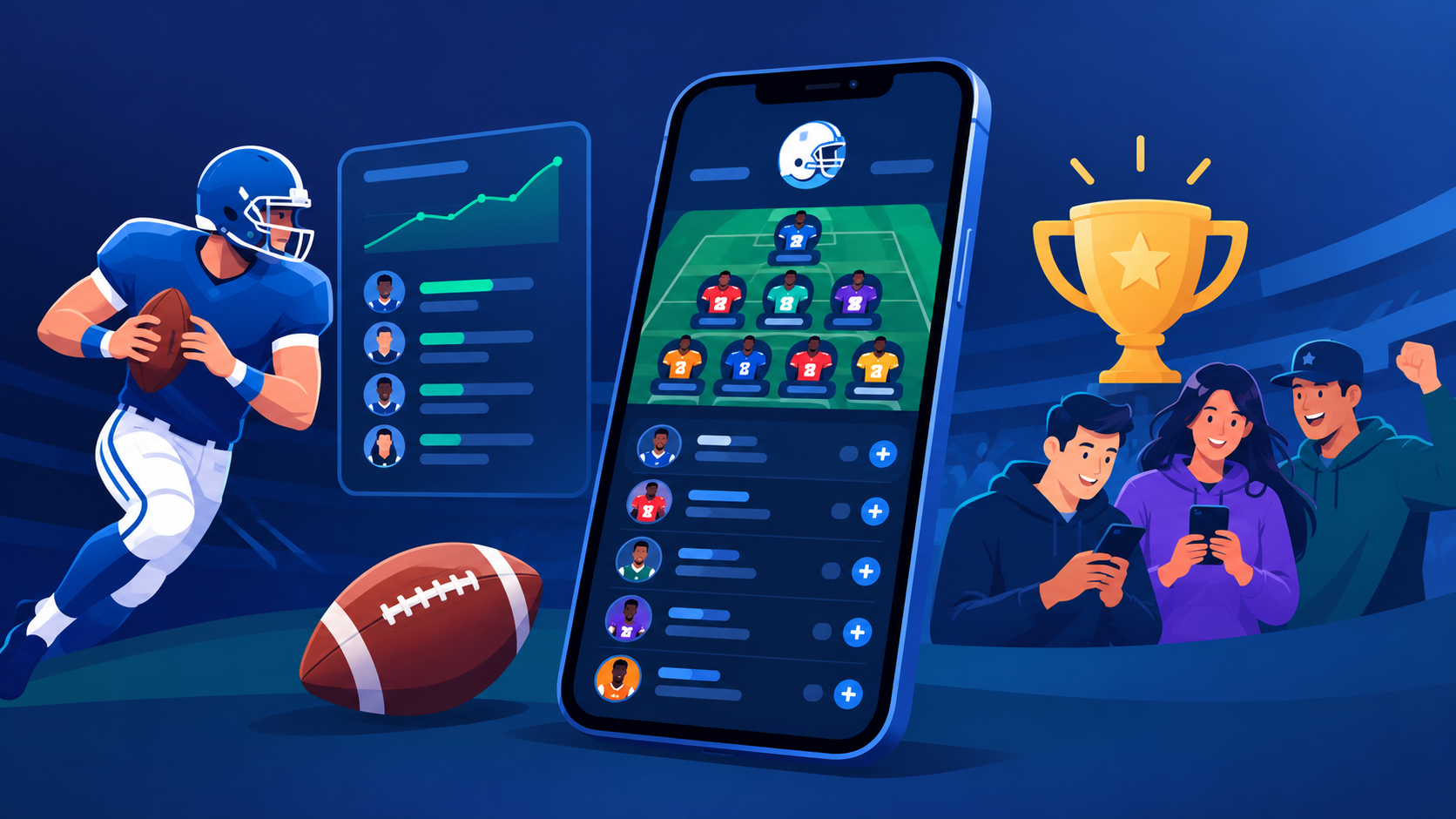
Fantasy football has evolved from a seasonal hobby into a highly interactive digital experience where fans can create leagues, draft players, track live performances, and compete with friends throughout the season. Platforms such as Sleeper have strengthened this experience by combining fantasy sports with social features, real-time updates, and engaging league management tools.
A modern fantasy football app needs to do more than calculate points. Users expect live player statistics, automated scoring, drafts, trades, waiver management, personalised notifications, league chat, and an intuitive interface that keeps them engaged throughout the season.
For businesses, this creates an opportunity to build a Sleeper-like platform tailored to a specific audience, competition format, or market. However, developing such an application requires reliable sports data, scalable backend infrastructure, secure user accounts, real-time updates, and carefully designed fantasy logic.
This guide explains how to build a fantasy football app like Sleeper in 2027, covering essential features, advanced functionality, the development process, technology stack, monetisation, security, development cost, timeline, and future trends.
What Is a Fantasy Football App Like Sleeper, and How Does It Work?
A fantasy football app allows users to create or join leagues, select real-world players, build fantasy teams, and compete based on how those players perform in actual games. The application automatically applies scoring rules to player statistics, allowing users to track their performance throughout a season.
1. How the Fantasy Model Works
Users typically enter a league, participate in a draft or player selection process, and build their roster according to predefined rules. Once games begin, real-world player performances are converted into fantasy points using the league's scoring system.
Managers can then make decisions throughout the season by adjusting lineups, trading players, adding free agents, and responding to injuries or changes in player performance.
2. What Makes Sleeper Different?
Sleeper combines traditional fantasy football functionality with social and communication features. Users can interact with league members, discuss players, share updates, and receive notifications within the same application.
This creates a more community-driven experience rather than treating fantasy sports as a standalone statistics platform. A Sleeper-like application can therefore combine fantasy competition, real-time sports data, league management, and social engagement within one mobile experience.
Why Fantasy Football Apps Are Gaining Rapid Popularity in 2027
Fantasy football apps are becoming more than platforms for tracking fantasy points. Users increasingly expect interactive, social, and real-time experiences that keep them connected to their leagues throughout the football season.
1. More Social Fantasy Experiences
Modern fantasy platforms are bringing communication and competition closer together. League members can discuss players, react to performances, share opinions, and compete with friends without leaving the app. This social layer can make fantasy football more engaging and encourage users to return regularly.
2. Real-Time Engagement During Games
Live scores, player statistics, injury updates, and performance notifications allow users to follow their fantasy teams as games happen. Real-time information also gives managers more opportunities to make decisions based on changing player performance.
3. Mobile-First Sports Consumption
Fans increasingly use smartphones to follow games, check statistics, manage lineups, and communicate with other league members. A well-designed mobile experience therefore becomes important for fantasy platforms that want to support frequent, on-the-go engagement.
4. Multiple Monetisation Opportunities
Fantasy football platforms can generate revenue through premium leagues, subscriptions, advertisements, sponsored competitions, in-app purchases, and other paid features. This flexibility allows businesses to choose monetisation models that fit their target audience and platform strategy.
How a Sleeper-Like Fantasy Football App Works: Key Features and Functions
A sleeper-like fantasy football app combines fantasy league management, real-time sports data, automated scoring, and social interaction within a single platform. The system continuously processes player and game information so users can manage their teams and track league performance throughout the season.
1. League Creation and Player Drafting
Users can create private or public leagues and define settings such as roster size, scoring rules, draft format, and league duration. Managers then participate in a draft or player selection process to build their fantasy teams.
2. Real-Time Scoring
Once games begin, the app receives player statistics from sports data providers. The backend applies the league's scoring rules to these statistics and automatically updates fantasy points, player rankings, and team standings.
3. Roster and League Management
Managers can adjust their starting lineups, add available players, submit waiver claims, and propose trades. The system validates each action against league rules before updating the roster and standings.
4. Social Interaction
League members can communicate through chat, reactions, announcements, and other community features. This social layer keeps users engaged between games and adds a competitive element beyond fantasy scoring.
5. Notifications and Personalised Updates
The application can send alerts about game starts, player performances, injuries, lineup changes, trade activity, and league events. Personalised notifications help users stay informed without constantly monitoring the application.
This combination of fantasy management, live sports data, automation, and social engagement creates the foundation for a modern fantasy football platform similar to Sleeper.
Must-Have Features for Building a Fantasy Football App
A successful fantasy football platform needs features that make team management simple while keeping users engaged throughout the season. The core functionality should cover account management, league operations, player selection, live statistics, communication, and timely updates.
1. User Registration and Profiles
Users should be able to create accounts using email, phone numbers, or supported social login options. Profiles can display league participation, fantasy performance, achievements, and other relevant information.
2. League Creation and Management
Users can create private or public leagues, invite friends, configure league settings, and manage participants. Administrators should be able to define roster limits, scoring rules, draft formats, and other competition settings.
3. Drafting and Player Selection
The app should support different draft formats, including standard and auction-based drafts where required. Real-time player availability, draft timers, roster limits, and automated selections can make the process smoother.
4. Live Scores and Statistics
Real-time game data should update player statistics and fantasy scores as matches progress. Users can view individual player performances, team scores, league standings, and other important statistics.
5. Player Rankings and News
Player rankings, performance trends, injury updates, and relevant news can help managers make informed decisions about their fantasy teams.
6. Trades and Waiver Management
Managers should be able to propose trades, accept or reject offers, submit waiver claims, and add available players. Automated rule validation can prevent actions that violate league settings.
7. Chat and Social Interaction
Built-in league chat allows users to discuss games, players, trades, and performances without switching to another application. The complexity of these features can also influence the Chat app development cost, particularly when the platform requires real-time messaging, media sharing, reactions, notifications, and moderation tools.
8. Notifications
Push notifications can alert users about upcoming games, player injuries, lineup deadlines, draft events, trade activity, scoring updates, and important league changes.
Advanced Features to Make Your Fantasy Football App Stand Out
Core fantasy features provide the foundation, but advanced functionality can make a platform more competitive and engaging. Businesses can use intelligent tools, deeper analytics, and personalised experiences to differentiate their app from traditional fantasy football platforms.
1. AI-Powered Player Insights
AI can analyse player statistics, recent performances, matchups, injuries, and historical data to generate useful insights. These recommendations can help managers identify potential lineup changes or promising players.
2. Personalised Team Recommendations
The app can analyse a user's roster and league settings to suggest lineup changes, waiver targets, or potential trades. Recommendations can be personalised according to the user's playing strategy and previous decisions.
3. Advanced Performance Analytics
Interactive dashboards can display player trends, fantasy-point projections, team performance, matchup analysis, and historical results. These insights can give experienced managers deeper information for decision-making.
4. Live Match Centre
A dedicated live match centre can combine scores, player statistics, game events, fantasy-point changes, and important updates in one interface. Users can follow their fantasy teams without switching between different screens.
5. Gamification and Achievements
Badges, leaderboards, streaks, challenges, and seasonal achievements can encourage users to remain active. Gamification can also introduce additional competition between league members.
6. Custom League Experiences
Advanced league controls can allow commissioners to customise scoring systems, roster rules, playoff formats, draft settings, and competition structures. This flexibility can help the platform support different fantasy football communities.
7. Voice and Smart Notifications
Voice-enabled features and intelligent notifications can provide quick updates about player performances, injuries, or upcoming matchups. Users can receive only the alerts that are relevant to their teams and leagues.
How to Build a Fantasy Football App Like Sleeper: Key Steps and Features
Building a fantasy football app like Sleeper requires more than developing a mobile interface. The platform needs reliable sports data, scalable backend infrastructure, accurate scoring logic, secure user accounts, and features that support real-time interaction.
1. Conduct Market and Audience Research
Start by analysing existing fantasy football platforms, target users, competitor features, preferred league formats, and market expectations. Research can help identify opportunities to offer a more focused or differentiated experience.
2. Define the Fantasy Format
Decide how users will create teams and compete. This includes choosing roster structures, scoring rules, draft formats, league types, waiver systems, playoff rules, and supported football competitions.
3. Plan the User Experience
Map the major user journeys, including registration, league creation, drafting, lineup management, trading, live scoring, and communication. The goal is to make frequent actions quick and easy to complete.
4. Design the Application
Create wireframes and high-fidelity UI designs for user profiles, league dashboards, player pages, draft rooms, live match centres, chat, and administrative interfaces. Responsive design should be considered if the platform will also include a web version.
5. Build the Backend
Develop the backend services responsible for authentication, league management, roster operations, scoring, notifications, user data, and administrative controls. The architecture should be designed to handle traffic spikes during major games.
6. Integrate Sports Data
Connect the platform with reliable sports data providers to receive player statistics, fixtures, scores, injuries, and other relevant information. Data processing should be designed to handle frequent updates with minimal delay.
7. Develop Fantasy and Scoring Logic
Implement the rules that convert real-world player performances into fantasy points. The system should also validate drafts, trades, waivers, roster changes, and lineup decisions according to each league's configuration.
8. Add Payments and Monetisation
If the platform includes premium leagues, subscriptions, paid competitions, advertisements, or in-app purchases, integrate the required payment infrastructure. Payment flows should include transaction tracking, refunds, and appropriate security controls.
9. Test and Launch
Perform functional, performance, security, API, usability, and real-time data testing before release. Testing should cover high-traffic scenarios, scoring accuracy, draft operations, notifications, and different league configurations.
10. Monitor and Improve
After launch, monitor application performance, user behaviour, crashes, data accuracy, and engagement. Regular updates can introduce new features, improve existing workflows, fix issues, and adapt the platform to changing user expectations.
Working with a fantasy football app development company can help businesses manage these technical requirements while building a scalable platform.
Technology Stack for Building a Modern Fantasy Football App
A fantasy football platform requires a technology stack capable of handling real-time sports data, scoring calculations, user interactions, notifications, payments, and large traffic volumes during live games. The final stack can vary based on the platform's scale, features, and integration requirements.
|
Technology Layer |
Recommended Technologies |
Purpose |
Indicative Development Cost |
|
Mobile App |
React Native, Flutter, Swift, Kotlin |
Build iOS and Android fantasy football applications. |
5,000–15,000 |
|
Frontend |
React.js, Next.js |
Web-based league dashboards and user interfaces |
3,000–10,000 |
|
Backend |
Node.js, Python, Go |
APIs, league management, scoring, and business logic |
5,000–15,000 |
|
Database |
PostgreSQL, MongoDB |
Store users, teams, leagues, player data, and transactions. |
2,000–7,000 |
|
Real-Time Communication |
WebSockets, Socket. IO |
Live scores, drafts, chat, and instant updates |
2,000–8,000 |
|
Sports Data APIs |
Sports data providers, REST APIs |
Player statistics, fixtures, scores, injuries, and game events |
3,000–12,000 |
|
AI/ML |
Python, TensorFlow, PyTorch |
Player insights, recommendations, predictions, and analytics |
4,000–15,000 |
|
Cloud Infrastructure |
AWS, Microsoft Azure, Google Cloud |
Hosting, storage, scaling, and application infrastructure |
3,000–10,000 |
|
Caching |
Redis |
Fast access to frequently requested scores, player data, and sessions |
1,500–5,000 |
|
Notifications |
Firebase Cloud Messaging, Apple Push Notification Service |
Push alerts for games, injuries, trades, and league events |
1,000–4,000 |
|
Payments |
Stripe, PayPal, Apple Pay, Google Pay |
Subscriptions, premium features, and in-app transactions |
2,000–7,000 |
|
Analytics |
Google Analytics, Firebase Analytics, Mixpanel |
Track user engagement, retention, and feature usage |
1,500–5,000 |
|
Security & Authentication |
OAuth 2.0, JWT, MFA |
Secure accounts, authentication, and access control |
2,000–7,000 |
Sports Data, APIs, and Real-Time Score Integration for Fantasy Football Apps
Sports data is one of the most important technical components of a fantasy football application. The platform needs accurate and timely information about fixtures, player statistics, injuries, game events, and scores to calculate fantasy points correctly.
1. Choosing a Reliable Sports Data API
A fantasy football app can connect with third-party sports data providers through APIs that deliver player profiles, schedules, team information, live scores, statistics, and game events. The selected provider should offer sufficient coverage, reliable uptime, update frequency, and documentation for the target football competitions.
2. Processing Live Sports Data
The backend receives data from the sports API and processes it before making the information available to users. A data-processing layer can validate incoming events, update player statistics, calculate fantasy points, and synchronise league standings.
3. Real-Time Updates
WebSockets or similar real-time communication technologies can push score changes and important game events to connected users without requiring them to repeatedly refresh the application. This is particularly useful during live matches when fantasy scores can change frequently.
4. Data Caching and Performance
Frequently requested information such as live scores, player statistics, and league standings can be temporarily stored using caching technologies such as Redis. Caching can reduce unnecessary API requests and improve response times during periods of high traffic.
5. Handling Data Failures
The application should also account for delayed, incomplete, or unavailable data. Retry mechanisms, validation rules, fallback processes, and monitoring can help prevent incorrect fantasy scores or outdated information from being displayed.
For businesses planning large-scale sports app development services, reliable sports data architecture should be considered from the beginning because data quality directly affects scoring accuracy, user trust, and the overall fantasy experience.
Monetisation Models for Fantasy Football Apps and Platforms
A fantasy football platform can use multiple revenue streams instead of depending on a single business model. The right approach depends on the target audience, competition format, market, and features offered through the app.
1. Premium Subscriptions
A subscription plan can provide access to advanced statistics, player insights, personalised recommendations, additional league tools, or an ad-free experience. Businesses can offer monthly, seasonal, or annual plans.
2. In-App Purchases
Users can purchase premium tools, custom league features, virtual items, additional analytics, or other optional functionality. These purchases should enhance the experience without compromising fair competition.
3. Advertising
Sports-related advertisements can generate revenue through banner placements, sponsored content, video ads, or native advertising. Targeted advertising can be used to make promotions more relevant to users while avoiding excessive interruptions.
4. Sponsored Leagues and Competitions
Brands can sponsor fantasy competitions, seasonal challenges, or special events. Sponsored leagues can provide businesses with visibility while giving users new ways to participate and compete.
5. Premium League Features
Advanced commissioner tools can be offered as paid features for users who manage private or competitive leagues. These may include custom scoring rules, expanded analytics, advanced league settings, and additional management controls.
6. Payment Integration
Secure payment processing is required when users purchase subscriptions or premium features. Businesses should evaluate transaction fees, supported payment methods, recurring billing capabilities, refunds, and regional requirements. For more complex payment workflows, the mobile payment app development cost can vary depending on the number of payment methods, security requirements, and integrations involved.
Security, Fair Play, and Data Protection in Fantasy Football Apps
A fantasy football app handles personal information, league data, player statistics, payments, and competitive decisions. Strong security and fair-play controls are therefore essential for protecting users and maintaining trust in the platform.
1. Secure User Authentication
The application should use secure authentication methods such as encrypted passwords, OAuth, multi-factor authentication, and secure session management. Role-based access controls can also restrict administrative functions to authorised users.
2. Payment and Transaction Security
Payment information should be handled through trusted payment providers and secure transaction processes. Sensitive financial information should not be unnecessarily stored within the application's own infrastructure.
3. Data Protection
User profiles, league information, preferences, and other sensitive data should be protected through encryption, access controls, secure APIs, and appropriate data-retention policies. Businesses should also consider the privacy requirements applicable to their target markets.
4. Fair-Play Mechanisms
The platform should enforce league rules consistently across all users. Automated validation can prevent unauthorised roster changes, invalid trades, duplicate accounts, or other activities that could compromise competition integrity.
5. Fraud and Abuse Prevention
Rate limiting, suspicious-activity monitoring, device or account analysis, and automated alerts can help identify potentially abusive behaviour. Administrative tools should allow authorised teams to investigate and take appropriate action.
6. Secure Infrastructure and Monitoring
Cloud infrastructure, databases, APIs, and third-party integrations should be regularly monitored for vulnerabilities and unusual activity. Logging and security alerts can help development teams identify and respond to incidents quickly.
Fantasy Football App Development Cost and Timeline in 2027
The fantasy football app development cost depends on the platform's features, sports data integrations, fantasy scoring logic, real-time capabilities, payment functionality, and level of customisation. A basic fantasy football app can require a smaller investment, while a feature-rich platform with AI, live data, social features, and advanced analytics can require a significantly larger budget.
|
Fantasy Football App Type |
Estimated Cost |
Development Timeline |
|
Basic Fantasy Football App |
8,000–20,000 |
2–3 months |
|
Mid-Level Fantasy Platform |
20,000–40,000 |
3–5 months |
|
Advanced Sleeper-Like App |
40,000–65,000 |
5–7 months |
|
Enterprise Fantasy Sports Platform |
65,000–90,000+ |
7–10+ months |
The timeline can increase when the application requires multiple sports data providers, complex scoring rules, live game updates, AI-powered recommendations, extensive social functionality, or integrations with existing business systems.
Businesses should also account for ongoing expenses such as sports data API subscriptions, cloud infrastructure, payment processing, maintenance, security monitoring, and third-party service fees. These costs are generally separate from the initial development budget.
Working with experienced sports app development companies can help businesses estimate the project more accurately based on the required features, target platforms, expected user volume, and long-term scalability requirements.
Factors Affecting Fantasy Football App Development Cost
The overall development budget for a fantasy football application depends on the complexity of the product and the technologies required to support it. Several factors can significantly influence the final cost.
1. Feature Complexity
Basic league management and scoring require less development effort than advanced features such as AI recommendations, live match centres, social feeds, custom league formats, and advanced analytics.
2. Sports Data Integration
The number and type of sports data APIs can affect both development effort and ongoing operating expenses. Real-time statistics, injury updates, player information, and live game events may require more sophisticated integrations.
3. Real-Time Functionality
Features such as live scoring, instant notifications, live drafts, league chat, and real-time player updates require additional backend infrastructure and communication technologies.
4. Platforms and Devices
Building for both iOS and Android generally requires more planning and testing than supporting a single platform. Adding a web application or tablet experience can further increase the project scope.
5. Custom Fantasy Logic
Custom scoring systems, draft formats, roster rules, waiver systems, trades, playoffs, and league configurations require specialised backend logic and extensive testing to ensure accurate results.
6. AI and Analytics
AI-powered player recommendations, performance predictions, personalised insights, and advanced dashboards can increase development complexity because they require additional data processing and model integration.
7. Security and Compliance
Authentication, payment security, privacy controls, fraud prevention, fair-play mechanisms, and regulatory requirements can add to both development and ongoing maintenance costs.
8. Maintenance and Scalability
The budget should also account for post-launch updates, bug fixes, infrastructure monitoring, API changes, security improvements, and scaling as the user base grows.
Conclusion
Building a fantasy football app like Sleeper requires a combination of reliable sports data, accurate fantasy logic, real-time technology, social functionality, and a scalable backend. From league creation and player drafting to live scoring, trades, chat, and personalised insights, every component contributes to the overall user experience.
Businesses should define their fantasy format, target audience, monetisation strategy, technology requirements, and scalability needs before development begins. Investing in strong architecture and reliable data integrations can also help reduce performance and maintenance challenges as the platform grows.
With the right product strategy and development approach, a Sleeper-like fantasy football platform can provide an engaging experience for sports fans while creating opportunities for subscriptions, advertising, premium features, and sponsored competitions.
FAQ's
A fantasy football app can cost approximately $8,000 to $90,000+, depending on features, sports data integrations, real-time functionality, AI capabilities, platforms, and scalability requirements.
A basic application may take around 2–3 months, while an advanced Sleeper-like platform can require approximately 5–7 months or longer, depending on its complexity.
Essential features include user profiles, league creation, player drafting, live scores, player statistics, trades, waivers, notifications, chat, and league management.
The application typically connects with third-party sports data APIs that provide player statistics, fixtures, scores, injuries, and live game events.
Yes. AI can support player recommendations, performance analysis, personalised insights, lineup suggestions, and other data-driven features.
Common monetisation models include subscriptions, advertising, premium features, sponsored competitions, and paid league-management tools.
Supporting both platforms can help reach a wider audience. Cross-platform frameworks can also reduce development effort when a shared codebase is appropriate.
Yes. A custom fantasy platform can support different scoring systems, roster structures, draft formats, waiver rules, trades, playoffs, and other league configurations.

CrinPro
CrinPro Solutions is a leading IT company that helps startups and enterprises build innovative digital products. From intuitive mobile applications and high-performance websites to AI-powered solutions and enterprise software, our team delivers scalable, secure, and user-focused products tailored to unique business needs. With expertise across multiple industries, we transform ideas into digital experiences that drive growth, improve efficiency, and create long-term business value.