Key Takeaways:
- Digital auction platforms help businesses reach a wider audience and simplify bidding processes.
- Real-time bidding, secure payments, and analytics are essential features for a successful auction app.
- Development costs generally range from $10,000 to $100,000+, depending on project complexity.
- A scalable architecture supports future growth and new auction formats.
- Custom auction solutions provide greater flexibility, security, and long-term business value.
The auction industry has evolved far beyond physical bidding halls. Today, buyers expect the convenience of participating in auctions from anywhere, while businesses seek digital solutions that simplify operations and expand their reach. From art galleries and automobile dealers to real estate agencies and industrial equipment providers, organisations are embracing online platforms to connect with larger audiences and create more competitive bidding experiences.
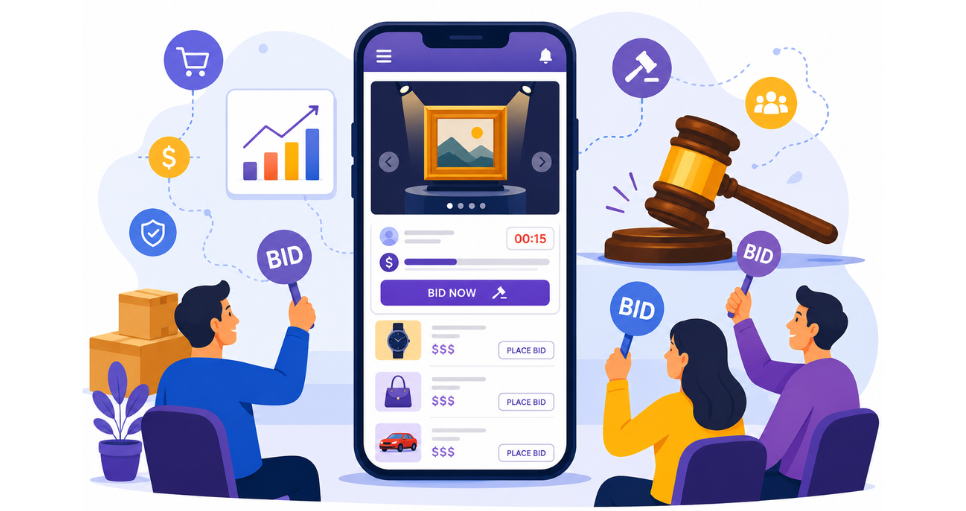
This growing demand has made auction app development a strategic investment for businesses looking to modernise their auction processes. A well-designed application enables users to browse listings, place bids in real time, make secure payments, and receive instant notifications, all from a single platform.
Whether you're planning an online marketplace for collectibles, antiques, vehicles, or commercial products, investing in online auction app development helps improve transparency. Increase customer engagement and create new revenue opportunities. Modern auction platforms also provide businesses with better control over inventory, bidder activity, and transaction management, making them an essential part of today's digital marketplace.
Challenges Traditional Auction Businesses Face
Traditional auction businesses often struggle to meet the expectations of today's digital-first customers. Manual processes, geographical limitations, and fragmented communication can reduce efficiency and make it difficult to compete with modern online platforms. Understanding these challenges highlights why businesses are increasingly investing in digital auction solutions.
1. Limited Audience Reach
Physical auctions are typically restricted by location, preventing businesses from reaching potential buyers in different cities or countries. Digital auction platforms remove these barriers by allowing participants to join auctions from virtually anywhere, increasing competition and improving the chances of achieving better selling prices.
2. Time-Consuming Manual Operations
Managing bidder registrations, maintaining auction catalogues, recording bids, generating invoices, and coordinating payments manually requires significant administrative effort. Modern auction software development helps automate these tasks, reducing paperwork and allowing auctioneers to focus on delivering better customer experiences.
3. Lack of Real-Time Transparency
Without a centralised digital platform, participants may struggle to track bidding activity, auction status, or winning bids. Real-time updates improve transparency by ensuring every bidder has access to the latest information throughout the auction process.
4. Complex Payment Management
Traditional payment collection methods often lead to delays, reconciliation issues, and administrative overhead. Integrated online payment systems simplify transactions, improve security, and provide a smoother experience for both buyers and sellers.
5. Customer Engagement Challenges
Keeping bidders informed about upcoming auctions, bid updates, and auction results can be difficult when communication relies on phone calls or emails. Push notifications, automated alerts, and personalised recommendations help businesses maintain stronger engagement and encourage repeat participation.
6. Scalability Limitations
As auction businesses grow, managing larger inventories, more bidders, and multiple simultaneous auctions becomes increasingly challenging. Digital platforms are designed to scale with business growth, enabling organisations to expand their services without significantly increasing operational complexity.
Features That Make an Auction App Successful
A successful auction platform should provide a seamless experience for bidders, sellers, and administrators while ensuring every auction is secure, transparent, and easy to manage. The right set of features not only improves user satisfaction but also helps businesses operate more efficiently. Below are the essential capabilities every modern auction platform should include.
1. User Registration and Profile Management
Allow users to register securely using email, phone numbers, or social logins. Each profile should enable bidders and sellers to manage personal information, view auction history, save favourite items, and monitor their account activity from a centralised dashboard.
2. Auction Listings and Catalog Management
An organised catalogue helps users browse products by category, price, popularity, or auction type. Businesses should be able to upload detailed descriptions, multiple images, pricing information, and auction schedules, making listings more informative and engaging.
3. Live Bidding System
Real-time bidding is the foundation of live auction app development. The platform should instantly display the latest bids, automatically update auction timers, and notify participants whenever a higher bid is placed, creating a competitive and transparent bidding experience.
4. Advanced Search and Filters
As the number of listings grows, users should be able to quickly locate relevant products using filters such as category, price range, auction status, seller, location, or ending time. A well-designed search experience helps users find items faster and increases platform engagement.
5. Secure Payment Gateway
A reliable payment system should support multiple payment methods, including credit cards, digital wallets, and online banking. Secure transactions, automated invoicing, and payment confirmations improve trust while simplifying financial management for buyers and sellers.
6. Watchlist and Notifications
Users should be able to bookmark interesting auctions and receive real-time alerts when an auction is about to begin, when they've been outbid, or when an auction is nearing completion. These notifications encourage greater participation and reduce missed opportunities.
7. Seller Dashboard
A dedicated seller dashboard enables vendors to create listings, monitor bidding activity, manage inventory, review completed transactions, and analyse sales performance through one centralised interface.
8. Analytics and Reporting
Comprehensive reporting tools help administrators monitor auction performance, bidder activity, revenue, successful sales, and user engagement. These insights support better business decisions and help identify opportunities for future growth.
9. AI-Powered Bid Recommendations
Many businesses partner with experienced AI app development companies to integrate intelligent features such as personalised item recommendations, demand forecasting, fraud detection, and bidder behaviour analysis. These capabilities improve user engagement while helping businesses optimise platform performance.
10. Multi-Admin Management
As businesses expand, multiple administrators may need to manage different aspects of the platform. Role-based access controls allow teams to oversee auctions, approve listings, manage users, monitor transactions, and generate reports without compromising security.
A feature-rich platform designed for bidding app development should balance usability, security, and performance. By focusing on the features that matter most to users, businesses can create an auction experience that builds trust, encourages participation, and supports long-term growth.
Building an Auction Platform That Scales
Creating a successful auction application involves much more than developing a bidding system. A scalable platform should support business growth, handle increasing user traffic, and provide a secure experience for buyers and sellers. Careful planning during the development phase helps reduce future challenges while creating a reliable digital marketplace.
1. Define Your Auction Business Model
Start by identifying the type of auction platform you want to build. Your business may focus on collectibles, automobiles, antiques, real estate, industrial equipment, or general consumer products. Defining your niche early helps determine the platform's features, user roles, and revenue model.
2. Prioritize Core Functionality
Rather than launching with every possible feature, begin with the essential capabilities that deliver value to your users. Registration, auction listings, live bidding, payments, notifications, and an admin dashboard form the foundation of a reliable platform. Additional features can be introduced gradually based on customer feedback and business growth.
3. Focus on Performance and Security
Auction platforms process large volumes of real-time activity, making performance and security critical. Optimised databases, secure APIs, encrypted payment processing, and reliable cloud infrastructure help maintain a smooth user experience even during high-traffic auctions.
4. Develop a Flexible Architecture
A well-planned auction platform development strategy ensures your application can support future enhancements such as multiple auction formats, international users, additional payment methods, or multilingual functionality without requiring major redevelopment.
5. Build for Multiple Devices
Modern users expect a consistent experience across smartphones, tablets, and desktops. Businesses often combine web and mobile app development to ensure bidders can participate in auctions from any device while enjoying the same functionality and performance.
Choosing the Right Auction Model for Your Business
Not every auction platform operates the same way. Selecting the right auction model is an important decision because it influences the user experience, platform features, and overall business strategy. Before starting auction platform development, businesses should evaluate their target audience, the products they plan to sell, and their long-term revenue goals.
1. Live Auctions
Live auctions allow bidders to compete in real time under the supervision of an auctioneer. This model is ideal for high-value assets such as artwork, luxury collectibles, antiques, and premium real estate, where competitive bidding can maximise selling prices.
2. Timed Auctions
Timed auctions remain open for a fixed period, allowing users to place bids until the countdown ends. This approach is commonly used for consumer products, electronics, and online marketplaces because it offers greater flexibility for participants across different time zones.
3. Reserve Price Auctions
In reserve price auctions, sellers define a minimum acceptable selling price. If the highest bid does not meet the reserve amount, the item is not sold. This model helps protect sellers from accepting bids below the asset's market value.
4. Buy Now with Auction
Many modern auction platforms combine bidding with a "Buy Now" option, allowing customers to purchase items immediately at a fixed price. This hybrid approach improves conversion rates while giving buyers more flexibility.
5. Multi-Vendor Auction Marketplace
Businesses planning large-scale Online auction app development often chooses a multi-vendor model, where multiple sellers can list products while the platform manages registrations, payments, commissions, and bidder interactions through a centralised system.
Choosing the right auction model during the planning stage helps businesses build a platform that aligns with customer expectations, supports future growth, and delivers a seamless bidding experience.
Auction App Development Cost
The auction app development cost depends on several factors, including platform complexity, real-time bidding functionality, customisation, integrations, and security requirements. A simple auction platform designed for a niche audience typically requires a lower investment, while enterprise-grade solutions with advanced automation and analytics involve a higher budget.
|
App Type |
Estimated Cost |
Development Timeline |
|
Basic Auction App |
$10,000–$30,000 |
2–3 Months |
|
Standard Online Auction Platform |
$30,000–$60,000 |
3–5 Months |
|
Advanced Live Auction Platform |
$60,000–$80,000 |
5–7 Months |
|
Enterprise Auction Ecosystem |
$80,000–$100,000+ |
7–10 Months |
Before finalising the project budget, businesses should evaluate the overall software development cost to understand the resources required throughout the development lifecycle. If the platform includes both web and mobile experiences, estimating the web app development cost and mobile app development cost separately help create a more realistic investment plan and avoid unexpected expenses during development.
Conclusion
Digital transformation is reshaping the auction industry, making online platforms an essential tool for businesses that want to expand their reach and deliver a seamless bidding experience. Investing in auction app development enables organisations to streamline auction management, improve bidder engagement, automate operations, and create secure transactions within a single platform.
Whether you're planning a marketplace for collectibles, vehicles, real estate, or industrial equipment, choosing the right development approach is crucial. A scalable auction platform not only supports current business needs but also provides the flexibility to introduce new features and accommodate future growth, helping businesses remain competitive in an increasingly digital marketplace.
FAQ's
Auction App Development is the process of creating digital platforms that allow users to list items, participate in live or timed auctions, place bids, make secure payments, and manage auction activities online.
The auction app development cost typically ranges from $10,000 to $100,000+, depending on the application's complexity, features, integrations, and customisation requirements.
Essential features include user registration, auction listings, live bidding, secure payments, seller dashboards, notifications, analytics, and admin controls.
Development generally takes 2 to 10 months, depending on the project scope, functionality, and level of customisation.
Yes. AI can enhance auction platforms through personalised recommendations, fraud detection, bid prediction, automated moderation, and customer behaviour analysis.
Auction platforms are suitable for businesses dealing with vehicles, real estate, antiques, artwork, industrial equipment, luxury goods, collectibles, government surplus, and other high-value assets.
A live auction app allows users to place bids in real time while an auctioneer manages the event. A timed auction app automatically opens and closes bidding within a predefined period without requiring a live host.
Custom auction app development allows businesses to build a platform tailored to their workflows, branding, auction formats, and scalability requirements, providing greater flexibility than off-the-shelf solutions.

CrinPro
CrinPro Solutions is a leading IT company that helps startups and enterprises build innovative digital products. From intuitive mobile applications and high-performance websites to AI-powered solutions and enterprise software, our team delivers scalable, secure, and user-focused products tailored to unique business needs. With expertise across multiple industries, we transform ideas into digital experiences that drive growth, improve efficiency, and create long-term business value.