Key Takeaways:
- API integration services connect business applications and third-party platforms for seamless data exchange.
- Costs generally range from $1,000 to $75,000+, depending on project complexity and requirements.
- Integration expenses depend on API count, security, architecture, testing, and maintenance.
- Reusing existing APIs and implementing integrations in phases can help control costs.
- Proper planning and regular monitoring improve integration reliability and long-term performance.
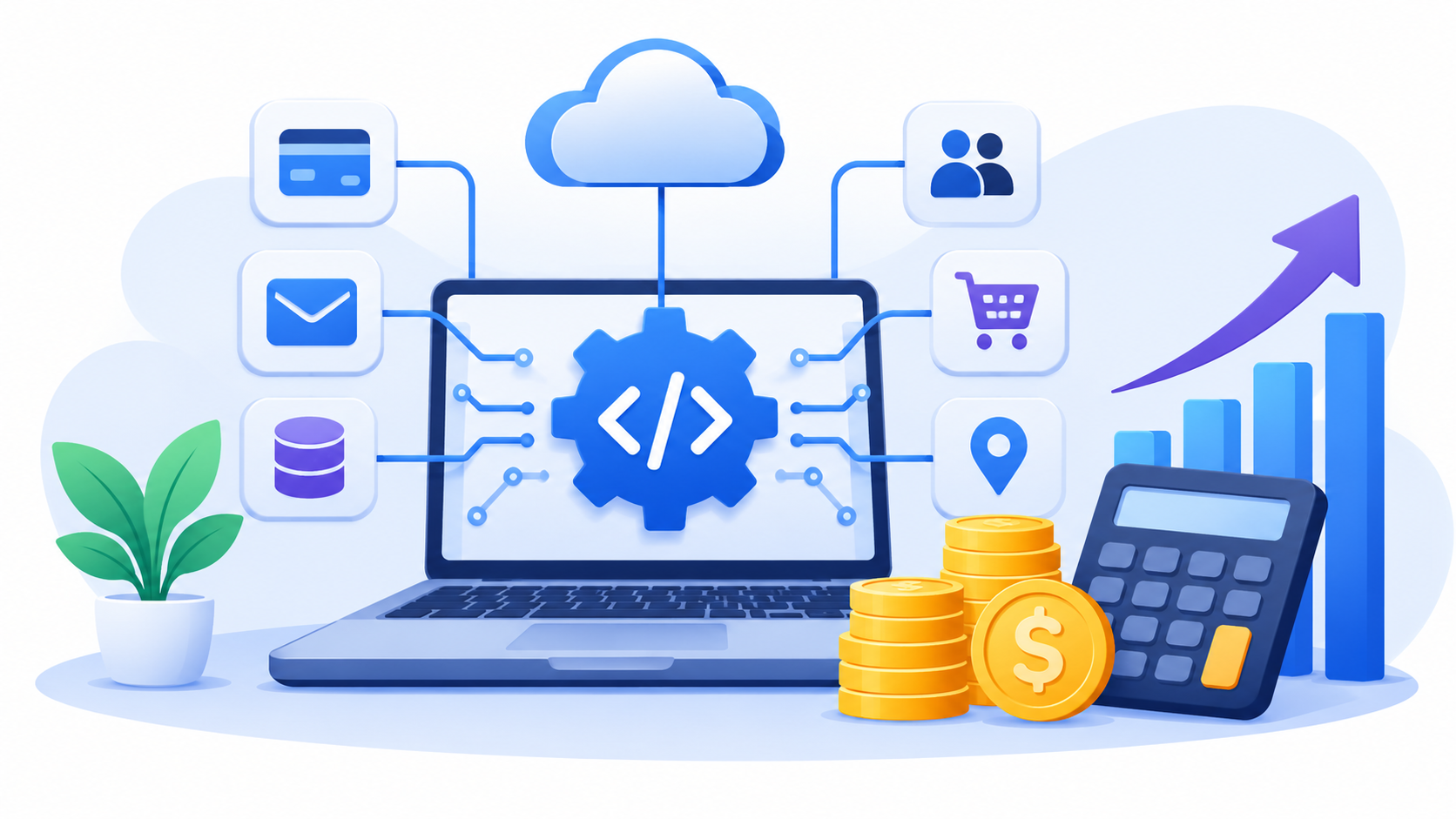
Modern businesses rely on multiple software applications to manage daily operations, customer interactions, payments, inventory, and data. However, when these systems operate independently, information becomes scattered, workflows slow down, and employees often need to perform repetitive tasks manually. API integration helps solve these challenges by connecting different applications and allowing them to exchange data seamlessly.
Understanding the API integration services cost is important for businesses planning to connect their existing systems or build new digital solutions. The overall investment depends on the number of APIs, integration complexity, security requirements, data volume, and the type of applications involved. A simple integration between two platforms requires less development effort than a complex enterprise system connecting multiple applications and databases.
Businesses can also use API integrations to introduce automation, improve data accuracy, and create connected digital experiences. From payment gateway connections and CRM integrations to cloud platforms and AI-powered applications, APIs support flexible business operations.
This guide explains API integration costs, pricing factors, common integration types, development requirements, and ways to manage the overall investment when building connected business applications.
Market Statistics
- API integration platforms are valued at around USD 4.7 billion in 2025 (projected to reach USD 21.6 billion by 2035 at a 16.3% CAGR), and broader application integration is estimated at USD 26.40 billion in 2026.
- The global API marketplace market size was valued at USD 21.3 billion in 2025 and is projected to grow from USD 25.1 billion in 2026 to USD 82.1 billion by 2033, at a CAGR of 18.4% from 2026 to 2033.
- The global API management market size was valued at USD 6.89 billion in 2025 and is projected to grow from USD 8.77 billion in 2026 to USD 37.43 billion by 2034, exhibiting a CAGR of 21.70% during the forecast period.
What Are API Integration Services?
API integration services involve connecting two or more software applications through Application Programming Interfaces (APIs) so they can exchange information and perform actions automatically. Instead of operating as separate systems, connected applications can share data, trigger workflows, and communicate in real time or at scheduled intervals.
For example, an ecommerce business can integrate its website with a payment gateway, inventory management system, CRM, and shipping platform. When a customer places an order, the API can send payment information to the payment provider, update inventory records, and share delivery details with the shipping service.
Businesses often work with an API Development Services provider to build custom connections, configure third-party APIs, and ensure that different applications communicate reliably.
How Do API Integrations Work?
API integrations generally follow a structured communication process:
- API Request: One application sends a request to another application through its API.
- Authentication: The receiving system verifies the request using API keys, OAuth tokens, or other authentication methods.
- Data Processing: The receiving application validates and processes the requested information.
- API Response: The system returns the requested data or confirms that an action has been completed.
- Data Synchronisation: The connected applications update relevant information to maintain consistency across systems.
Why Do Businesses Need API Integration Services?
API integration helps businesses connect their existing technology infrastructure without replacing every application. It reduces manual data transfers, improves workflow efficiency, and allows teams to access information across different platforms.
Common business applications include:
- Connecting CRM systems with marketing and sales platforms.
- Integrating payment gateways with e-commerce applications.
- Linking ERP systems with inventory and accounting software.
- Connecting cloud storage with internal business applications.
- Integrating AI tools with existing software workflows.
- Synchronising customer and transaction data across platforms.
With the right integration architecture, businesses can create a connected software ecosystem that is easier to manage, maintain, and expand.
Types of API Integrations Used in Business Applications
Businesses use different types of API integrations depending on their application architecture, data requirements, and operational goals. Some integrations connect internal business systems, while others allow applications to communicate with external platforms, cloud services, and third-party tools.
Understanding these integration types helps businesses select the right approach and estimate the development effort.
1. REST API Integration
REST APIs are widely used to connect web applications, mobile apps, and backend systems. They use standard HTTP methods such as GET, POST, PUT, and DELETE to exchange data, commonly in JSON format.
Businesses use REST APIs for payment processing, customer data synchronisation, ecommerce integrations, and connecting CRM or ERP platforms.
2. SOAP API Integration
SOAP APIs use a structured XML-based messaging protocol to exchange information between applications. They are commonly found in enterprise environments where strict communication standards, formal contracts, and established security requirements are important.
Financial institutions, insurance platforms, and legacy enterprise applications may use SOAP integrations to connect existing systems.
3. GraphQL API Integration
GraphQL allows applications to request specific data through a single endpoint. Instead of receiving a fixed response, the requesting application can define which information it needs.
This approach is useful for complex applications that retrieve data from multiple sources, particularly platforms with dynamic dashboards and mobile interfaces.
4. Webhook Integration
Webhooks allow one application to automatically send information to another when a particular event occurs. Unlike traditional polling, the receiving system does not need to repeatedly check for updates.
For example, an ecommerce platform can receive an automatic notification when a payment is completed, an order is cancelled, or a shipment status changes.
5. Third-Party API Integration
Third-party APIs connect business applications with external services and platforms. Common examples include payment gateways, mapping services, communication tools, social media platforms, and analytics providers.
These integrations help businesses introduce additional functionality without developing every service independently.
6. Internal API Integration
Internal APIs connect different modules or services within an organisation's software ecosystem. For example, a company may use internal APIs to connect its HR, finance, inventory, and customer management systems.
This approach supports data sharing between departments and helps maintain consistent information across business applications.
7. Cloud API Integration
Cloud API integrations connect applications with cloud-based platforms, storage services, databases, and infrastructure tools. They allow businesses to exchange information between on-premises systems and cloud environments.
Organisations modernising their infrastructure may combine API integration with Cloud migration services to connect existing applications with newly deployed cloud systems.
Each API integration type serves a different purpose. The right choice depends on application requirements, security needs, expected data volume, and the complexity of the existing software environment.
Key Factors Affecting API Integration Services Cost
The cost of API integration services depends on more than the number of applications being connected. Technical complexity, data exchange requirements, security standards, and ongoing maintenance all influence the total investment.
Understanding these factors helps businesses estimate their budgets and select an integration approach that meets their operational requirements.
1. Number of APIs to Be Integrated
The number of APIs directly affects development effort. Connecting two applications through a simple API may require limited configuration, while integrating multiple platforms involves additional endpoints, authentication methods, data mapping, and testing.
2. Integration Complexity
Basic integrations usually involve straightforward data exchange between applications. However, complex integrations may require custom business logic, multiple workflows, real-time synchronisation, and communication between different software architectures.
These requirements increase development time and overall costs.
3. Customisation Requirements
Some third-party APIs provide ready-to-use endpoints, while others require custom development to match specific business workflows. Custom data transformations, validation rules, and application-specific functionality can increase the project budget.
4. Data Volume and Synchronisation Frequency
Applications exchanging small amounts of information may require relatively simple integration infrastructure. However, platforms processing thousands of transactions or large datasets need efficient data handling, caching, queue management, and monitoring mechanisms.
Real-time synchronisation can also require more resources than scheduled data transfers.
5. Security and Authentication
API integrations often exchange sensitive business, customer, and financial information. Implementing OAuth 2.0, encryption, API keys, access controls, rate limiting, and secure communication adds to development and testing requirements.
6. Existing Software Architecture
Integrating modern applications is generally more straightforward when their APIs follow compatible standards. Older systems may require middleware, custom connectors, data conversion, or additional backend development to communicate with newer platforms.
7. Testing and Documentation
Every integration needs testing to verify data accuracy, response handling, error management, security, and performance. Complex projects also require detailed technical documentation so future developers can maintain and update the connections.
8. Development Team and Expertise
The experience and location of the development team can influence the final budget. Projects involving enterprise architecture, multiple APIs, and advanced security requirements generally need specialised backend developers, integration engineers, and quality assurance professionals.
Working with an experienced custom software development company can help businesses choose suitable integration methods, manage technical challenges, and avoid unnecessary development expenses.
API Integration Services Cost Breakdown Based on Complexity and Integration Requirements
The cost of API integration services varies depending on the number of applications, data exchange requirements, customisation, and security measures involved. A simple connection between two applications requires less development effort than an enterprise integration involving multiple systems, real-time data synchronisation, and complex workflows.
Businesses should estimate costs based on their integration requirements rather than relying on a single fixed price.
|
Integration Complexity |
Estimated Cost |
Timeline |
Typical Requirements |
|
Basic Integration |
1,000–5,000 |
1–3 weeks |
Single API connection, basic data exchange, standard authentication |
|
Moderate Integration |
5,000–15,000 |
3–6 weeks |
Multiple APIs, custom data mapping, webhook integration, error handling |
|
Advanced Integration |
15,000–35,000 |
6–10 weeks |
Complex workflows, real-time synchronisation, custom business logic, security controls |
|
Enterprise Integration |
35,000–75,000+ |
3–6+ months |
Multiple enterprise systems, middleware, high-volume data processing, advanced monitoring |
API Integration Cost by Application Type
The type of business application also affects integration requirements and pricing.
|
Application Type |
Estimated Integration Cost |
Common Integrations |
|
Ecommerce Applications |
2,000–10,000 |
Payment gateways, inventory, shipping, CRM |
|
CRM Applications |
3,000–12,000 |
Marketing platforms, email services, sales tools |
|
ERP Applications |
5,000–25,000 |
Accounting, inventory, HR, procurement |
|
Mobile Applications |
2,000–15,000 |
Authentication, maps, payments, notifications |
|
Enterprise Applications |
15,000–75,000+ |
ERP, CRM, cloud platforms, analytics, internal systems |
Additional Costs to Consider
Apart from initial development, businesses should account for ongoing expenses such as:
- API subscription fees: Some third-party providers charge monthly or usage-based fees.
- Cloud infrastructure: Hosting, data storage, and processing expenses may increase with usage.
- Maintenance: API updates, compatibility fixes, and performance monitoring require ongoing support.
- Security management: Authentication updates, access monitoring, and security testing help protect connected systems.
- Scalability: Higher transaction volumes may require additional infrastructure and optimisation.
For an accurate estimate, businesses should evaluate both initial implementation and long-term operational expenses. This provides a clearer picture of the overall software development cost associated with building and maintaining connected business applications.
Step-by-Step Process of API Integration Development for Seamless System Connectivity
Developing a reliable API integration requires proper planning, technical evaluation, implementation, and testing. Each stage ensures that connected applications exchange information accurately, maintain security, and support business workflows without disrupting existing operations.
Here are the key steps involved in the API integration process.
1. Identify Business Requirements
Start by identifying why the business needs API integration and which applications must communicate. Define the expected workflows, data exchange requirements, user needs, and operational challenges.
2. Evaluate Existing Systems and APIs
Review the existing software architecture, databases, API documentation, authentication methods, and technical limitations. Check whether the required APIs are publicly available, privately accessible, or need custom development.
3. Select the Right Integration Approach
Choose an appropriate integration method based on the application's requirements. REST, GraphQL, SOAP, webhooks, and middleware-based integrations are common options.
The selection should consider data volume, response speed, security, and compatibility.
4. Define API Architecture and Data Mapping
Plan how information will move between connected applications. Define API endpoints, request formats, response structures, data fields, validation rules, and error-handling procedures.
Proper data mapping helps prevent inconsistencies between systems.
5. Develop and Configure API Connections
Build the required API endpoints or configure existing third-party APIs. Implement authentication, request handling, data transformation, and business logic to establish communication between applications.
6. Implement Security Measures
Configure authentication, authorisation, encryption, access controls, and rate limiting. Sensitive information should be protected during transmission and processing, with appropriate logging to monitor API activity.
7. Perform API Testing
Test the integration to verify that data is exchanged correctly and applications respond as expected. Check authentication, error handling, response times, data accuracy, and performance under different usage conditions.
8. Deploy the Integration
After successful testing, deploy the integration to the production environment. Configure API credentials, server settings, monitoring tools, and required permissions before enabling live communication.
9. Monitor Performance and Maintain APIs
Monitor API response times, failures, traffic, and usage limits after deployment. Update integrations when third-party providers change their endpoints, authentication requirements, or API versions.
A structured development process helps businesses build reliable integrations that support current workflows while allowing applications to scale as requirements change.
Key Business Benefits of API Integration for Improving Application Connectivity and Efficiency
API integration offers businesses a practical way to connect different software systems, simplify workflows, and improve data accessibility. Instead of managing multiple disconnected applications, organisations can create a connected technology environment where information moves between platforms efficiently.
Here are the major benefits of API integration:
1. Improved Operational Efficiency
API integration automates data exchange between applications and reduces repetitive manual tasks. For example, when a customer places an order, the system can automatically update inventory, process payment information, and notify the shipping platform.
2. Real-Time Data Synchronisation
Connected applications can exchange information in real time or at scheduled intervals. This helps departments access updated customer records, transaction details, inventory levels, and business information without repeatedly transferring data manually.
3. Reduced Development Time
Businesses can use existing APIs to introduce functionality without building every service from scratch. Payment processing, maps, communication, authentication, and analytics can be integrated through established providers.
4. Better Customer Experience
API integrations connect customer-facing applications with CRM, payment, support, and marketing platforms. This allows businesses to provide consistent information, faster transactions, and more personalised services across digital channels.
5. Improved Business Scalability
A well-designed API architecture makes it easier to add new applications, services, and integrations as business requirements grow. Companies can expand their software ecosystem without replacing their entire technology infrastructure.
6. Enhanced Data Accuracy
Automated data exchange reduces duplicate entries, inconsistent records, and manual input errors. Businesses can maintain more reliable information across different departments and applications.
7. Greater Flexibility and Customisation
APIs allow businesses to connect selected services according to their workflows. Organisations can integrate specialised applications, introduce custom functionality, and modify existing systems without rebuilding everything.
8. Support for AI and Automation
API integration enables businesses to connect AI tools with existing applications, databases, and operational systems. For example, AI-powered tools can analyse CRM information, generate reports, and trigger automated workflows.
Companies exploring AI automation software development can use APIs to connect intelligent services with their existing business applications and improve process automation.
9. Better Cloud Connectivity
APIs make it easier to connect on-premises applications with cloud-based platforms, databases, and services. This supports businesses modernising their infrastructure and adopting flexible digital environments.
Overall, API integration helps businesses improve connectivity, reduce operational complexity, and build a technology ecosystem that can adapt to changing requirements.
Effective Ways to Reduce API Integration Costs While Maintaining Performance and Reliability
Businesses can manage API integration expenses without compromising functionality or security by planning the project carefully and choosing the right implementation approach.
1. Define Integration Requirements Clearly
Identify which applications need to communicate, what data they must exchange, and how frequently updates are required. Clear requirements prevent unnecessary integrations, reduce development changes, and help keep the project within budget.
2. Prioritize Essential Integrations
Start with APIs that directly support critical business operations. Additional integrations can be introduced in later phases based on business needs. This phased approach helps control initial spending, particularly when API integration is part of a larger project involving enterprise app development costs.
3. Choose the Right Integration Architecture
Select an architecture that matches your application's complexity and expected growth. REST APIs may be sufficient for straightforward integrations, while middleware or API gateways can help manage more complex environments. Avoid investing in infrastructure that your current requirements do not justify.
4. Reuse Existing APIs and Components
Before developing custom connections, check whether existing APIs, SDKs, connectors, or integration platforms can meet your requirements. Reusing tested components can reduce coding time, testing effort, and overall implementation expenses.
5. Work With an Experienced Development Partner
An experienced mobile app development company or software development team can identify technical risks early, recommend suitable tools, and prevent expensive integration mistakes. Review the team's experience with API security, documentation, testing, and third-party systems before selecting a partner.
6. Plan for Testing and Maintenance
Include API testing, monitoring, documentation, and maintenance in the initial project plan. Identifying errors early is generally less expensive than fixing data inconsistencies or integration failures after deployment.
A structured approach helps businesses control API integration services costs while building reliable connections that can support future application requirements.
Conclusion
API integration helps businesses connect applications, automate workflows, and maintain consistent data across systems. The overall cost depends on integration complexity, the number of APIs, security requirements, development time, and ongoing maintenance.
By defining clear requirements, selecting suitable technologies, and implementing integrations in phases, businesses can control expenses while building a scalable application ecosystem. Investing in reliable API integration also makes it easier to introduce new tools, improve operational efficiency, and support long-term business growth.
FAQ's
API integration services can cost between $1,000 and $75,000+, depending on complexity, the number of APIs, and security requirements.
Basic integrations may take 1–3 weeks, while complex enterprise integrations can require 3–6 months or longer.
Key factors include API complexity, data volume, authentication requirements, third-party services, testing, and ongoing maintenance.
Yes. Businesses can connect multiple APIs to support payments, CRM, inventory, communication, analytics, and other application functions.
API integration is useful when applications need to exchange data, connect third-party tools, automate workflows, or provide connected digital services.
Businesses can reduce costs by defining requirements, reusing existing APIs, choosing suitable architecture, and implementing integrations in phases.
Yes. APIs may change, security requirements evolve, and connected services need monitoring to ensure integrations continue working reliably.
API development involves creating APIs, while API integration connects existing APIs and systems so they can exchange data and functionality.

CrinPro
CrinPro Solutions is a leading IT company that helps startups and enterprises build innovative digital products. From intuitive mobile applications and high-performance websites to AI-powered solutions and enterprise software, our team delivers scalable, secure, and user-focused products tailored to unique business needs. With expertise across multiple industries, we transform ideas into digital experiences that drive growth, improve efficiency, and create long-term business value.