Key Takeaways:
- Alcohol delivery apps simplify online ordering, payments, and delivery management.
- Age verification and regulatory compliance are essential features for every liquor delivery platform.
- Development costs generally range from $15,000 to $150,000+, depending on the app's complexity.
- AI-powered recommendations and analytics help improve customer engagement and operational efficiency.
- A custom alcohol delivery app provides liquor businesses with a scalable solution for long-term growth and increased revenue.
The on-demand delivery industry has transformed consumer expectations, with customers now preferring the convenience of ordering products directly from their smartphones. This shift has also extended to the liquor industry, where licensed retailers and alcohol businesses are increasingly adopting digital platforms to provide fast, secure, and compliant delivery services.
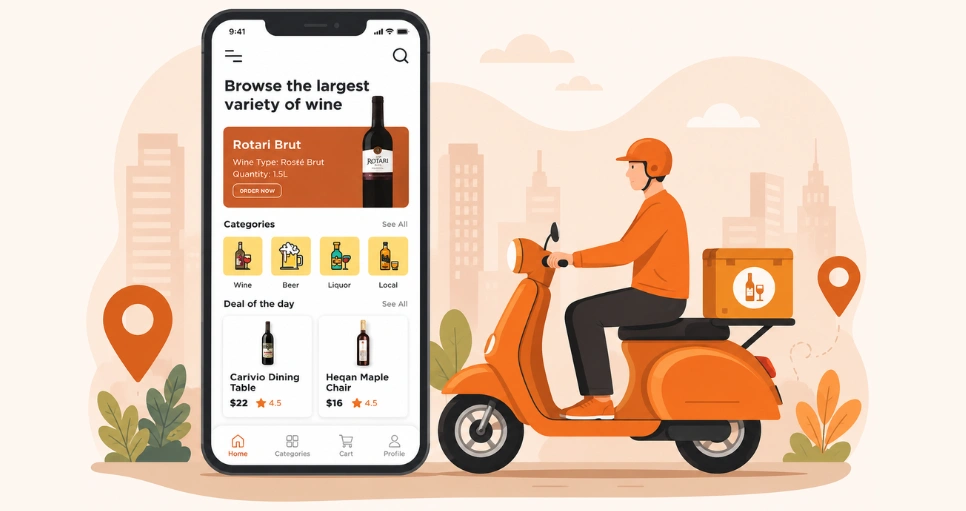
As demand continues to grow, alcohol delivery app development has become a valuable investment for liquor stores, wine shops, breweries, distributors, and alcohol delivery startups. A dedicated mobile application enables businesses to manage product catalogues, process online orders, verify customer age, track deliveries, and offer a seamless purchasing experience while complying with regional regulations.
Whether you're planning liquor delivery app development for a local liquor store or a large multi-location business, investing in a customised solution can improve operational efficiency, increase customer retention, and create new revenue opportunities.
Business Benefits of Alcohol Delivery Apps
Digital ordering platforms have become an essential part of the alcohol retail industry, helping businesses streamline operations while meeting growing consumer demand for convenience. Investing in On-Demand Alcohol Delivery App Development offers several long-term advantages for liquor businesses.
1. Expand Customer Reach
A mobile application enables liquor stores to serve customers beyond walk-in traffic, allowing users to browse products, place orders, and schedule deliveries from anywhere within the service area.
2. Increase Sales and Revenue
Online ordering encourages repeat purchases through personalised recommendations, promotional offers, loyalty programmes, and subscription-based services, helping businesses generate consistent revenue.
3. Streamline Order Management
Digital platforms centralise inventory management, order processing, payment collection, and delivery tracking, reducing manual work and improving operational efficiency.
4. Improve Customer Convenience
Customers can browse available products, compare prices, place secure orders, track deliveries in real time, and receive notifications throughout the purchasing journey, resulting in a better overall experience.
5. Ensure Regulatory Compliance
Alcohol delivery applications can integrate age verification, digital identity checks, location-based restrictions, and compliance monitoring to help businesses operate within local laws and licensing requirements.
6. Gain Valuable Business Insights
Analytics dashboards provide detailed reports on customer behaviour, sales performance, inventory movement, and delivery operations, enabling businesses to make informed decisions and optimise growth strategies.
Must-Have Features for a Liquor Delivery App
A successful liquor delivery application should deliver a seamless experience for customers, delivery partners, and business administrators while ensuring security and regulatory compliance. By combining intuitive design with powerful functionality, businesses can improve customer satisfaction and streamline daily operations. Below are the essential liquor delivery app features every modern platform should include.
1. User Registration and Age Verification
The application should allow customers to create secure accounts using email, phone numbers, or social logins while completing mandatory age verification through government-issued identification or digital verification systems. This helps businesses comply with legal regulations and prevent unauthorised alcohol purchases.
2. Product Catalog and Smart Search
A well-organised product catalogue should categorise beverages by type, brand, price, availability, and popularity. Advanced search and filtering options enable customers to quickly find their preferred products, creating a faster and more convenient shopping experience.
3. Real-Time Order Tracking
Customers should be able to monitor every stage of their order, from confirmation and preparation to dispatch and final delivery. Live GPS tracking and estimated delivery times improve transparency and build customer confidence.
4. Secure Payment Integration
The platform should support multiple payment options, including credit and debit cards, digital wallets, net banking, and other secure payment methods. Encrypted payment processing ensures safe transactions while protecting sensitive financial information.
5. Delivery Scheduling
Flexible scheduling allows customers to choose on-demand delivery or book a preferred delivery time in advance. This feature improves convenience while helping businesses optimise delivery operations.
6. Push Notifications and Alerts
Automated notifications keep users informed about order confirmations, delivery updates, promotional campaigns, special offers, and new product arrivals, helping businesses maintain customer engagement and encourage repeat purchases.
7. AI-Powered Product Recommendations
Many businesses collaborate with experienced AI app development companies to integrate intelligent recommendation engines that analyse customer preferences, purchase history, seasonal demand, and browsing behaviour. These AI-powered insights deliver personalised product suggestions, improve customer engagement, and increase overall sales.
Planning Your Alcohol Delivery App Development
Building a successful liquor delivery platform requires careful planning, a strong technology foundation, and compliance with local alcohol delivery regulations. Whether you're developing an application for a single liquor store or a multi-vendor marketplace, following a structured approach helps create a secure and scalable solution.
1. Define Your Business Model
Start by identifying the type of alcohol delivery platform you want to build. Your application may serve a single liquor store, multiple retailers, or an on-demand marketplace connecting customers, delivery partners, and licensed vendors. Defining the business model early helps determine the required features and development strategy.
2. Identify Core Features
Focus on the essential functionalities required for the first release, including user registration, age verification, product management, order placement, payment integration, delivery tracking, and notifications. Additional features can be introduced gradually based on customer feedback and business growth.
3. Design a User-Friendly Experience
Create intuitive interfaces for customers, store administrators, and delivery partners. A simple navigation structure, quick checkout process, and responsive design improve customer satisfaction and encourage repeat purchases.
4. Build a Scalable Platform
Develop the application using modern technologies and cloud infrastructure that support future expansion. Businesses investing in custom alcohol delivery app development services should also ensure seamless integration with payment gateways, GPS tracking, inventory systems, and compliance verification tools.
5. Test Before Launch
Conduct comprehensive testing to verify functionality, security, payment processing, order management, age verification, and delivery workflows. Thorough testing ensures the application performs reliably across different devices and operating systems.
6. Launch and Ongoing Maintenance
After deployment, continuously monitor application performance, collect customer feedback, release feature updates, and strengthen platform security. Partnering with an experienced mobile app development company can help businesses ensure ongoing maintenance, seamless scalability, and long-term technical support as their platform grows.
What Does It Cost to Develop a Liquor Delivery App?
The alcohol delivery app development cost depends on several factors, including application complexity, feature set, technology stack, integrations, and compliance requirements. While a basic application requires a lower investment, advanced platforms with AI-powered recommendations, real-time delivery tracking, and multi-vendor capabilities involve higher development costs. Businesses should also evaluate the overall software development cost when planning their investment.
Below is an estimated cost breakdown based on the project scope.
|
App Type |
Estimated Cost |
Development Timeline |
|
Basic Alcohol Delivery App |
$15,000–$30,000 |
2–3 Months |
|
Standard Liquor Delivery App |
$30,000–$60,000 |
3–5 Months |
|
Advanced On-Demand Alcohol Delivery App |
$30,000–$60,000 |
5–8 Months |
|
Enterprise Liquor Delivery Platform |
$100,000–$150,000+ |
8–12 Months |
For mobile-first solutions, estimating the mobile app development cost provides a clearer picture of the total project budget and helps businesses plan for future scalability.
Conclusion
The growing demand for fast and convenient alcohol delivery services has created new opportunities for liquor retailers, distributors, and startups to expand their businesses through digital platforms. Investing in Alcohol Delivery App Development enables businesses to streamline order management, enhance customer experiences, ensure regulatory compliance, and increase revenue through a scalable on-demand solution.
Whether you're planning liquor delivery app development for a local liquor store or a multi-vendor marketplace, choosing the right technology strategy is essential for long-term success. Partnering with an experienced alcohol delivery app development company can help you build a secure, feature-rich, and future-ready platform that meets evolving customer expectations and supports sustainable business growth.
FAQ's
Alcohol delivery app development is the process of creating mobile or web applications that allow customers to browse alcoholic beverages, place orders, complete secure payments, and receive deliveries while ensuring compliance with local regulations.
The Alcohol Delivery App Development Cost typically ranges from $15,000 to $150,000+, depending on the application's complexity, features, integrations, and customisation requirements.
Essential liquor delivery app features include user registration, age verification, a product catalogue, secure payments, real-time order tracking, delivery scheduling, push notifications, and an admin dashboard.
The development timeline generally ranges from 2 to 12 months, depending on the project's scope, feature set, and level of customisation.
Yes. AI can enhance the platform with personalised product recommendations, demand forecasting, customer behaviour analysis, inventory optimisation, and intelligent delivery management.
Custom alcohol delivery app development services allow businesses to build tailored solutions that align with their operational requirements, improve customer engagement, support regulatory compliance, and provide long-term scalability.
Yes. Businesses can build an alcohol delivery app for Android, iOS, or both platforms using cross-platform or native development technologies, depending on their target audience, budget, and business requirements.

CrinPro
CrinPro Solutions is a leading IT company that helps startups and enterprises build innovative digital products. From intuitive mobile applications and high-performance websites to AI-powered solutions and enterprise software, our team delivers scalable, secure, and user-focused products tailored to unique business needs. With expertise across multiple industries, we transform ideas into digital experiences that drive growth, improve efficiency, and create long-term business value.