Key Takeaways:
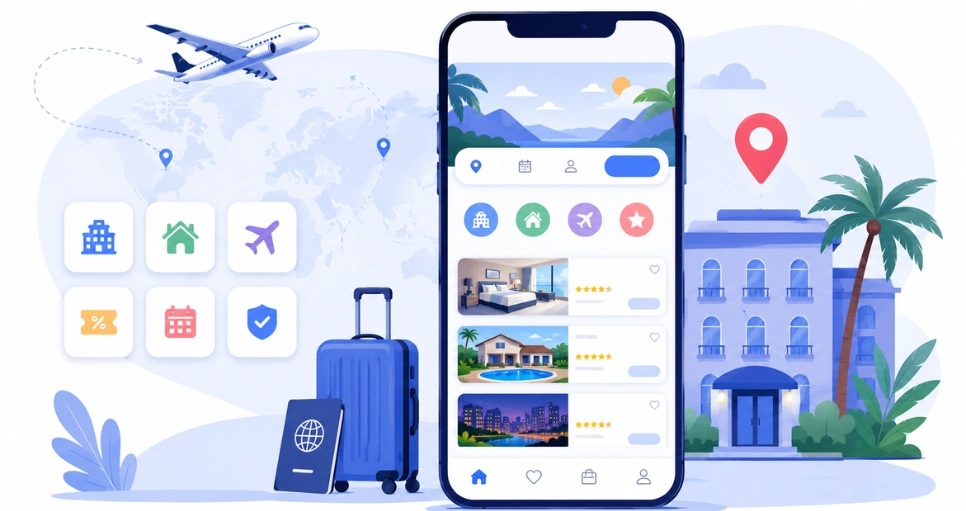
- Agoda-like platforms combine hotel discovery, real-time reservations, secure payments, and marketplace management into one scalable travel ecosystem.
- A successful booking platform depends on intuitive user experiences, reliable inventory management, and secure payment processing.
- Choosing the right technology stack lays the foundation for future scalability and seamless third-party integrations.
- Development investment varies based on marketplace size, automation requirements, and the number of supported travel services.
- Businesses that continuously improve their platform with personalisation, loyalty programmes, and new booking services are better positioned to compete in the evolving online travel industry.
The global travel industry has become increasingly digital, with travellers expecting to search, compare, and book accommodations in just a few taps. Platforms like Agoda have transformed the booking experience by offering millions of hotel listings, vacation rentals, apartments, and exclusive travel deals through a single, user-friendly application. Their success has inspired startups, travel agencies, and hospitality businesses to invest in Agoda clone app development as a way to enter the rapidly growing online travel market.
Unlike a basic hotel reservation application, an Agoda-like platform functions as a complete travel marketplace. It connects travellers with hotels, resorts, vacation rentals, and property owners while managing bookings, payments, pricing, customer reviews, and real-time availability through one centralised system. This marketplace approach creates value for both travellers seeking competitive prices and accommodation providers looking to increase occupancy.
Building a successful Agoda clone requires more than replicating the interface. It demands scalable architecture, seamless booking workflows, secure payment processing, real-time inventory management, and an intuitive user experience capable of handling thousands of listings and simultaneous bookings.
In this guide, we'll explore everything you need to know about Agoda Clone App Development, including its business potential, essential features, development process, technology stack, cost considerations, and the key factors that contribute to building a competitive travel booking platform.
Online Travel Booking Market Statistics
- Global Market Size: The global online travel market was valued at approximately USD 600+ billion in 2024 and is projected to exceed USD 1 trillion by 2033, driven by growing internet penetration, smartphone adoption, and increasing demand for digital travel services.
- Strong Market Growth: According to Precedence Research, industry forecasts estimate the online travel market will grow at a CAGR of around 8–10% over the next decade, supported by rising international tourism and digital booking adoption.
- Mobile Booking Dominance: According to Statista, a significant share of travel reservations now takes place through smartphones, making mobile-first booking experiences a priority for travel businesses.
- Hotel Booking Leads Revenue: Hotel and accommodation reservations remain the largest revenue segment within online travel platforms, accounting for a major portion of digital travel transactions.
- AI-Powered Personalisation: Travel platforms increasingly use artificial intelligence to deliver personalised accommodation recommendations, dynamic pricing, multilingual support, intelligent search, and automated customer service.
Why Businesses Are Building Agoda-Like Apps
The way people book travel has changed dramatically over the last decade. Travellers no longer visit multiple websites or rely on travel agents to compare accommodation options. Instead, they expect one platform where they can discover properties, compare prices, read verified reviews, and complete secure bookings within minutes. This shift has created enormous opportunities for businesses investing in digital travel marketplaces.
As competition in the online travel industry increases, businesses are looking beyond off-the-shelf solutions and partnering with experienced mobile app development companies to build scalable booking platforms that support real-time reservations, secure payment processing, and seamless user experiences across global markets.
1. Rising Demand for Online Hotel Reservations
Millions of travellers now prefer booking hotels, resorts, apartments, and vacation rentals through mobile applications because they offer convenience, transparent pricing, and instant confirmation. This growing preference continues to fuel demand for hotel booking app development, enabling businesses to serve customers anytime and from anywhere.
2. Marketplace Business Model
An Agoda-like platform acts as a marketplace that connects accommodation providers with travellers. Rather than owning hotels, businesses generate value by bringing together multiple property owners while managing reservations, payments, and customer interactions through a single platform.
3. Multiple Revenue Opportunities
A custom travel booking platform can generate income from several sources, including:
- Commission on hotel reservations
- Featured property listings
- Premium membership plans
- In-app advertising
- Travel insurance partnerships
- Airport transfers and tour bookings
- Currency conversion and payment services
Diversifying revenue streams makes the platform more sustainable while reducing dependence on a single income source.
4. Better Customer Retention
Integrated loyalty programmes, personalised recommendations, exclusive discounts, and reward points encourage users to return for future bookings. These features help businesses increase repeat customers while lowering customer acquisition costs.
5. Expanding Beyond Hotel Bookings
Many travel platforms begin with hotel reservations and gradually introduce additional services such as flights, holiday packages, local experiences, and transportation. Businesses planning travel app development often follow this phased approach to scale their platform while responding to changing customer expectations.
Inside an Agoda-Like Booking Platform
An Agoda-like application is more than a hotel search platform; it operates as a complete travel marketplace where travellers, accommodation providers, and administrators interact through one connected ecosystem. Understanding how the platform works helps businesses define the right development strategy before building the product.
Step 1: Property Owners List Their Accommodations
Hotels, resorts, serviced apartments, homestays, and vacation rental owners create business profiles and publish their properties. Each listing typically includes:
- Property details and descriptions
- High-quality images
- Room categories
- Pricing
- Amenities
- Availability calendar
- Cancellation policies
This allows accommodation providers to manage their inventory independently while keeping information updated in real time.
Step 2: Travelers Search & Compare
Users search for accommodations based on destination, travel dates, budget, ratings, amenities, and property type. Advanced filtering and sorting options help travellers quickly identify the most suitable stay without browsing hundreds of listings.
Step 3: Instant Booking & Secure Payments
Once users select a property, they confirm the reservation through a secure checkout process. The platform processes payments, sends booking confirmations, updates room availability automatically, and generates digital invoices.
Step 4: Reservation Management
Both travellers and property owners can manage reservations from their dashboards. Users can modify bookings, request cancellations, access invoices, communicate with property owners, and receive important travel notifications.
Step 5: Reviews & Ratings
After completing their stay, guests leave ratings and reviews that help future travellers make informed decisions while encouraging accommodation providers to maintain high service quality.
The Role of the Admin Panel
Behind every successful travel marketplace is an administration system responsible for managing users, accommodation providers, bookings, payments, commissions, promotional campaigns, customer support, analytics, and platform security.
Businesses planning booking app development typically invest in a robust admin dashboard because it becomes the operational control centre that keeps the entire marketplace running efficiently.
Must-Have Agoda Clone App Features
The success of an Agoda-like platform depends on delivering a smooth experience for travellers, accommodation providers, and administrators. Instead of overwhelming users with unnecessary functionality, the platform should focus on features that simplify property discovery, booking management, and business operations.
Features for Travelers
Travellers can easily search, compare, and book accommodations using smart filters, detailed listings, and secure payment options, ensuring a smooth and hassle-free booking experience.
- Smart Property Search: Users should be able to search properties using filters such as destination, travel dates, price range, property type, amenities, ratings, and guest capacity, making it easier to find the right accommodation quickly.
- Interactive Property Listings: Every listing should provide detailed descriptions, high-quality images, room availability, pricing, nearby attractions, policies, and verified guest reviews to help users make confident booking decisions.
- Instant Booking & Digital Payments: A frictionless booking flow with multiple payment methods, digital invoices, and instant confirmations creates a better customer experience while increasing completed reservations.
- Wishlists & Saved Trips: Allow users to bookmark favourite properties, compare options later, and organise upcoming trips in one place.
- Booking History: Customers should have easy access to previous reservations, invoices, cancellations, and upcoming bookings from their account dashboard.
Features for Property Owners
Accommodation providers need a dedicated dashboard to manage their business efficiently.
- Property Management: Owners can add new properties, update availability, manage pricing, upload images, and modify room details whenever needed.
- Reservation Dashboard: A centralised booking panel allows hosts to view reservations, confirm bookings, process cancellations, and monitor occupancy rates in real time.
- Revenue Insights: Reports showing booking performance, earnings, occupancy trends, and customer behaviour help property owners optimise pricing strategies.
Features for Administrators
The admin dashboard manages the complete marketplace ecosystem.
- Platform Management: Administrators can monitor users, accommodation providers, bookings, payments, commissions, promotional campaigns, customer support, and platform performance through one centralised dashboard.
- Analytics & Reporting: Business intelligence dashboards provide insights into bookings, revenue, customer growth, popular destinations, and overall marketplace performance, enabling data-driven decision-making.
As the platform expands, many businesses choose to build a hotel booking app like Airbnb by introducing additional capabilities such as vacation rentals, experiences, airport transfers, loyalty programmes, and multi-property management, allowing the platform to evolve beyond traditional hotel reservations.
Step-by-Step Agoda Clone App Development Process
Building a travel marketplace requires more than developing booking screens. Every stage should be planned around how travellers search, how properties manage inventory, and how the platform scales as bookings increase.
Phase 1: Define Your Marketplace Strategy
Start by deciding what type of booking platform you want to launch. Some businesses focus only on hotels, while others include apartments, villas, vacation homes, or complete travel experiences. This decision influences the overall platform architecture and future expansion plans.
Phase 2: Validate the Product Experience
Before investing in full-scale development, create user journeys, wireframes, and interactive prototypes. Testing the booking flow early helps identify usability issues and ensures customers can complete reservations with minimal effort.
Phase 3: Build the Marketplace Infrastructure
Develop the core platform by creating customer applications, property-owner dashboards, administrative portals, secure payment systems, booking engines, notification services, and cloud infrastructure.
Phase 4: Integrate Third-Party Services
Connect the application with hotel inventory providers, payment gateways, maps, customer notification systems, analytics tools, and review services. These integrations create a seamless experience for both travellers and accommodation providers.
Phase 5: Optimize Performance & Security
Travel platforms process thousands of transactions every day. Conduct performance testing, security audits, payment validation, and scalability testing to ensure the platform remains stable during peak booking periods.
Phase 6: Launch, Measure & Expand
Once the application goes live, monitor user behaviour, booking trends, and customer feedback. Continuous improvements, new travel services, loyalty programmes, and AI-powered personalisation help the platform remain competitive while supporting long-term business growth through professional mobile app development services.
Recommended Technology Stack
A travel marketplace must process thousands of searches, manage real-time availability, handle secure payments, and synchronise booking data across multiple systems. Choosing the right technology stack ensures the platform remains reliable as user traffic and property listings grow.
|
Component |
Recommended Technologies |
|
Frontend |
Flutter, React Native, Swift, Kotlin |
|
Backend |
Node.js, Java, Python, .NET |
|
Database |
PostgreSQL, MongoDB |
|
Cloud Platform |
AWS, Google Cloud, Microsoft Azure |
|
Maps & Location |
Google Maps API, Mapbox |
|
Payments |
Stripe, PayPal, Razorpay |
|
Notifications |
Firebase Cloud Messaging, OneSignal |
|
Analytics |
Google Analytics, Firebase Analytics |
|
Search Engine |
Elasticsearch |
Why Architecture Matters
Unlike a standard mobile application, a booking platform must support real-time room availability, simultaneous reservations, secure financial transactions, and continuous synchronisation between customers, property owners, and administrators. A scalable architecture minimises booking conflicts while maintaining fast response times.
Preparing for Long-Term Growth
As the marketplace expands, additional services such as vacation rentals, airport transfers, and local experiences can be integrated without rebuilding the platform. Businesses planning long-term digital products often evaluate the overall software development cost alongside infrastructure decisions to ensure the architecture remains scalable while supporting future business expansion.
Agoda Clone App Development Cost
There isn't a single price for developing an Agoda-like application because every travel platform is built differently. A startup launching a hotel booking MVP has very different requirements from an enterprise creating a global travel marketplace with hotels, vacation rentals, flights, and travel experiences.
The smartest way to estimate your investment is by identifying the type of platform you want to launch.
If You're Building a Starter Platform
Estimated Budget: $8,000–$15,000
This version focuses on the essentials:
- User registration
- Hotel listings
- Search & filters
- Booking flow
- Secure payments
- Basic admin panel
Ideal for startups testing a new travel business or targeting a single city or region.
If You're Building a Growing Marketplace
Estimated Budget: $15,000–$30,000
As the platform expands, businesses usually introduce the following:
- Property owner dashboard
- Booking management
- Customer reviews
- Push notifications
- Promotional campaigns
- Analytics dashboards
This stage is suitable for businesses planning regional expansion and managing multiple accommodation partners.
If You're Building an Agoda-Like Marketplace
Estimated Budget: $30,000–$50,000
At this level, the platform becomes much more intelligent with features such as the following:
- Dynamic pricing
- AI-powered recommendations
- Multi-language support
- Currency conversion
- Advanced search engine
- Loyalty programs
- High-performance cloud infrastructure
If You're Building an Enterprise Travel Ecosystem
Estimated Budget: $50,000–$70,000+
Large travel businesses often require the following:
- Multi-country operations
- Thousands of hotel listings
- High-volume booking management
- Enterprise reporting
- Third-party supplier integrations
- Advanced security
- Dedicated cloud infrastructure
These platforms are designed to support continuous growth while maintaining performance during peak booking seasons.
Budget Planning Tips
Before starting development, businesses should calculate more than the application itself. Infrastructure, integrations, future scalability, and maintenance all influence the total investment.
Before starting development, businesses should calculate more than the application itself. Infrastructure, integrations, future scalability, cloud hosting, and long-term maintenance all influence the overall travel app development cost and should be considered during project planning.
Conclusion
Building an Agoda-like application is an opportunity to create a comprehensive travel marketplace rather than simply another hotel booking platform. By combining user-focused design, scalable architecture, intelligent booking workflows, and a sustainable business model, companies can deliver experiences that meet the expectations of modern travellers.
Whether you're launching a niche accommodation platform or planning a global travel marketplace, investing in the right development strategy from the beginning helps create a product that can grow alongside your business while adapting to changing customer demands.
FAQ's
Agoda clone app development involves creating a travel booking platform that enables users to search, compare, and reserve hotels, apartments, vacation rentals, and other accommodations through a centralised marketplace
The overall cost depends on platform complexity, supported booking services, integrations, marketplace features, and customisation requirements.
Essential features include property search, booking management, secure payments, user reviews, property owner dashboards, admin management, notifications, and analytics.
Development timelines typically vary based on the project's scope, feature set, integrations, and customisation level.
Yes. Modern travel marketplaces allow hotels, resorts, apartments, and vacation rental owners to manage listings, availability, pricing, and reservations independently through dedicated dashboards.
Yes. AI can provide personalised accommodation recommendations, dynamic pricing, intelligent search, customer support automation, and predictive travel insights, helping improve both user experience and business performance.

CrinPro
CrinPro Solutions is a leading IT company that helps startups and enterprises build innovative digital products. From intuitive mobile applications and high-performance websites to AI-powered solutions and enterprise software, our team delivers scalable, secure, and user-focused products tailored to unique business needs. With expertise across multiple industries, we transform ideas into digital experiences that drive growth, improve efficiency, and create long-term business value.